Sutil contracorriente: Conversación con Mariska Karto sobre su obra
Con Juan Pablo Torres Muñiz
En el retrato, claro, el objetivo crítico general es la noción de persona. Nos ocupa cómo la luz, el encuadre y la pose pueden revelar algo de la interioridad del sujeto o, por el contrario, construir una identidad deseada. Esta tensión se agudiza al abordar la representación de la mujer y la femineidad. En este punto, de la musa romántica al icono pop, pasando por la objetivación mercantil, se han proyectado ideales, mitos y ansiedades de toda clase, de época en época.
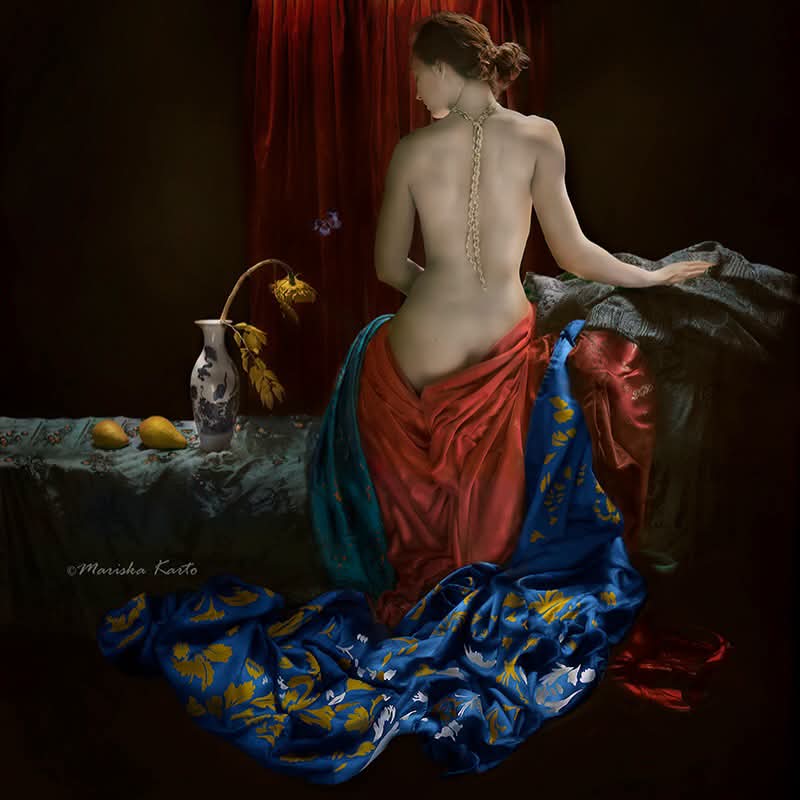
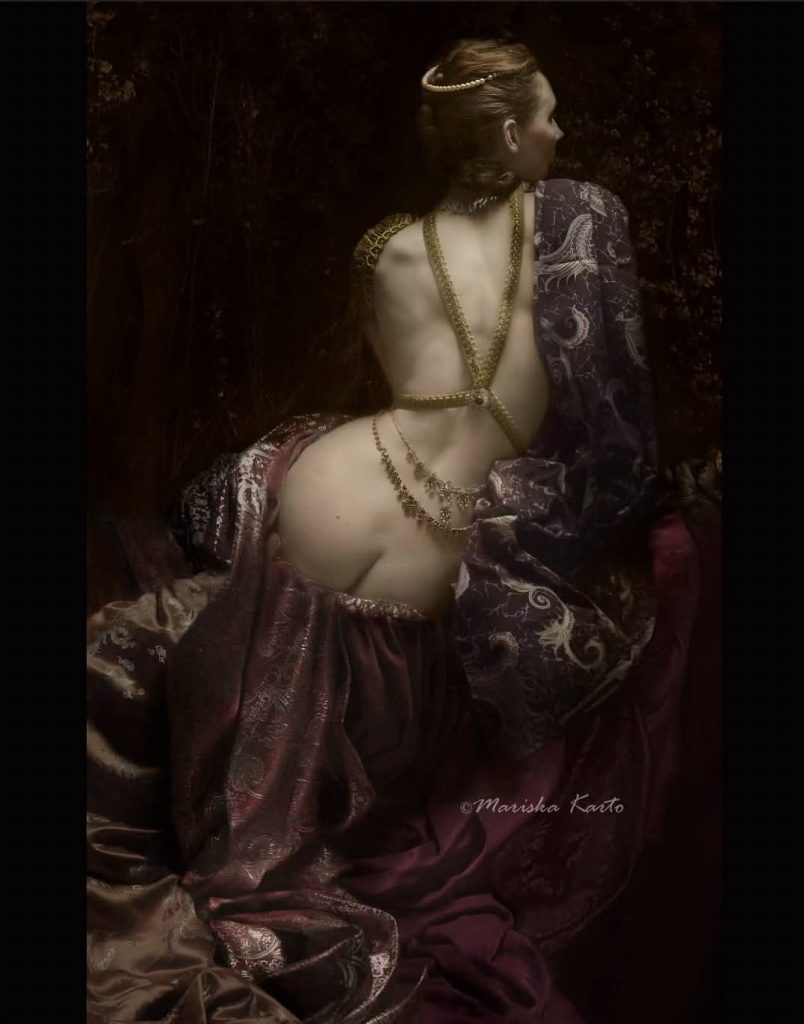
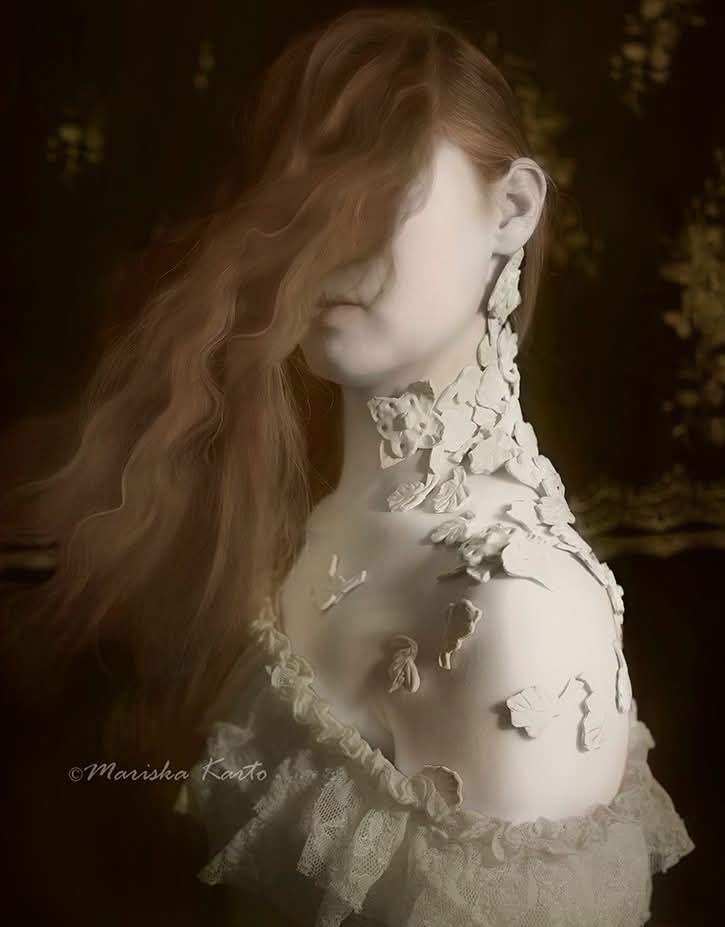
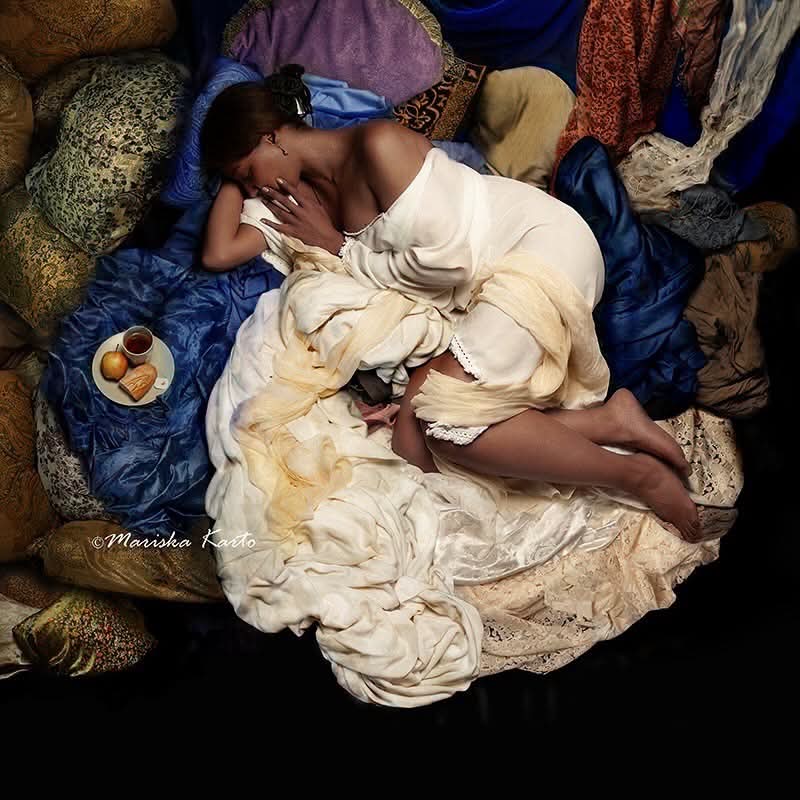
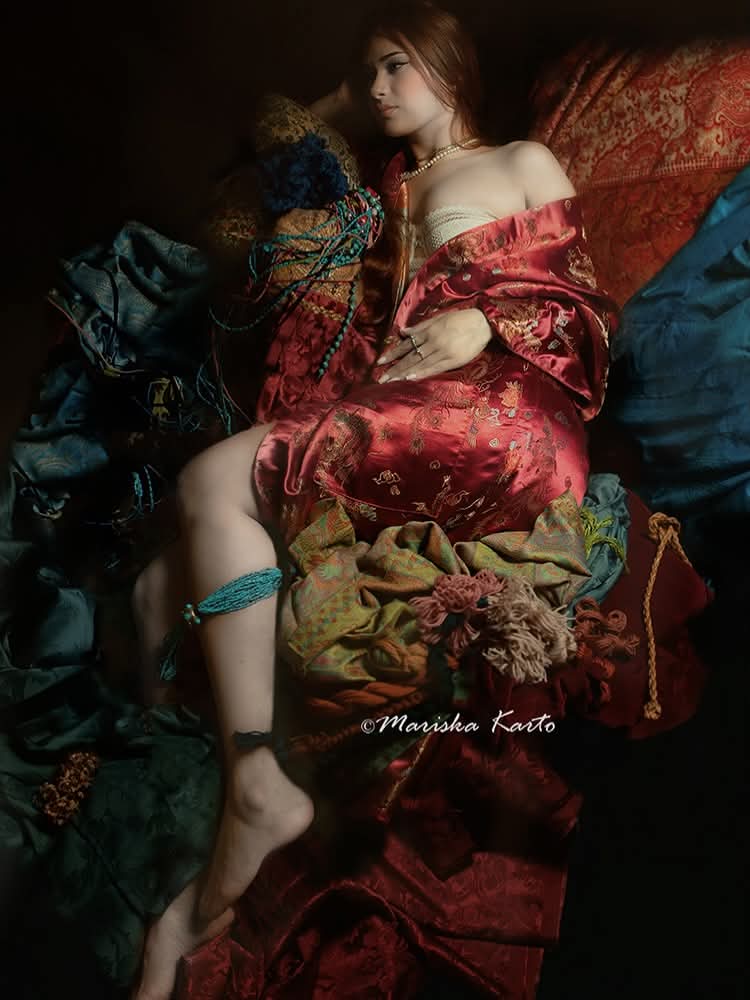
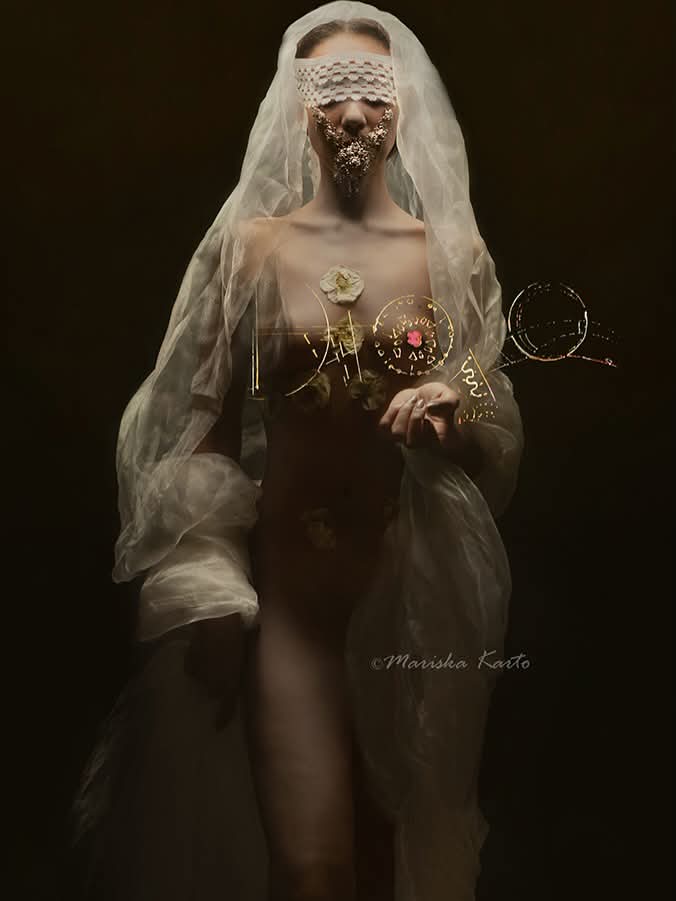
La fotografía de Mariska Karto, influenciada por la intensidad dramática del Barroco y la poética de los maestros antiguos, se sitúa a contracorriente de la inmediatez contemporánea. Con sus hiperfotocollages, reconfigura sutilmente la femineidad. Integra influencias que van desde las pinturas del Renacimiento hasta su herencia multicultural de Surinam, Indonesia y África, no simplemente aprovechando una rica tradición iconográfica, sino sometiéndola a una torsión que revela su vigencia o su fractura.
La propuesta de la artista encuentra en la sensualidad y la vulnerabilidad del cuerpo femenino sus principales materiales. Lejos de caer en la complacencia, su mirada sobre los cuerpos, realzado por tatuajes que narran historias personales, se convierte en un argumento, por decir lo menos, interesante sobre la complejidad de la identidad.
Conversamos con ella para adentrarnos en su proceso creativo, explorando su particular concepción del retrato, la luz y la construcción de mundos a través de la imagen…
La imagen debe hablar por sí misma: debe plantear su propio cuestionamiento. Pero hay para ello varios caminos. Varias artes, para empezar. ¿Cómo llegas a la fotografía como forma de expresión, y cómo al retrato en particular?
La fotografía llegó a mi vida cuando la necesité. Para mí, era la mejor manera de expresar mis emociones y sentimientos. Empecé fotografiándome a mí misma. De esta manera, podía procesar mis emociones, que en aquel momento eran imaginativas pero también oscuras. Así fue como también aprendí fotografía y Photoshop. Fotografiándome a mí misma, no tenía que decepcionar a una modelo mientras todavía estaba aprendiendo.
¿Por qué la mujer? ¿De qué manera la atmósfera de tus retratos se presta a alumbrar o, según el caso, a velar cuestiones sobre la feminidad que son de tu interés?
Yo misma soy una mujer, y las historias que cuento son a menudo las mías propias. Por eso, me resulta natural retratar a mujeres. El espectro de la feminidad es increíblemente amplio. Por supuesto, incluye la vida cotidiana y las situaciones que experimentamos como mujeres, pero también la sensualidad. Para mí, la sensualidad es emoción, poesía, pero también erotismo. Esa también es una parte importante de la vida. Creo que el cuerpo femenino es increíblemente hermoso, redondo y suave. Esa es la naturaleza del cuerpo femenino, y disfruto retratándolo de esa manera.
Ha de haber, en todo caso, alguna impronta. ¿Cuáles son tus principales influencias?
Hay muchas influencias diferentes. Por supuesto, me inspira el arte del pasado, pero también el arte contemporáneo. La vida tal como se vive hoy también juega un papel. Creo que me inspiro principalmente en la vida que yo misma experimento y en la vida que me rodea, que percibo y observo.
¿Cómo concibes tus imágenes? ¿Aparece primero la idea, el rostro, quizás el cuerpo, el vestuario y demás, o son las circunstancias? ¿Qué tan planificado es tu proceso?
A veces son semillas que se plantaron en el pasado pero que solo cobran vida mucho más tarde. También puede haber muchas fuentes de inspiración diferentes detrás de una imagen. A menudo, son como piezas de un rompecabezas que finalmente encajan. Los sentimientos y las imágenes suelen venir primero. Las palabras vienen después.
Entonces, ¿cómo eliges a tus modelos?
Trabajo tanto con modelos que conozco personalmente como con modelos profesionales con los que siento una conexión. Necesito tener una conexión con una modelo. A menudo es simplemente una sensación.
Belleza, equilibrio, lozanía, atractivo sensual, misterio seductor. ¿Cuánto pesa cada elemento en tu visión de cada obra? ¿Cuánto pesa, por otra parte, en la edición de las imágenes?
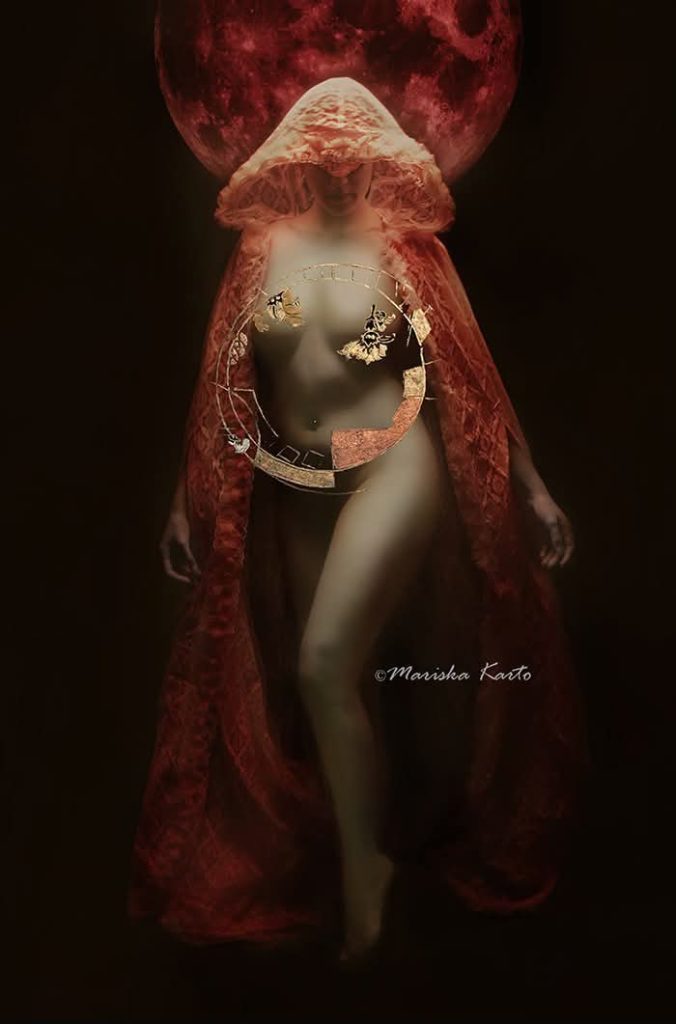
Eso depende de la historia. Las modelos de mi mundo de sombras, por ejemplo, son retratadas de manera muy diferente a mis modelos más seductoras. No es sólo la modelo la que tiene un gran peso. Construir el entorno es igualmente importante, y eso a menudo lleva más tiempo que fotografiar a la modelo en sí. También creo mis propios accesorios y, en última instancia, no estoy simplemente fotografiando a modelos comunes. La modelo se transforma visiblemente de una chica común en una figura que puede asustarte o llenarte de deseo. A veces puede ser literalmente terriblemente atractiva al mismo tiempo. La seducción existe en muchos elementos diferentes: en su presencia y expresión, pero también en las formas femeninas. El desafío es crear arte de una manera que sea mía y que hable mi idioma. Porque junto a mi firma, también me encuentro presente como personalidad. Creo literalmente un mundo que es profundamente mío y que invita a otros a mirar en él.
¿Qué te gustaría que te pregunte alguien que haya podido ver toda tu obra reunida?
No tanto una pregunta, sino que, sobre todo, me gustaría que vieran mi desarrollo. Me gustaría que la gente reconociera cuánta creatividad hay en el desarrollo de todos los álbumes conceptuales, y que viera el crecimiento en ellos, la evolución de un álbum al siguiente. Idear una idea por primera vez, e incluso por segunda vez, suele ser la parte más fácil. Seguir desarrollándola durante años, mientras también se sigue creciendo y evolucionando, solo se vuelve visible cuando se ha estado trabajando durante muchos años en el portafolio. Esa es a menudo la parte más difícil del desarrollo de un artista. Se trata literalmente de encontrarse a uno mismo y entablar una lucha con uno mismo.
¿A qué apuntas próximamente?
Realmente no he desarrollado un plan. Así no es como funciona esto para mí. Escucho a mi alma, esa es mi brújula. Y esa brújula me muestra el camino.
(ENGLISH VERSION)
Subtle Countercurrent: A Conversation with Mariska Karto about Her Work
Translation by Tiffany Amber Elías Trimble
In portraiture, of course, the general critical objective is the notion of person. We are concerned with how light, framing, and pose can reveal something of the subject’s interiority or, on the contrary, construct a desired identity. This tension becomes sharper when addressing the representation of women and femininity. At this point, from the romantic muse to the pop icon, through mercantile objectification, ideals, myths, and anxieties of all kinds have been projected, from era to era.
Mariska Karto’s photography, influenced by the dramatic intensity of the Baroque and the poetics of the Old Masters, positions itself against the current of contemporary immediacy. With her hyper-photocollages, she subtly reconfigures femininity. She integrates influences ranging from Renaissance paintings to her multicultural heritage from Suriname, Indonesia, and Africa, not simply drawing from a rich iconographic tradition, but subjecting it to a torsion that reveals its validity or its fracture.
The artist’s proposal finds in the sensuality and vulnerability of the female body its main materials. Far from falling into complacency, her gaze on bodies, enhanced by tattoos that narrate personal stories, becomes an, to say the least, interesting argument about the complexity of identity.
We spoke with her to delve into her creative process, exploring her particular conception of portraiture, light, and the construction of worlds through images…
The image must speak for itself: it must pose its own questioning. But there are several paths. Several arts, to begin with. How do you arrive at photography as a form of expression, and how at portraiture in particular?
Photography came into my life when I needed it. For me, it was the best way to express my emotions and feelings. I started by photographing myself. In this way, I could process my emotions, which at the time were imaginative but also dark emotions. This is also how I learned photography and Photoshop. By photographing myself, I didn’t have to disappoint a model while I was still learning.
Why women? In what way does the atmosphere of your portraits lend itself to illuminating or, as the case may be, veiling questions about femininity that are of interest to you?
I am a woman myself, and the stories I tell are often my own. For me, it therefore feels natural to portray women. The spectrum of womanhood is incredibly broad. Of course, it includes everyday life and the situations we experience as women, but also sensuality.
To me, sensuality is emotion, poetry, but also eroticism. That is an important part of life too. I think the female body is incredibly beautiful, round and soft. That is the nature of the female body, and I enjoy portraying it in that way.
What are your main influences?
There are many different influences. Of course, I am inspired by art from the past, but also by contemporary art. Life as it is lived today also plays a role.
I think I am primarily inspired by the life I experience myself and by the life around me that I notice and observe.
How do you conceive your images? Does the idea come first, the face, perhaps the body, the wardrobe and so on, or is it the circumstances? How planned is your process?
Sometimes they are seeds that were planted in the past but only come to life much later. There can also be many different sources of inspiration behind an image. Often, they are like pieces of a puzzle that eventually fall into place.
Feelings and images usually come first. The words come afterwards.
How do you choose your models?
I work with both models I know personally and professional models with whom I feel a connection. I need to have a connection with a model. It is often simply a feeling.
Beauty, balance, freshness, sensual appeal, seductive mystery. How much does each element weigh in your vision of each work? How much, on the other hand, does it weigh in the editing of the images?
That depends on the story. The models in my shadow world, for example, are portrayed very differently from my more seductive models.
It is not only the model that carries great weight. Building the environment is equally important, and that often takes often more time than photographing the model itself. I also create props myself, and ultimately, I am not simply photographing ordinary models.
The model visibly transforms from an ordinary girl into a figure who can frighten you or fill you with desire. Sometimes she can be literally terrifyingly attractive at the same time.
Seduction exists in many different elements: in her presence and expression, but also in female shapes. The challenge is to create art in a way that is mine and speaks my language. Because alongside my signature, I am also present as a personality.
I literally create a world that is deeply my own and one that invites others to look into.
What would you like someone who has been able to see all your work gathered together to ask you?
Not so much a question, but above all, I would like them to see my development.
I would like people to recognize how much creativity goes into developing all of the conceptual albums, and to see the growth within them, the evolution from one album to the next.
Coming up with an idea for the first time, and even the second time, is often the easiest part. Continuing to develop it for years, while also continuing to grow and evolve, only becomes visible when you have been working for many years in your portfolio.
That is often the most difficult part of an artist’s development. It is literally about encountering yourself and entering into a struggle with yourself.
What are you aiming for next?
I haven’t really developed a plan. That is not how it works for me.
I listen to my soul, that is my compass. And that compass shows me the way.