Reflejo de un mundo nuevo: Conversación con Alain Laboile sobre su obra
Con Juan Pablo Torres Muñiz
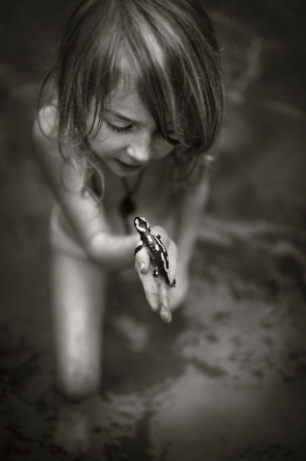
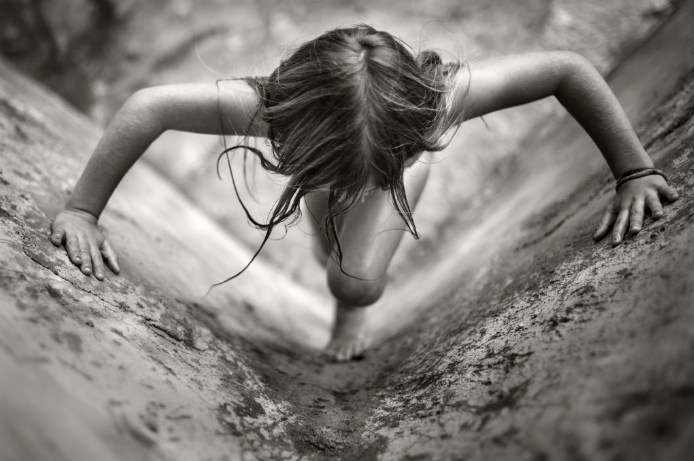
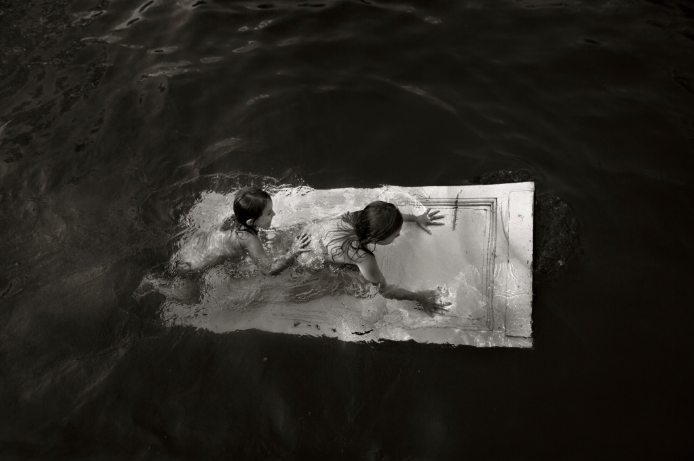
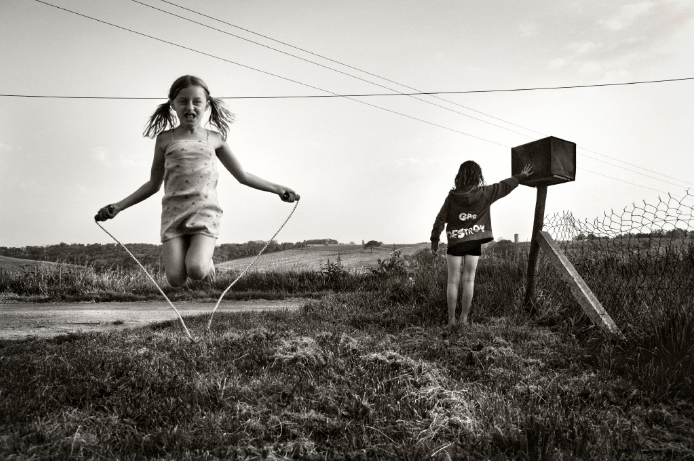
Hay, en la fotografía documental de familia, una tentación contra la que pocos artistas logran resistir: convertir la crónica doméstica en un ejercicio de nostalgia complaciente, de idealización ingenua de la infancia como paraíso perdido. Contra esa tendencia, la obra de Alain Laboile se alza como un testimonio de otra naturaleza: la desbordante, sucia, salvaje, que late en los márgenes de la vida organizada. Sus imágenes son el registro de una educación que no se parece a ninguna otra: la de seis niños creciendo en una vieja casa del suroeste de Francia, sin televisión ni otras pantallas. Aunque, cuidado: no se trata de una evasión romántica hacia un mundo arcádico.
Laboile no fotografía la huida de la civilización, sino su suspensión en un territorio donde el tiempo parece haber recuperado otro ritmo, más cercano al de las estaciones que al de los calendarios.
Niñez, sobreprotección, corsés ideológicos, ese miedo paralizante que ha convertido a los niños occidentales en rehenes de sus propios miedos y de las proyecciones ansiosas de sus padres. Idealismo. Mucho en cuestión. Aquí, en la obra de francés, el juego es el juego, y su único fin es su propio despliegue.
Pasa por sobre la nostalgia, para provocar inquietud. El primer paso para volver a pensar, desde sus cimientos, la institución de la infancia.
Conversamos con él al respecto…
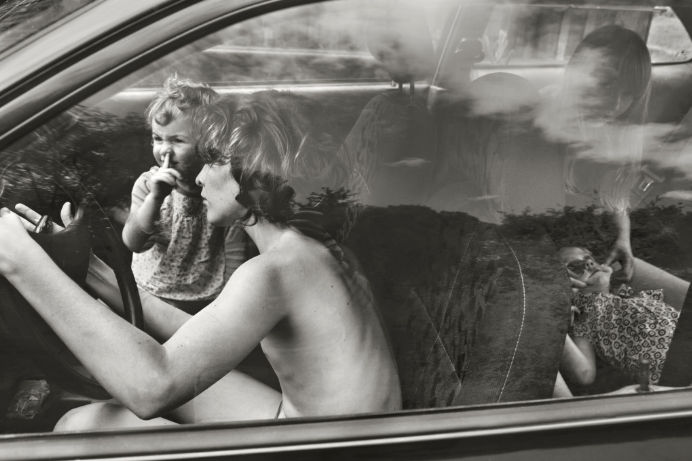
En tu trabajo, la diferencia entre realidad y verdad es clara; de hecho, es quizás esto último lo que se transmite. ¿Por qué a través de la fotografía y no de otra forma de arte? ¿Cómo te relacionaste con esta forma expresiva?
La realidad es lo que me rodea; la verdad es lo que se me escapa y sin embargo aparece en la fotografía. No elegí la fotografía para revelar la verdad, la fotografía me eligió a mí porque me permitía recibir en lugar de construir.
Proveniente de la escultura, estaba acostumbrado a dar forma a la materia. Con la fotografía, dejo que la materia me dé forma a mí. Es un arte de disponibilidad, de presencia. La verdad que emerge no es documental, es emocional, instintiva, a veces incluso accidental. Y es precisamente por eso que confío en ella.
¿Historias o, más bien, escenas alrededor de las cuales gira el tiempo…? ¿Qué hay de este elemento en tu trabajo, del tiempo, pero también de la narrativa?
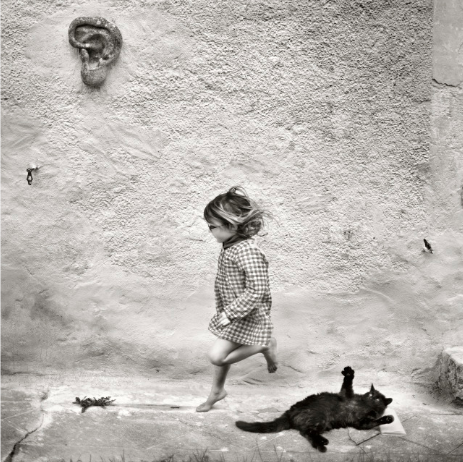
El tiempo en mi trabajo no es lineal. Es circular, suspendido, casi salvaje. Los niños viven en un tiempo sin propósito, un tiempo de experiencia pura. Yo me deslizo en ese ritmo.
No construyo historias. Capturo mitologías de lo cotidiano. Un gesto, un salto, una caída, un momento de silencio… Estos no son narrativas, sino fragmentos de eternidad. Mis fotografías no dicen antes o después. Dicen aquí, ahora, siempre.
La elección de una paleta implica una serie de principios; ni se diga ya de la fotografía en blanco y negro. ¿Por qué esta forma de contraste?
El blanco y negro no es una decisión estética, es una forma de hablar. El color describe. El blanco y negro revela.
Elimina la distracción, esculpe la luz, acerca la imagen a algo esencial, casi arquetípico.
Quizás también es el escultor que hay en mí. Todavía esculpo, pero ahora esculpo con sombras.
Situaciones, actos, hechos… ¿qué tanto planificas tu trabajo con la cámara? ¿Cómo eliges con qué material trabajar en cada ocasión?
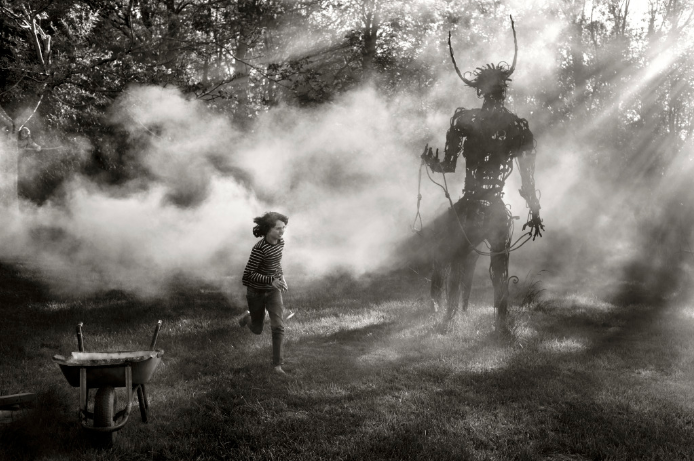
No planifico. Observo. La vida se despliega a mi alrededor, caótica, impredecible, luminosa, y yo la sigo con mi cámara.
La única decisión que tomo es estar ahí, permanecer abierto, dejar que el mundo me sorprenda. En cuanto al material con el que trabajo, es simple: lo que esté a mano, lo que esté vivo, lo que resuene.
Niños… ¿Por qué? ¿Y en qué medida representan mucho más que cuanto suponemos de ellos, es decir, su inocencia? ¿En qué medida representan, para ti, sujetos significativos más allá de su corporeidad?
Los niños no son símbolos de inocencia para mí. Son fuerzas de la naturaleza. Encarnan libertad, riesgo, imaginación, fiereza; todo lo que la edad adulta tiende a domesticar. No son «sujetos», sino presencias. A través de ellos, fotografío la condición humana despojada de artificio. Sus cuerpos, sus gestos, sus juegos hablan un lenguaje universal, uno que es anterior a la cultura.
¿Tus principales influencias, dentro y fuera de la fotografía?
Mis influencias están dispersas. En fotografía, me siento cercano a la inmediatez instintiva de los fotógrafos callejeros.
Fuera de la fotografía, mis influencias provienen de la escultura, de la tierra, de mis propios hijos, de los animales que habitan nuestro espacio, del silencio de la vida rural. La naturaleza es mi más grande maestra.
¿Cómo consideras que ha progresado tu trabajo desde el principio hasta ahora? ¿Cabría hablar de maduración o más bien de una evolución sinuosa?
No lo llamaría maduración. Eso suena demasiado lineal, demasiado intencional. Mi evolución es sinuosa, como un río que cambia de curso según las piedras que encuentra.
Me he vuelto más paciente, quizás más atento. Pero el núcleo sigue siendo el mismo: un deseo de ser testigo de la vida sin interferir en ella.
¿Qué sigue a continuación para ti, como artista?
Lo que sigue es simplemente la vida desarrollándose, y yo tratando de seguir su ritmo. No planifico proyectos, los dejo crecer. Así es como surgió mi parque de arte La Tortue Volante, de forma natural, como una extensión de mi trabajo y mi forma de vivir.
Quizás nuevas esculturas para el parque, quizás nuevas fotografías, quizás algo que aún no he imaginado. Confío en el camino. Siempre me ha llevado a donde necesitaba ir.
(ENGLISH —ORIGINAL— VERSION)
Reflection of a New World: A Conversation with Alain Laboile about His Work
Translation by Tiffany Amber Elías Trimble
In documentary family photography, there is a temptation that few artists manage to resist: turning the domestic chronicle into an exercise in complacent nostalgia, a naive idealization of childhood as a lost paradise. Against this tendency, the work of Alain Laboile stands as a testimony of another nature: the overflowing, dirty, wild one that pulses at the margins of organized life. His images are the record of an education unlike any other: that of six children growing up in an old house in southwestern France, without television or other screens. But be careful: this is not a romantic escape to an Arcadian world.
Laboile does not photograph the flight from civilization, but its suspension in a territory where time seems to have recovered another rhythm, closer to that of the seasons than to that of calendars.
Childhood, overprotection, ideological corsets, that paralyzing fear that has turned Western children into hostages of their own fears and the anxious projections of their parents. Idealism. Much is called into question. Here, in the French artist’s work, play is just play, and its only purpose is its own unfolding.
It bypasses nostalgia to provoke unease. The first step towards rethinking, from its foundations, the institution of childhood.
We spoke with him about it…
In your work, the distinction between reality and truth is clear; in fact, it is perhaps the latter that is transmitted. Why through photography and not another art form? How did you relate to this expressive form?
Reality is what surrounds me; truth is what escapes me and yet appears in the photograph. I didn’t choose photography to reveal truth, photography chose me because it allowed me to receive rather than construct.
Coming from sculpture, I was used to shaping matter. With photography, I let matter shape me. It’s an art of availability, of presence. The truth that emerges is not documentary, it’s emotional, instinctive, sometimes even accidental. And that’s precisely why I trust it.
– Stories or, rather, scenes around which time revolves…? What of this element in your work-time, but also narrative?
Time in my work is not linear. It’s circular, suspended, almost feral. Children live in a time without purpose, a time of pure experience. I slip into that rhythm.
I don’t build stories. I capture mythologies of the everyday. A gesture, a jump, a fall, a moment of silence… These are not narratives but fragments of eternity. My photographs don’t say beforr or after. They say here, now, always
– The choice of a palette implies a series of principles; let alone black and white photography. Why this form of contrast?
Black and white is not an aesthetic decision, it’s a way of speaking. Color describes. Black and white reveals.
It removes distraction, it sculpts the light, it brings the image closer to something essential, almost archetypal.
Perhaps it’s also the sculptor in me. I still carve, but now I carve with shadows.
– Situations, actions, events… to what extent do you plan your work with the camera? How do you choose which material to work with on each occasion?
I don’t plan. I observe. Life unfolds around me, chaotic, unpredictable, luminous and I follow it with my camera.
The only decision I make is to be there, to stay open, to let the world surprise me. As for the material I work with, it’s simple: whatever is at hand, whatever is alive, whatever resonates.
– Children… Why? And to what extent do they represent much more than what we assume of them, that is, their innocence? To what extent do they represent, for you, significant subjects beyond their corporeality?
Children are not symbols of innocence for me. They are forces of nature. They embody freedom, risk, imagination, wildness ; everything adulthood tends to tame. They are not “subjects” but presences. Through them, I photograph the human condition stripped of artifice. Their bodies, their gestures, their games speak a universal langage, one that predates culture.
– Your main influences, within and outside of photography?
My influences are scattered. In photography, I feel close to the rthe instinctive immediacy of street photographers.
Outside photography, my influences come from sculpture, from the land, from my own children, from the animals that inhabit our space, from the silence of rural life. Nature is my greatest teacher
– How do you consider your work has progressed from the beginning until now? Could one speak of maturation or rather of a sinuous evolution?
I wouldn’t call it maturation. That sounds too linear, too intentional. My evolution is sinuous, like a river that changes course depending on the stones it meets.
I’ve become more patient, perhaps more attentive. But the core remains the same: a desire to witness life without interfering with it.
– What comes next for you as an artist?
What comes next is simply life unfolding, and me trying to follow its rhythm. I don’t plan projects, I let them grow. That’s how my artpark La Tortue Volante emerged, naturally, as an extension of my work and my way of living.
Maybe new sculptures for the park, maybe new photographs, maybe something I haven’t imagined yet. I trust the path. It has always led me where I needed to go.