
Por explorar: Conversación con Walther Sánchez sobre su obra
Con Juan Pablo Torres Muñiz
Es bien sabido que gran parte de las tendencias artísticas actuales obedecen, ya sin disimulo, a las más elementales normas del mercado. De pronto, una forma de expresión o un tipo de representación, cuando no un motivo en particular, se hacen especialmente aprovechables, bien porque resultan provocadoras en un determinado contexto o porque permiten una pronta identificación del público, en todo caso desde una sensibilidad elemental. Esta suerte de reflejo, cuando se limita a confirmar lo advertido por el espectador, complaciéndolo, resulta apenas en un producto de consumo, mientras que, si sirve para seducirlo, y luego da paso a su cuestionamiento, trasciende la situación que fomentó su aparición y se eleva a la categoría de arte.
Desde hace décadas, debido especialmente al clientelismo de la mayoría de casas de estudio —convertidas así en campos de fomento ideológico—, resuenan —aunque algo menguado el afán de escándalo característico de los primeros años— versiones más o menos parecidas entre sí del mismo rollo identitario tribal. No obstante, el cuestionamiento de la concepción del hombre como criatura trascendente de lo biológico, sujeto de una u otra sociedad, dividido, cada vez más, entre distintas asociaciones, cada cual con su normativa, y condenado tanto por su innegable naturaleza como por su capacidad conceptual y creadora, requiere todavía mucha exploración.
En este sentido, Walther Sánchez propone una serie de escenas dramáticas como pozos interrogantes. Conversamos con él a propósito de éste y otros proyectos.
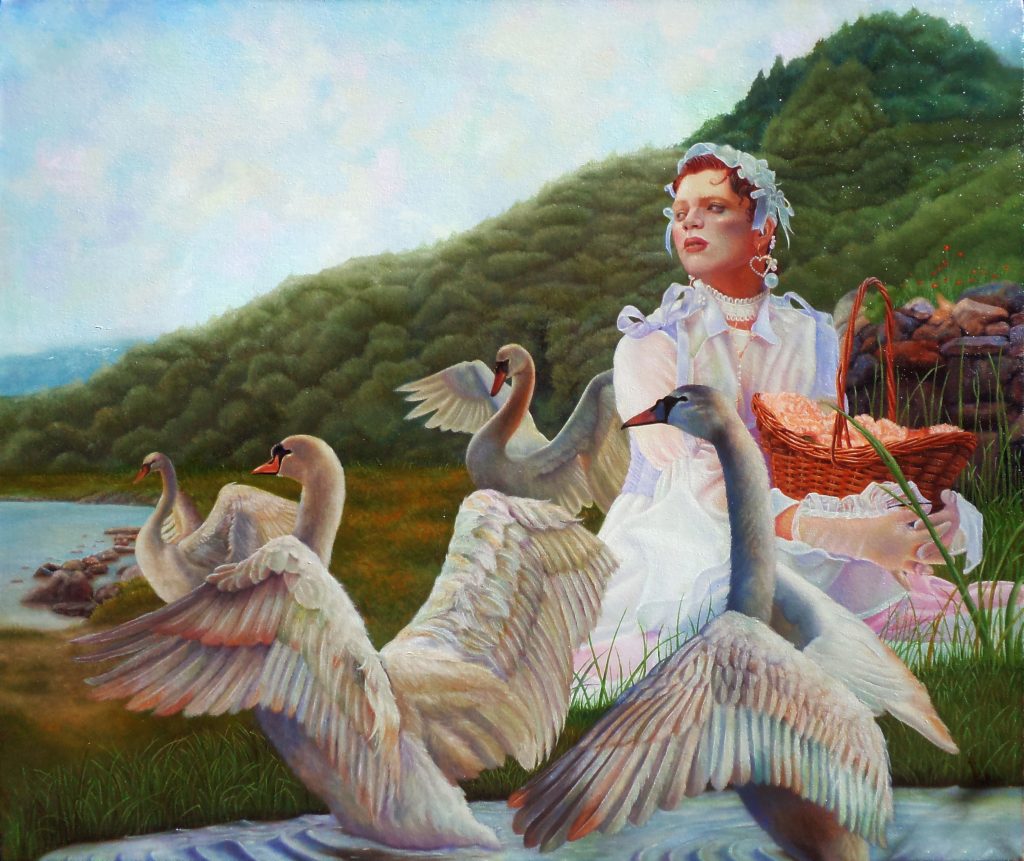
¿Cómo surgen las imágenes de esta muestra? ¿Acaso, a partir de un elemento o, más bien, de una totalidad que requiere ser expresada?
La totalidad de la obra es suma de diversas series realizadas con el paso de los años. Pero las imágenes no surgen cada una como un elemento aislado, sino de una totalidad afectiva y conceptual que busca condensarse. En mi caso, la imagen surge como una necesidad. La acumulación de experiencias, lecturas, memorias corporales y tensiones internas exige luego una forma visible. No se trata de ilustrar una idea previa, sino de permitir que esa totalidad, a veces difusa, a menudo incómoda, encuentre su propia organización en la pintura. El cuadro funciona entonces como un campo donde lo íntimo, lo histórico y lo simbólico se entrelazan.
¿Quién o quiénes son los sujetos representados en las imágenes? ¿Hasta qué punto esta cuestión trasciende lo obvio para abrirnos camino a una comprensión mayor de tu proyecto?
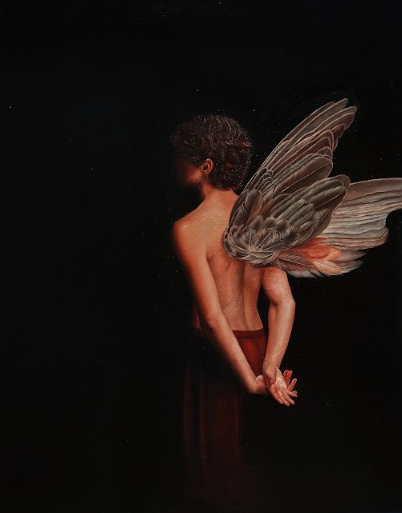
No nos vemos ante retratos en un sentido literal. Los sujetos allí son cuerpos-símbolo, cuerpos atravesados por una experiencia común: la vulnerabilidad, el deseo, la espera, la tensión entre lo que se es y lo que se espera ser. No obstante, puedan leerse como figuras masculinas o andróginas, lo importante no es su identidad fija, sino su condición de cuerpos en tránsito, abiertos a múltiples interpretaciones. De tal manera, el proyecto busca ir más allá de lo individual para tocar una dimensión más amplia: lo personal como colectivo, donde la representación puede identificar al espectador.
He ido trabajando el cuerpo y escenas que narran experiencias individuales o colectivas que buscan contar aspectos que muchos sienten relegados al silencio. Considero que la pintura puede contarlo y perdurar. Por otra parte, no se puede negar que un gran grupo prefiere odiar.
Desde luego, te refieres a la intolerancia agresiva, no a la fácil calificación de odio o, peor, fobia, que se lanza a buena parte de las objeciones racionales más elementales… También se confunde con enorme facilidad sensibilidad con susceptibilidad y victimismo. Es uno de los tantos precios de comerse el rollo identitario. Mejor cuestionar a través de propuestas, mejor discutir…
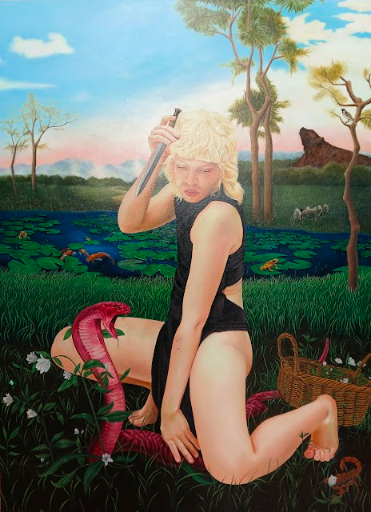
¿La teatralidad de las composiciones abreva de algún arte más allá de la pintura?
Sí, la teatralidad dialoga con otras disciplinas. Hay una clara influencia del cine, y también de lo sacro entendido como puesta en escena. Me interesa la idea del escenario como un espacio de revelación, donde el cuerpo se muestra y se oculta al mismo tiempo. Las poses, los gestos y la iluminación no buscan naturalismo, sino intensificar la carga emocional, como si cada figura estuviera suspendida en un momento decisivo.
Situaciones simbólicas. Tus imágenes son más bien representaciones de tensiones permanentes, expresas a través de cuerpos. ¿Obedece esta tensión a un cambio que no se produce, acaso uno imposible, a una potencial transformación que atraviesa necesariamente el dolor?
La tensión es central en mi trabajo. No se trata de un cambio que se consuma, sino de un estado de transformación latente, muchas veces doloroso. Los cuerpos parecen detenidos en un umbral, atrapados entre la posibilidad y la imposibilidad. El dolor no aparece como espectáculo, sino como condición de circulación: transformar implica fracturarse, exponerse, perder una forma conocida para acceder a otra aún incierta.
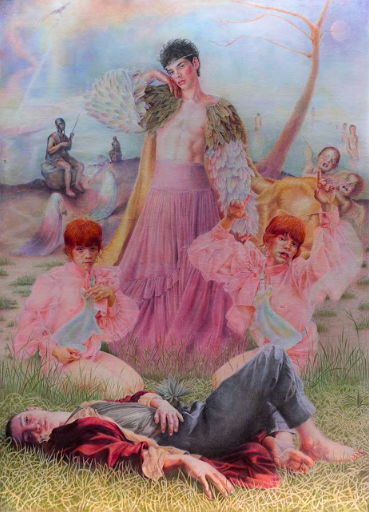
¿Qué hay de la aparente dicotomía entre integridad y fragmentación en tus cuadros?
Se trata de una dicotomía solo aparente. La fragmentación no implica pérdida, sino una forma distinta de integridad. Los cuerpos fragmentados, incompletos o tensionados reflejan una experiencia contemporánea del sujeto: no somos unidades cerradas, sino construcciones inestables. La pintura permite habitar esa contradicción, aceptar que la integridad puede surgir precisamente de la fisura.
¿Con qué otras obras del pasado (influencias) y presentes consideras que dialoga tu propuesta?
Mi trabajo dialoga con lo clásico, el Renacimiento, el Barroco y el Prerrafaelismo, especialmente en el uso del cuerpo como vehículo simbólico. También acusa ecos de Rembrandt o Caravaggio. Entre los artistas contemporáneos que trabajan la intimidad y la identidad, Salman Toor, Kent Monkman; y, por otra parte, también hay de vertientes de la llamada pintura queer actual. En todo caso, no se trata de citas directas, sino de una conversación constante con la historia del arte y sus relecturas desde el presente.
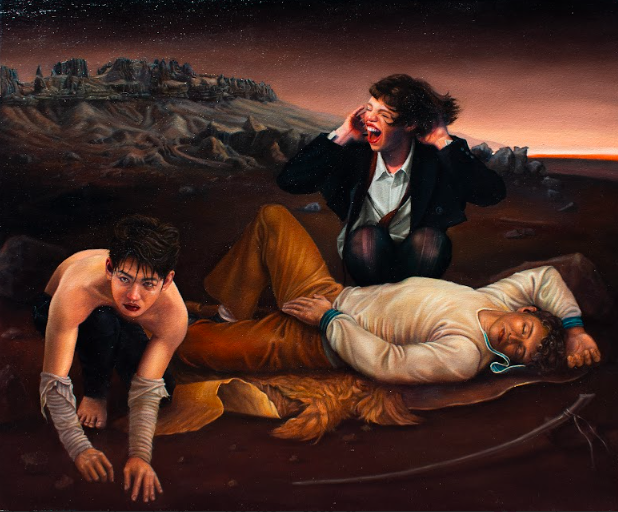
¿Qué sigue a continuación para ti?
Una profundización… Continuar explorando el cuerpo como territorio simbólico, me interesa expandir este lenguaje hacia series más complejas (Los placeres de Adán, Queer Religious), donde la pintura dialogue con otros formatos y donde la tensión no se resuelva, sino que se vuelva cada vez más… consciente.
Son proyectos que he podido presentar fuera del ámbito nacional, especialmente debido a la falta de tolerancia en espacios culturales. Ha resultado más sencillo ir por la internacionalización que por el trabajo de difusión desde aquí mismo.
Que cada propuesta diga por sí mismo lo suyo, siempre que no se quede en apelación ideológica o mera provocación…
ENGLISH VERSION
To Be Explored: A Conversation with Wálther Sánchez About His Work
Translation by Rebeca Sanz
It is well known that a large part of current artistic trends obey, now without disguise, the most elementary norms of the market. Suddenly, a form of expression or a type of representation, if not a particular motif, becomes especially exploitable, either because it proves provocative in a certain context or because it allows for quick identification by the public, in any case from an elementary sensibility. This sort of reflection, when limited to confirming what the viewer already expects, pleasing them, barely results in a consumer product, whereas, if it serves to seduce them, and then leads to their questioning, it transcends the situation that fostered its appearance and rises to the category of art.
For decades, especially due to the clientelism of most educational institutions—thus turned into fields of ideological promotion—more or less similar versions of the same identitarian tribal rhetoric have resonated—although the characteristic scandal-seeking fervor of the early years has somewhat diminished. However, the questioning of the conception of man as a transcendent creature beyond the biological, subject to one society or another, increasingly divided among different associations, each with its own norms, and condemned both by his undeniable nature and by his conceptual and creative capacity, still requires much exploration.
In this sense, Walther Sánchez proposes a series of dramatic scenes as interrogative wells. We spoke with him about this and other projects.
How do the images in this exhibition arise? From an element, or rather, from a totality that needs to be expressed?
The totality of the work is the sum of various series created over the years. But the images do not arise each as an isolated element, but from an affective and conceptual totality that seeks to condense itself. In my case, the image arises from a necessity. The accumulation of experiences, readings, bodily memories, and internal tensions later demands a visible form. It is not about illustrating a prior idea, but about allowing that totality, sometimes diffuse, often uncomfortable, to find its own organization in painting. The painting then functions as a field where the intimate, the historical, and the symbolic intertwine.
Who or what are the subjects represented in the images? To what extent does this question transcend the obvious to pave the way for a greater understanding of your project?
We are not looking at portraits in a literal sense. The subjects there are body-symbols, bodies traversed by a common experience: vulnerability, desire, waiting, the tension between what one is and what one is expected to be. However much they may be read as masculine or androgynous figures, what is important is not their fixed identity, but their condition as bodies in transit, open to multiple interpretations. Thus, the project seeks to go beyond the individual to touch a broader dimension: the personal as collective, where the representation can identify with the viewer.
I have been working with the body and scenes that narrate individual or collective experiences which seek to tell aspects that many feel are relegated to silence. I believe painting can tell this and endure. On the other hand, one cannot deny that a large group prefers to hate.
Of course, you’re referring to aggressive intolerance, not the easy label of hate or, worse, phobia, which is thrown at a large part of the most elementary rational objections… Sensitivity is also very easily confused with susceptibility and victimhood. It’s one of the many costs of swallowing the identitarian rhetoric. Better to question through proposals, better to discuss…
Does the theatricality of the compositions draw from any art beyond painting?
Yes, the theatricality dialogues with other disciplines. There is a clear influence from cinema, and also from the sacred understood as staging. I am interested in the idea of the stage as a space of revelation, where the body is shown and hidden at the same time. The poses, gestures, and lighting do not seek naturalism, but to intensify the emotional charge, as if each figure were suspended in a decisive moment.
Symbolic situations. Your images are rather representations of permanent tensions, expressed through bodies. Does this tension obey a change that does not occur, perhaps an impossible one, or a potential transformation that necessarily passes through pain?
Tension is central to my work. It is not about a change that is consummated, but about a state of latent transformation, often painful. The bodies seem stopped at a threshold, trapped between possibility and impossibility. Pain does not appear as spectacle, but as a condition of circulation: to transform implies fracturing, exposing oneself, losing a known form to access another still uncertain one.
What about the apparent dichotomy between integrity and fragmentation in your paintings?
It is a dichotomy only in appearance. Fragmentation does not imply loss, but a different form of integrity. Fragmented, incomplete, or tensioned bodies reflect a contemporary experience of the subject: we are not closed units, but unstable constructions. Painting allows us to inhabit that contradiction, to accept that integrity can arise precisely from the fissure.
With which other works of the past (influences) and present do you consider your proposal dialogues?
My work dialogues with the classical, the Renaissance, the Baroque and the Pre-Raphaelites, especially in the use of the body as a symbolic vehicle. It also echoes Rembrandt or Caravaggio. Among contemporary artists who work with intimacy and identity, Salman Toor, Kent Monkman; and, on the other hand, there are also elements from so-called current queer painting. In any case, it is not about direct quotes, but about a constant conversation with art history and its rereadings from the present.
What comes next for you?
A deepening… To continue exploring the body as a symbolic territory, I am interested in expanding this language towards more complex series (The Pleasures of Adam, Queer Religious), where painting dialogues with other formats and where the tension is not resolved, but becomes increasingly… conscious.
These are projects I have been able to present outside the national sphere, especially due to a lack of tolerance in cultural spaces. It has proven simpler to pursue internationalization than to work on dissemination from here itself.
May each proposal speak for itself, as long as it does not remain in ideological appeal or mere provocation…