Personalidad por sobre identidad: Aproximación a la muestra «Halfbreed» de Nahanni McKay
Por Juan Pablo Torres Muñiz
Personalidad por sobre identidad: Aproximación a la muestra «Halfbreed» de Nahanni McKay
La fotografía intervenida, como práctica que trasciende la mera captura para convertirse en un acto de inscripción sobre la imagen, tiene una larga tradición en el arte de vanguardia. Desde los collages dadá que yuxtaponían fragmentos de realidad impresa hasta las apropiaciones de la Escuela de Düsseldorf, pasando por las capas de sentido de artistas como John Stezaker, la intervención ha servido para cuestionar la propia naturaleza del medio fotográfico, su pretensión de objetividad y su relación con la memoria y la historia. La obra de Nahanni McKay, particularmente en su serie Halfbreed, se inscribe en esta genealogía con algo más que simple superposición formal. Excava en las capas de la historia colonial para producir un texto visual donde el documento oficial y la imagen documental se confrontan en una tensión que no busca resolverse, sino exponerse. La artista, lejos de limitarse a una confesión personal, emplea la hibridación como un medio para hacer visible lo que la historia oficial ha pretendido silenciar, situando su práctica como una forma de interrogar los fundamentos mismos de la personalidad, la identidad y la pertenencia.
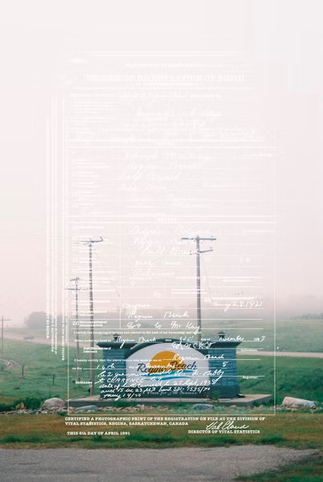
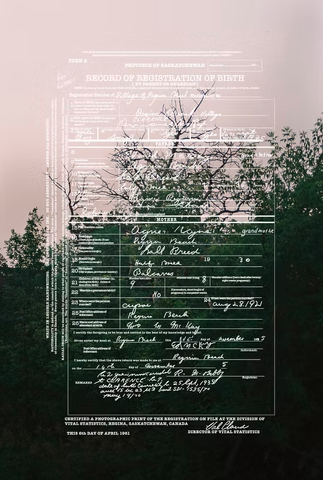
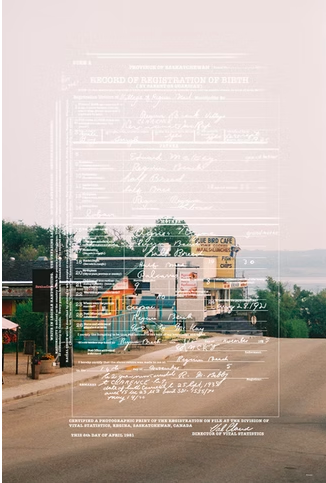
La obra se sitúa en un conflicto racial específico y fundacional de la historia de Canadá: el de la población métis, descendiente del mestizaje entre europeos (mayoritariamente franceses, escoceses e ingleses) y pueblos indígenas (principalmente cree y ojibwe), que se consolidó como una nación política y cultural propia en el siglo XIX. El término «halfbreed» —equivalente despectivo a «mestizo»— fue el instrumento lingüístico del régimen colonial canadiense (heredero del Imperio Británico) para clasificar, administrar y, en última instancia, desposeer a esta población que no encajaba en la dicotomía «blanco» frente a «indio». La obra de McKay se centra en el territorio del Oeste de Canadá —Manitoba, Saskatchewan y el noroeste de Ontario—, cuna de la Nación Métis y escenario de la resistencia del Río Rojo y de la única adhesión colectiva métis a un tratado en la historia del país: la Halfbreed Adhesion to Treaty No. 3 de 1875. Al «retrazar» el certificado de nacimiento de su abuelo y superponerlo sobre el paisaje de Regina Beach (Saskatchewan) —el lugar donde su familia, originaria del asentamiento del Río Rojo, se estableció—, McKay no solo documenta una genealogía personal, sino que expone la maquinaria burocrática que usó el lenguaje racial para fragmentar comunidades, imponer categorías jurídicas y negar derechos territoriales.
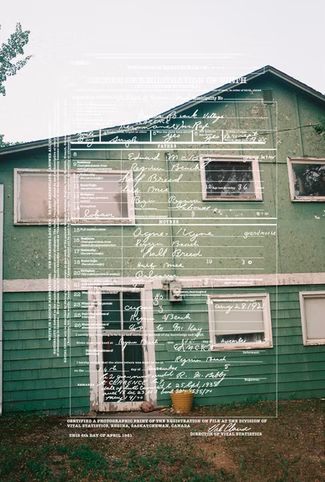
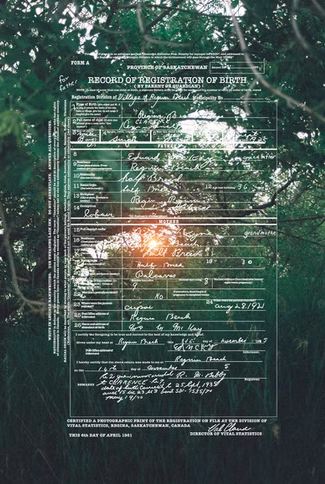
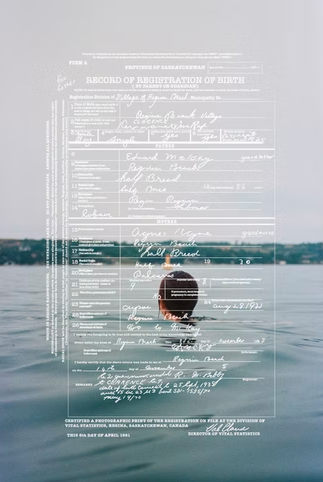
Así, la temática central de Halfbreed aborda la fractura entre la personalidad, una construcción racional, producto del enfrentamiento con la vida misma, y la identidad en dos acepciones: como construcción burocrática y vivencia territorial. La obra se articula alrededor del acto de «retrazar» un certificado de nacimiento que clasifica a sus antepasados con un término de profunda carga colonial, y superponerlo sobre fotografías de un sereno paisaje concreto. Un cuestionamiento sistemático de varias instituciones que organizan nuestra percepción del mundo. Interroga el contraste entre la realidad entendida desde la escritura (la visión esquemática del certificado, un signo de clasificación) y la realidad que se consigue a través de la cámara. El certificado es un acto de violencia epistémica, un intento de fijar a la persona en una identidad considerada «ilegítima» bajo la lógica del estado colonial. La fotografía del paisaje, por el contrario, aunque también es una reducción de la realidad material, está cargada de una fuerza afectiva y subjetiva; es el lugar de la memoria, de la conexión con el territorio. Al superponer la opresión del signo sobre la serenidad del paisaje, McKay no busca documentar un lugar, sino desvelar el conflicto histórico que subyace a esa tierra apacible. Pero, paradójicamente, en una composición armónica.
Aquí, la vivencia de pertenecer a dos mundos, de lidiar con la mirada escrutadora que cuestiona la autenticidad, se transforma en experiencia a través de un proceso de configuración racional. La obra se convierte en el archivo de esa transformación, en el medio por el cual McKay no solo narra, sino que constituye su propia personalidad por encima de toda supuesta identidad, y ante un público que, a través de la lectura de la imagen, se ve invitada a exigir explicaciones. La experiencia se vuelve una narración material que no necesita ser defendida, sino que se impone por su evidencia y sus efectos. La artista se apropia del término peyorativo para desactivar su poder, reelaborando su significado a través de una intervención crítica que pone en evidencia cómo el lenguaje, en este caso, el colonial impregna los documentos más íntimos, transformando la identidad, pero no por sobre la personalidad, que aquí integra todo en una visión serena, contradictoria, compleja, rica en matices.
Esta mirada se extiende al cuestionamiento de la memoria y la narrativa personal como un afán de orden frente a lo inaprensible. La personalidad de la artista supera por mucho cuanto se espera de una cédula o un currículo; entretanto, su identidad queda marcada del modo más primitivo por su color de piel y una apariencia que no «coincide» con el estereotipo. La memoria familiar, documentada en el certificado, choca con una realidad presente que a menudo le exige probar su autenticidad. El cuestionamiento es enormemente sofisticado: el arte se erige entonces como una «creación de sentido» que busca una plenitud de significado frente a la fragmentación impuesta por la historia. La obra se convierte así en una forma de componer por sobre las así llamadas «narrativas», procurando coherencia a la vivencia, ofreciendo una respuesta visual y material a la pregunta sobre la pertenencia, sin necesidad de caer en el esencialismo o la victimización.
La técnica empleada por McKay es el vehículo perfecto para este cuestionamiento. La fotografía de paisajes posee una cualidad documental que habla de una experiencia directa, de un encuentro con el lugar del que la escritura oficial solo ofrece una versión clasificatoria. La factura es deliberadamente clásica y remite a la tradición documental de la escuela de la New Topographics. McKay emplea una cámara de formato medio, probablemente analógica, que le permite obtener un negativo de gran superficie y, con él, una gama tonal extraordinariamente rica en matices. La profundidad de campo es total, de modo que tanto los primeros planos como los horizontes lejanos aparecen nítidos, invitando a una exploración minuciosa de la superficie de la imagen. La luz es natural, predominantemente de la hora dorada, lo que confiere a los paisajes una atmósfera de serenidad casi bucólica, acentuada por la elección de una paleta cromática de tonos terrosos y azules atenuados. Esta elección estética constituye la base sobre la que McKay va a operar su intervención. Al presentar sus fotografías en un formato de gran tamaño, la artista otorga a estos paisajes una presencia casi monumental, que contrasta fuertemente con la naturaleza del documento sobreimpreso.
La artista no digitaliza el documento para integrarlo de manera uniforme, sino que lo «retraza» y lo superpone, una acción que evidencia la intervención manual, la reescritura de la historia. Es un acto que recuerda a las prácticas del collage y el fotomontaje, donde la yuxtaposición no busca la armonía, sino el conflicto productivo. La elección de este método supera la mera ilustración: el acto de calcar el certificado sobre la fotografía es una forma de reclamar el espacio para la memoria, de sobreescribir la historia oficial con la historia vivida. La obra se exhibe en una galería, convirtiendo un documento íntimo en un texto público. Un esquema simbólico de gran potencia: el signo escrito y la imagen fotográfica no se complementan, sino que se enfrentan en una dialéctica que expone la estructura de poder subyacente a ambos lenguajes, revelando que la identidad es siempre un territorio en disputa. Entre otras cosas…
[Todas las imágenes, del sitio web de la artista: https://www.nahannimckay.com/]
(ENGLISH VERSION)
Personality over Identity: An Approach to the «Halfbreed» Exhibition by Nahanni McKay
Translation by Tiffany Amber Elías Trimble
Intervened photography, as a practice that transcends mere capture to become an act of inscription upon the image, has a long tradition in avant-garde art. From Dadaist collages that juxtaposed fragments of printed reality to the appropriations of the Düsseldorf School, passing through the layers of meaning of artists like John Stezaker, intervention has served to question the very nature of the photographic medium, its claim to objectivity, and its relationship with memory and history. The work of Nahanni McKay, particularly in her series Halfbreed, belongs to this genealogy with something more than mere formal superimposition. It delves into the layers of colonial history to produce a visual text where the official document and the documentary image confront each other in a tension that does not seek resolution, but exposure. The artist, far from limiting herself to a personal confession, employs hybridization as a means to make visible what official history has sought to silence, situating her practice as a way of interrogating the very foundations of personality, identity, and belonging.
The work is situated within a specific and foundational racial conflict in Canadian history: that of the Métis population, descended from the mixing of Europeans (mostly French, Scottish, and English) and Indigenous peoples (primarily Cree and Ojibwe), who consolidated as a political and cultural nation in the 19th century. The term «halfbreed» —a derogatory equivalent to «mestizo»— was the linguistic instrument of the Canadian colonial regime (heir to the British Empire) to classify, administer, and ultimately dispossess this population that did not fit the «white» versus «Indian» dichotomy. McKay’s work focuses on the territory of Western Canada —Manitoba, Saskatchewan, and northwestern Ontario—, cradle of the Métis Nation and setting for the Red River Resistance and the only collective Métis adhesion to a treaty in the country’s history: the Halfbreed Adhesion to Treaty No. 3 of 1875. By «retracing» her grandfather’s birth certificate and superimposing it onto the landscape of Regina Beach (Saskatchewan) —where her family, originally from the Red River settlement, settled—, McKay not only documents a personal genealogy but exposes the bureaucratic machinery that used racial language to fragment communities, impose legal categories, and deny territorial rights.
Thus, the central theme of Halfbreed addresses the fracture between personality, a rational construction, the product of confrontation with life itself, and identity in two senses: as a bureaucratic construction and as a territorial experience. The work is articulated around the act of «retracing» a birth certificate that classifies her ancestors with a term of profound colonial weight, and superimposing it onto photographs of a serene, specific landscape. A systematic questioning of several institutions that organize our perception of the world. It interrogates the contrast between reality understood through writing (the schematic vision of the certificate, a sign of classification) and the reality achieved through the camera. The certificate is an act of epistemic violence, an attempt to fix the person within an identity considered «illegitimate» under the logic of the colonial state. The landscape photograph, on the other hand, although also a reduction of material reality, is charged with an affective and subjective force; it is the place of memory, of connection with the territory. By superimposing the oppression of the sign onto the serenity of the landscape, McKay does not seek to document a place, but to unveil the historical conflict underlying that peaceful land. Paradoxically, however, within a harmonious composition.
Here, the experience of belonging to two worlds, of dealing with the scrutinizing gaze that questions authenticity, is transformed into experience through a process of rational configuration. The work becomes the archive of that transformation, the means by which McKay not only narrates but constitutes her own personality above any supposed identity, and before a public that, through the reading of the image, is invited to demand explanations. Experience becomes a material narrative that does not need to be defended, but rather imposes itself through its evidence and its effects. The artist appropriates the pejorative term to deactivate its power, reworking its meaning through a critical intervention that reveals how language, in this case colonial language, permeates the most intimate documents, transforming identity, but not at the expense of personality, which here integrates everything into a serene, contradictory, complex vision, rich in nuances.
This perspective extends to the questioning of memory and personal narrative as a desire for order in the face of the ungraspable. The artist’s personality far exceeds what is expected of a birth certificate or a curriculum vitae; meanwhile, her identity is marked in the most primitive way by her skin color and an appearance that does not «match» the stereotype. Family memory, documented in the certificate, clashes with a present reality that often demands she prove her authenticity. The questioning is enormously sophisticated: art then stands as a «creation of meaning» that seeks a fullness of meaning in the face of the fragmentation imposed by history. The work thus becomes a way of composing above the so-called «narratives,» seeking coherence for lived experience, offering a visual and material response to the question of belonging, without needing to fall into essentialism or victimization.
The technique employed by McKay is the perfect vehicle for this questioning. The landscape photographs possess a documentary quality that speaks of a direct experience, of an encounter with the place of which official writing only offers a classificatory version. The execution is deliberately classical and refers to the documentary tradition of the New Topographics school. McKay employs a medium-format camera, probably analog, which allows her to obtain a large-format negative and, with it, an extraordinarily rich tonal range full of nuances. Depth of field is total, so that both foregrounds and distant horizons appear sharp, inviting a meticulous exploration of the image’s surface. The light is natural, predominantly from the golden hour, which gives the landscapes an almost bucolic serenity, accentuated by the choice of a chromatic palette of earthy tones and muted blues. This aesthetic choice constitutes the basis upon which McKay will operate her intervention. By presenting her photographs in a large format, the artist gives these landscapes an almost monumental presence, which contrasts strongly with the nature of the overprinted document.
The artist does not digitize the document to integrate it uniformly, but rather «retraces» it and superimposes it, an action that evidences manual intervention, the rewriting of history. It is an act reminiscent of the practices of collage and photomontage, where juxtaposition does not seek harmony, but productive conflict. The choice of this method goes beyond mere illustration: the act of tracing the certificate over the photograph is a way of reclaiming space for memory, of overwriting official history with lived history. The work is exhibited in a gallery, turning an intimate document into a public text. A symbolic scheme of great power: the written sign and the photographic image do not complement each other, but rather confront each other in a dialectic that exposes the power structure underlying both languages, revealing that identity is always a disputed territory. Among other things…