Perecible, finito, y parcial: Aproximación a la muestra «West of the river», de Christian Badach
Por Juan Pablo Torres Muñiz
Se dice que cada quien es dueño de su tiempo. ¿Qué porción? El orden del reloj y el calendario, esa invención humana tan precisa como arbitraria, se corresponde con el ajuste del mundo, más allá, pero también a través de nosotros, incluido el sueño —bien sabemos del ciclo circadiano—. Cuando algo falla (una enfermedad, una mudanza a un lugar sin vecinos, un invierno que no deja salir de casa) advertimos que bajo el tiempo de los relojes corre otro, el de las estaciones y el cuerpo, que nuestras instituciones apenas logran domesticar. Ese desajuste entre dos temporalidades, y lo que le ocurre a la persona obligada a habitar entre ambas, es el terreno abordado aquí por Christian Badach. Astutamente.
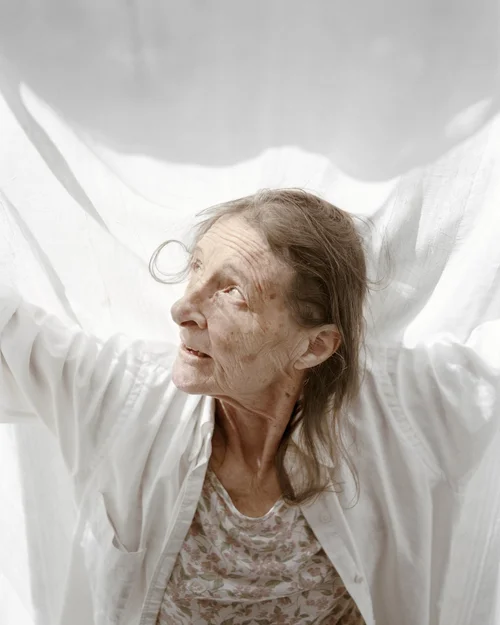
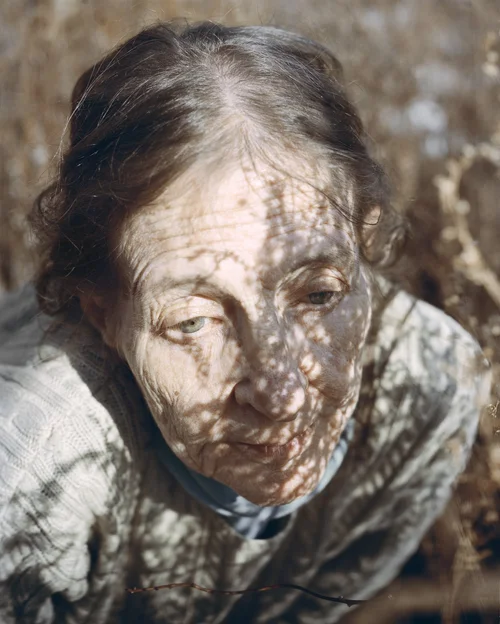
Badach (1999) es un fotógrafo estadounidense criado en los suburbios de Nueva Jersey, que vive entre un pueblo diminuto de Massachusetts occidental y New Haven. West of the River sigue la vida de Cedar, una mujer con trastorno de hipermovilidad, para descifrar cómo los ciclos estacionales conceden o restringen el movimiento y alteran sus emociones y conducta. Ante algo así, el repertorio temático de enfermedad, cuidado, fragilidad, nostalgia rural, etcétera, limita considerablemente la interpretación de la obra, que atraviesa esos tópicos para hendir el dedo en la llaga mucho más allá.
Un testimonio documenta una vivencia, y la vivencia, por sí sola, no cuestiona nada. Aquí, lo que vemos directamente en entredicho es el tiempo como institución, ese sistema abstracto de calendarios, horarios y plazos que asumimos natural, confundiendo el fenómeno, la complejidad de la realidad, con las razones y la instrumentación de la que nos servimos para operar en la vida. Cedar lo señala con los títulos, que sustituyen la fecha por la estación, en cada caso. Y es que el cambio de las condiciones del ambiente carece de número. ¿Qué precio paga quien no logra plegarse a la convención? ¿Hasta qué punto aproximarse a la vida de Cedar mediante la fotografía de Badach conlleva atravesar el espacio intermedio, obviar los términos normativos y atisbar así el envés institucional de nuestro mundo, todavía vivo, palpitante?
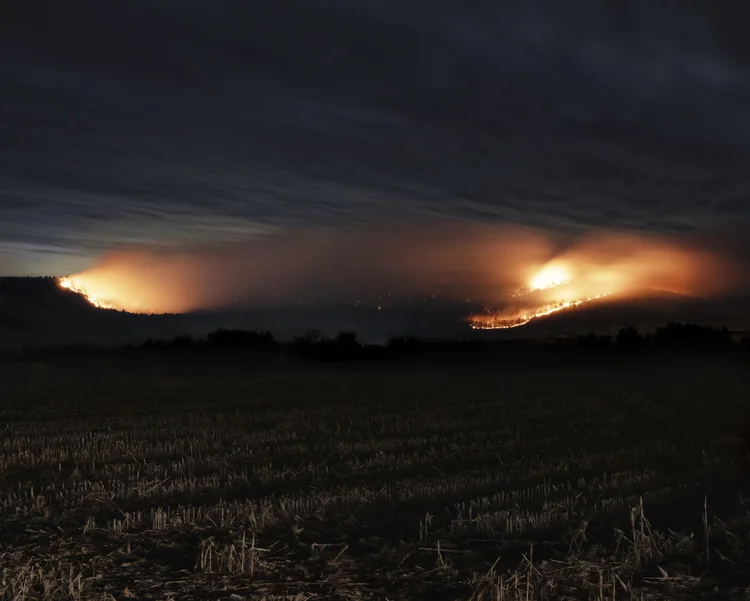
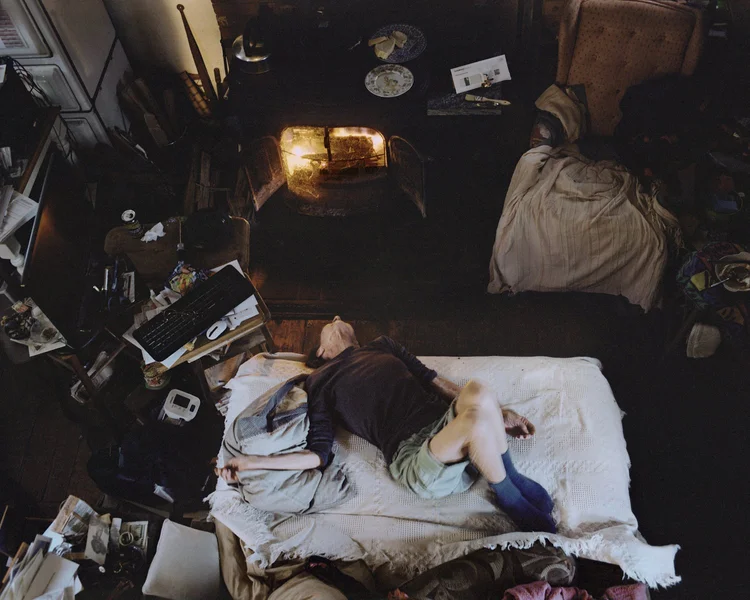
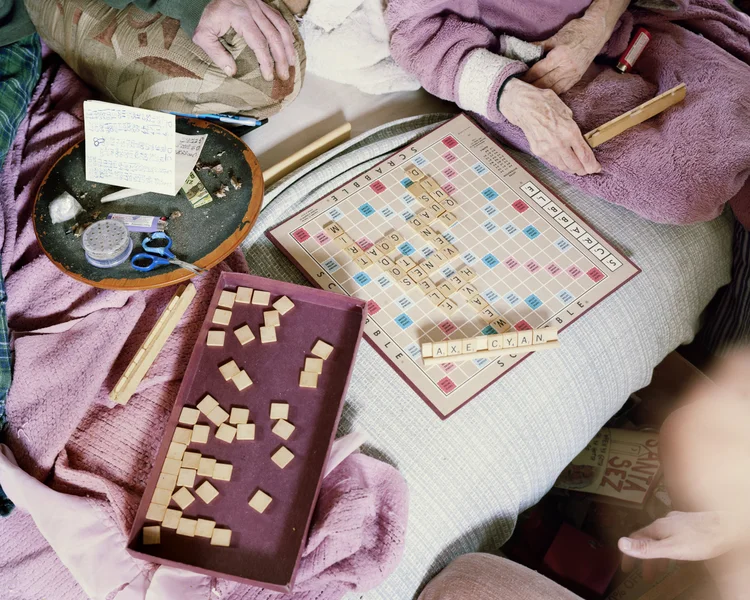
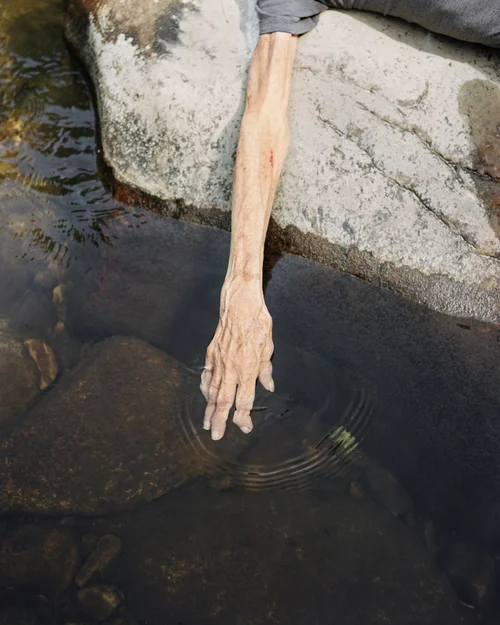
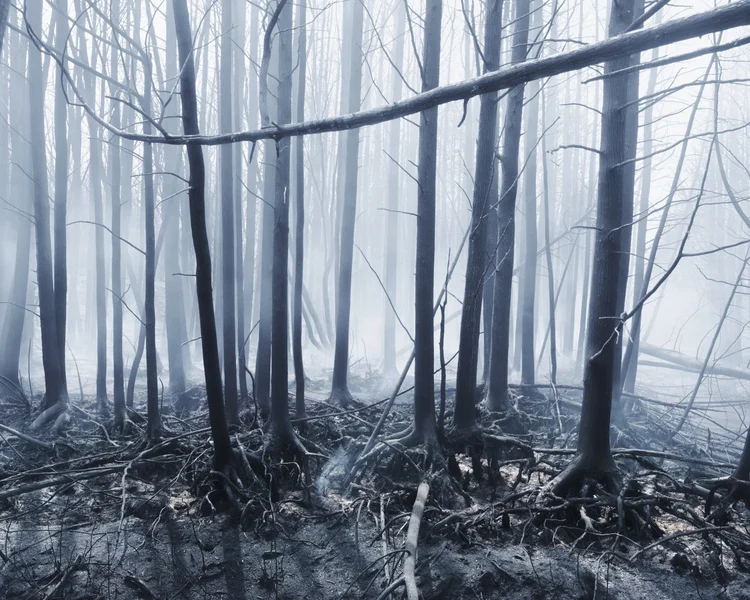
Badach encontró un paisaje salvaje e intacto; no obstante, a través de la técnica, ofrece una serie de espacios parcialmente ficcionalizados. He aquí el peso de su elección de qué representar y qué no, y cómo hacerlo. En efecto, busca fotografiar el entorno como lo recordaría quien no podrá detenerse en él, exagerando, por tanto, su aparente belleza: un engrandecimiento de la vivencia mediante la experiencia. Tanto de los exteriores como de los interiores… Bosque allá y desorden mobiliario aquí, geometría espontánea y rasgos armónicos en uno y otro lado: ora sí y ora no, ¿según qué criterios? El mundo que rodea y bien conoce Cedar lo envuelve al margen de categorizaciones sencillas, merced de la técnica del artista, que se las arregla para fusionar paisaje agreste y domesticidad.
La casa es ajena a quien la penetra y ve en ella: el fotógrafo y Cedar no son parientes. La ayuda que el artista brinda a quien retrata difícilmente podría ser considerada, sin más, como caridad; mucho menos como responsabilidad ineludible. Hay algo de la relación que fructifica en la obra y, aunque no constituye un pago, reclama consideración además de la compañía y, acaso, la compasión. ¿Hasta qué punto asistimos a un montaje parcial, a una exposición didáctica, o, en cambio, a una muestra fiel de auténtica vida marginal, si quien ve y captura las imágenes interviene en ellas adoptando en parte la perspectiva de su modelo y guía?
El entorno, la casa, el cuerpo. Se trata de límites. Todos aquí, retados. La hipermovilidad es, por definición, exceso respecto de un rango convencional de movimiento, y señala sin querer que lo «normal» es un umbral trazado por la costumbre y la estadística. Nos vemos ante una circunstancia inusual que, como tal, acaba imponiendo una suerte de deber para quien pretenda acceder a la verdad: ver, sino por dentro, desde lo más cerca posible, qué ocurre allí: qué posibilidades se desarrollan detrás del reloj, el calendario, las visitas sociales y la supervisión por el pago de servicios, más allá de donde se tienden nuestras extremidades a por abrigo, cuando el invierno nos reta, y del otro lado de la puerta, en la carretera, atravesado el insomnio. ¿Qué implica ser consciente de la capacidad de exponer una imagen verdaderamente confrontativa? ¿Qué hay, allí, del arte de la fotografía?
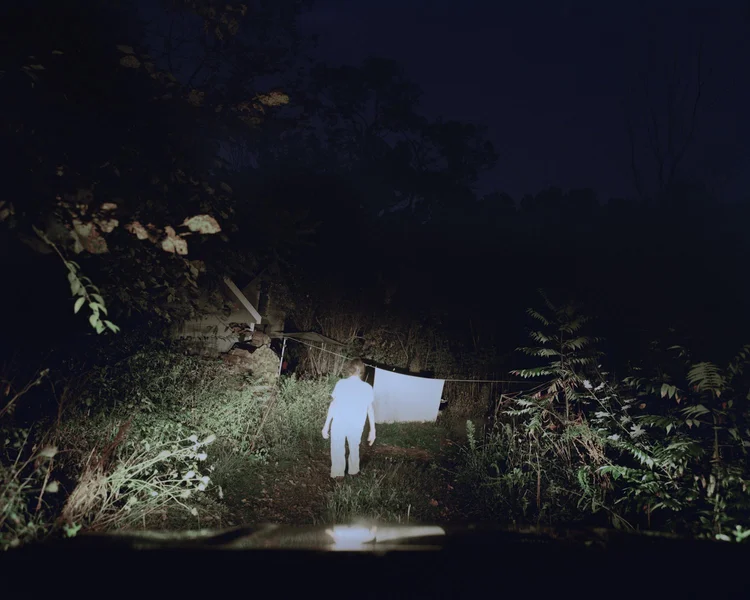
Badach recurre a los códigos visuales del mito; metaforiza y se sirve de atmósferas preñadas de ambigüedad. El realismo es aquí un efecto, no un presupuesto. Esto introduce una tensión clara: el autor se desplaza con libertad entre varios estados mientras su protagonista ve restringido el movimiento por la estación y por su propia condición física. La colaboración declarada entre artista y protagonista debería arribar a cierto equilibrio, pero no es el caso: la voluntad de control del autor se enfrenta a un cuerpo que se resiste a ser controlado. He aquí la fricción más honda del conjunto.
La pregunta por cómo se comunica todo esto, nos refiere a la técnica. Operan sobre todo tres decisiones de oficio. La primera es el encuadre por exclusión: al recortar lo que delata el presente corriente, el paisaje queda reducido a sus elementos primarios, y la omisión pesa tanto como la inclusión. La segunda es el tratamiento tonal y cromático, que se carga en la copia y en el retoque hasta rebasar lo que el ojo vio, de manera que la belleza aparente se engrandece y la vivencia, en rigor breve y fugaz, adquiere la densidad de una experiencia. La tercera es la atmósfera ambigua, fruto de la aplicación del mismo régimen: los interiores, que Badach ha abordado también como naturalezas muertas, se encuadran, se iluminan y se entonan como el campo, con una paleta y una secuencia sostenidas por el «contenedor» del proyecto, de manera que el umbral entre el adentro y el afuera se vuelve continuo. ¿Qué usa…? Una cámara de gran formato analógico, lo que le otorga un control exhaustivo de la perspectiva y la atmósfera, así como construir composiciones de una quietud deliberada, donde cada elemento dentro del encuadre cumple una función narrativa o simbólica. Tras la captura, el fotógrafo escanea los negativos para intervenirlos digitalmente. La iluminación en su obra se caracteriza por un gran uso de la luz natural, a menudo difusa, que atraviesa y comunica entre sí los espacios. Esta elección lumínica busca la traducción visual de una exageración emocional, creando ambientes que oscilan entre la comodidad del testigo y una sutil inquietud.
Lo que llamamos natural jamás nos llega sin mediación institucional, ni siquiera en el pueblo más remoto. Nadie se desnuda sin haber portado antes prendas. Y en este caso, nacimos con ellas. Hay personas cuyo cuerpo las obliga a vivir esa mediación como conflicto en lugar de hábito. Para acceder a éste, el ojo del artista. Intruso, quiérase o no. Dado que cuestiona…
[Todas las imágenes, del sitio Web del artista: https://www.christianbadach.com/]
(ENGLISH VERSION)
Perishable, Finite, and Artificial: An Approach to the Exhibition «West of the River,» by Christian Badach
Translation by Tiffany Amber Elías Trimble
It is said that each person is the owner of their time. What portion? The order of the clock and the calendar, that human invention as precise as it is arbitrary, corresponds to the adjustment of the world, beyond, but also through us, including sleep —we know well of the circadian cycle—. When something fails (an illness, a move to a place without neighbors, a winter that does not let one leave the house) we notice that beneath the time of clocks runs another, that of the seasons and the body, which our institutions barely manage to domesticate. That mismatch between two temporalities, and what happens to the person obliged to inhabit between both, is the terrain addressed here by Christian Badach. Astutely.
Badach (1999) is an American photographer raised in the suburbs of New Jersey, who lives between a tiny town in western Massachusetts and New Haven. West of the River follows the life of Cedar, a woman with hypermobility disorder, to decipher how seasonal cycles grant or restrict movement and alter her emotions and conduct. Faced with something like this, the thematic repertoire of illness, care, rural nostalgia, and so on, considerably limits the interpretation of the work, which traverses those topics to sink its finger into the wound much further.
A testimony documents a lived experience, and lived experience, by itself, questions nothing. Here, what we see directly called into question is time as an institution, that abstract system of calendars, schedules, and deadlines that we assume natural, confusing the phenomenon, the complexity of reality, with the reasons and the instrumentation we use to operate in life. Cedar points to it with the titles, which substitute the date for the season, in each case. And it is that the change of environmental conditions lacks a number. What price does whoever fails to fold themselves to the convention pay? To what extent does approaching Cedar’s life through Badach’s photography entail traversing the intermediate space, bypassing normative terms, and thus glimpsing the institutional underside of our world, still alive, throbbing?
Badach found a wild and intact landscape; nevertheless, through technique, he offers a series of partially fictionalized spaces. Here is the weight of his choice of what to represent and what not, and how to do it. Indeed, he seeks to photograph the environment as it would be remembered by someone who will not be able to pause in it, exaggerating, therefore, its apparent beauty: an enlargement of lived experience through experience. Both of exteriors and interiors… Forest over there and furniture disorder here, spontaneous geometry and harmonious features on both sides: now yes and now no, according to what criteria? The world that surrounds and well knows Cedar envelops it on the margin of simple categorizations, thanks to the artist’s technique, which manages to fuse rugged landscape and domesticity.
The house is foreign to whoever penetrates it and sees in it: the photographer and Cedar are not relatives. The help that the artist provides to whom he portrays could hardly be considered, without more, as charity; much less as inescapable responsibility. There is something of the relationship that fructifies in the work and, although it does not constitute a payment, it claims consideration in addition to company and, perhaps, compassion. To what extent are we witnessing a partial montage, a didactic exhibition, or, on the contrary, a faithful display of authentic marginal life, if whoever sees and captures the images intervenes in them adopting in part the perspective of their model and guide?
The environment, the house, the body. These are limits. All here, challenged. Hypermobility is, by definition, excess with respect to a conventional range of movement, and it points, without intending to, to the fact that the «normal» is a threshold traced by custom and statistics. We find ourselves before an unusual circumstance that, as such, ends up imposing a kind of duty on whoever intends to access the truth: to see, if not from within, from as close as possible, what happens there: what possibilities develop behind the clock, the calendar, social visits, and supervision by payment for services, beyond where our limbs reach for warmth, when winter challenges us, and on the other side of the door, on the road, having crossed insomnia. What does it imply to be conscious of the capacity to expose a truly confrontational image? What is there, there, of the art of photography?
Badach resorts to the visual codes of myth; he metaphorizes and avails himself of atmospheres pregnant with ambiguity. Realism is here an effect, not a presupposition. This introduces a clear tension: the author moves freely among various states while his protagonist sees movement restricted by the season and by her own physical condition. The declared collaboration between artist and protagonist should arrive at a certain equilibrium, but that is not the case: the author’s will to control confronts a body that resists being controlled. Here is the deepest friction of the whole.
The question of how all this is communicated refers us to technique. Three craft decisions operate above all. The first is framing by exclusion: by cropping what betrays the current present, the landscape is reduced to its primary elements, and the omission weighs as much as the inclusion. The second is the tonal and chromatic treatment, which is loaded in the print and in the retouching until it surpasses what the eye saw, so that apparent beauty is enlarged and lived experience, strictly brief and fleeting, acquires the density of an experience. The third is the ambiguous atmosphere, fruit of the application of the same regime: the interiors, which Badach has also approached as still lifes, are framed, lit, and toned like the countryside, with a palette and a sequence sustained by the project’s «container,» so that the threshold between inside and outside becomes continuous. What does he use…? A large-format analog camera, which grants him exhaustive control of perspective and atmosphere, as well as constructing compositions of a deliberate stillness, where each element within the frame fulfills a narrative or symbolic function. After capture, the photographer scans the negatives to intervene in them digitally. The lighting in his work is characterized by a great use of natural light, often diffuse, which traverses and communicates spaces with one another. This luminous choice seeks the visual translation of an emotional exaggeration, creating environments that oscillate between the witness’s comfort and a subtle unease.
What we call natural never reaches us without institutional mediation, not even in the most remote town. No one undresses without having first worn clothes. And in this case, we were born with them. There are people whose body obliges them to live that mediation as conflict instead of habit. To access this, the artist’s eye. Intruder. Since it questions…