
Pasar, permanecer: Conversación con Angie Stergio sobre su obra
Por Juan Pablo Torres Muñiz
Nuestra presencia en el mundo deja a menudo mucho menos impacto que el que esperamos. O todo lo contrario. De determinarlo, dicen, se encarga la Historia. Pero esta sí que es relativa; no la escriben los vencedores, sino los sobrevivientes, y aquí tenenos ya una pauta importante para nuestra ponderación. La consistencia de nuestra marcha por la vida es discutible, por decir lo menos. El destino, en realidad, no pide nada de nadie, no le exige cosas, como dicen que hace; solo sucede; somos partícipes suyos precipitando ora unos ora otros hechos, aunque a veces conscientemente, sin saber nunca su impacto real ni mucho menos su alcance ulterior. Esto no nos hace sombras, para nada. Es la luz de nuestra propia mirada la que alumbra esa misma realidad de la que hablamos y nos permite asombrarnos, perseguir entenderla, pretender comprenderla. Nuestra huella en el tiempo, por si fuera poco, es el tiempo mismo: nosotros creamos esta medida, en realidad. La imagen de un cuerpo humano en una imagen subraya la concepción de un mundo humano para humanos. El orden que supone en sí mismo el mundus depende precisamente de nuestra capacidad de conectar y relacionar unos elementos con otros, de reconocer, conceptualizar y definir nuestro entorno para poder luego operar en y con él.
La obra de Angie Stergio plantea estas y otras cuestiones a través de un sutil empleo de la luz y la sombra. Nuestra participación, nuestro rol, la forma en que aparecemos en el mundo y buscamos permanecer en él, acaso mediante el asombro de los otros y de todos, en conjunto, hacienda de la cotidianidad un complejo más allá de la simple escena.
Muy amable, nos recibe entre su obra y conversamos con ella.
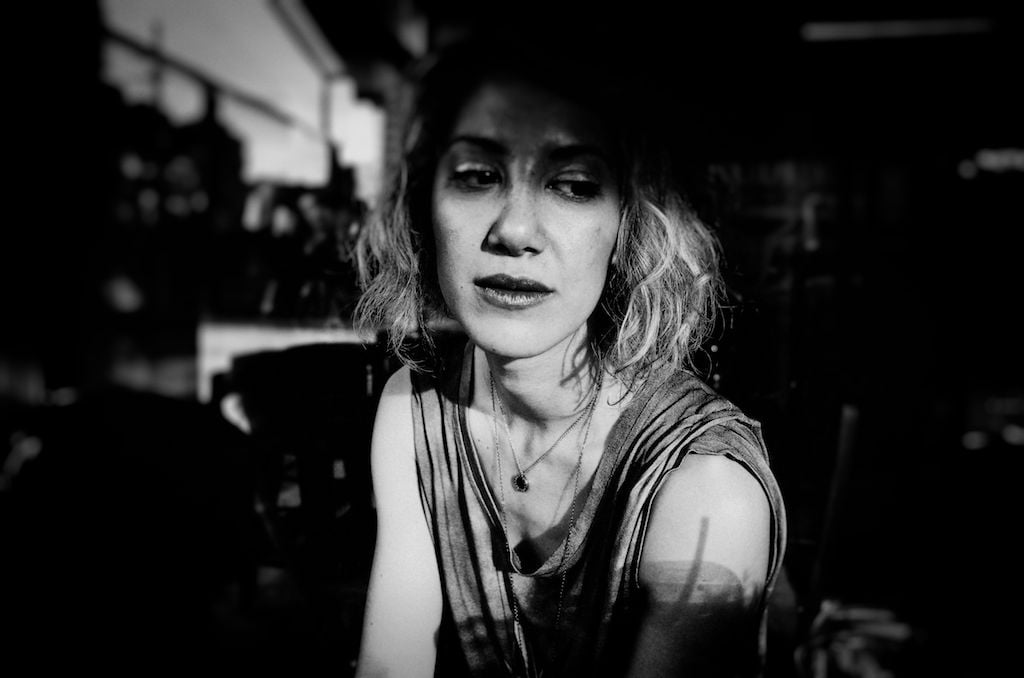
En tu obra el claro el giro en torno a la figura humana, sobre todo a la mujer. Proyectas una imagen de ella, central, pero también, acaso, gravitante… ¿Desde cuándo? ¿Cómo y por qué surgió esta propuesta? Es decir, ¿de qué manera la presencia de los cuerpos da forma a tu obra artística?
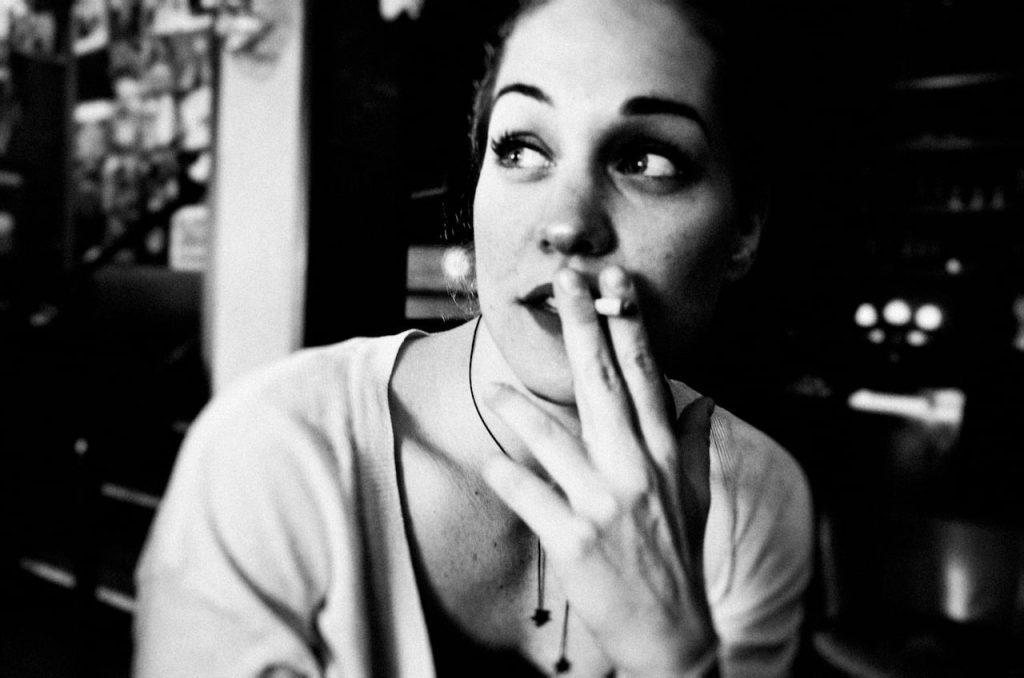
Mi andadura fotográfica comenzó en 2013, cuando las circunstancias me ofrecieron mucho tiempo para seguir mi gran pasión, la fotografía. Y empecé a fotografiar lo que me rodeaba, sobre todo a personas en los cafés que solía frecuentar, ya que tenía mucho tiempo libre. Surgió de forma muy natural. Fotografiar a las personas, sus figuras y partes del cuerpo se ha convertido en un trabajo hecho con amor para mí, porque fotografiar significa mirar con atención, observar, valorar cada gesto, expresión, movimiento, mirarlo con los ojos bien abiertos como si se viera algo por primera vez, sin filtros de percepción, apreciándolo. Y a través de este «proceso» —que surge de forma automática— ves algo completamente nuevo en tu sujeto fotográfico, algo sorprendente cada vez, incluso después de haber fotografiado a una persona varias veces. Esto es lo que es amar, para mí.
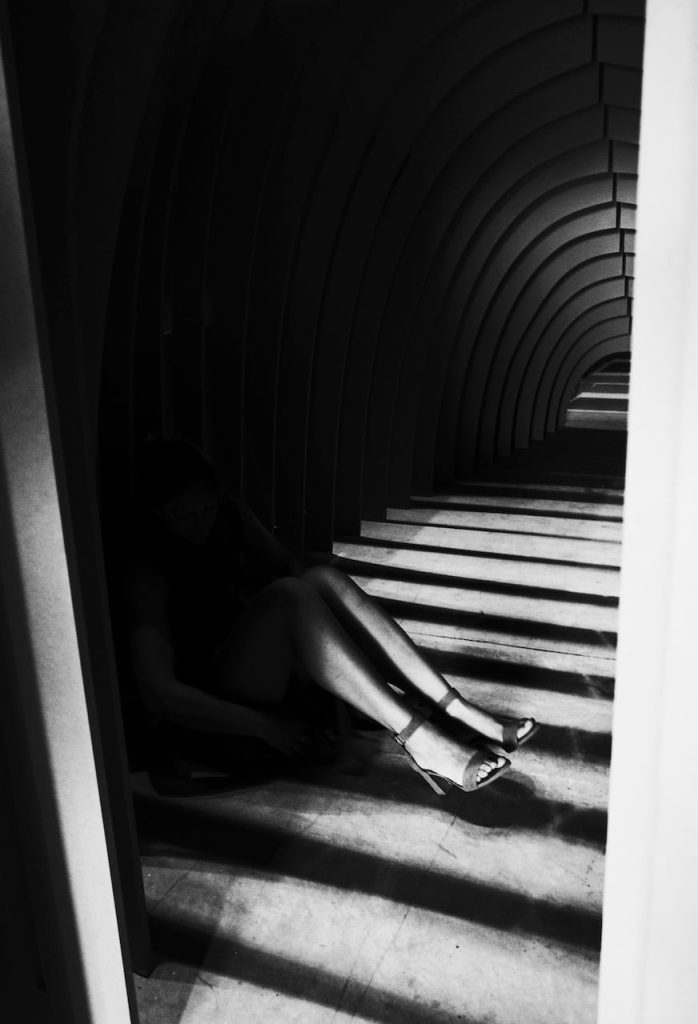
En tus imágenes, la luz emerge, en gran medida, desde atrás de las formas.¿Cómo se da esta selección? ¿Qué ves en un entorno o espacio particular, más allá de su atractivo estético, para realizar tus capturas?
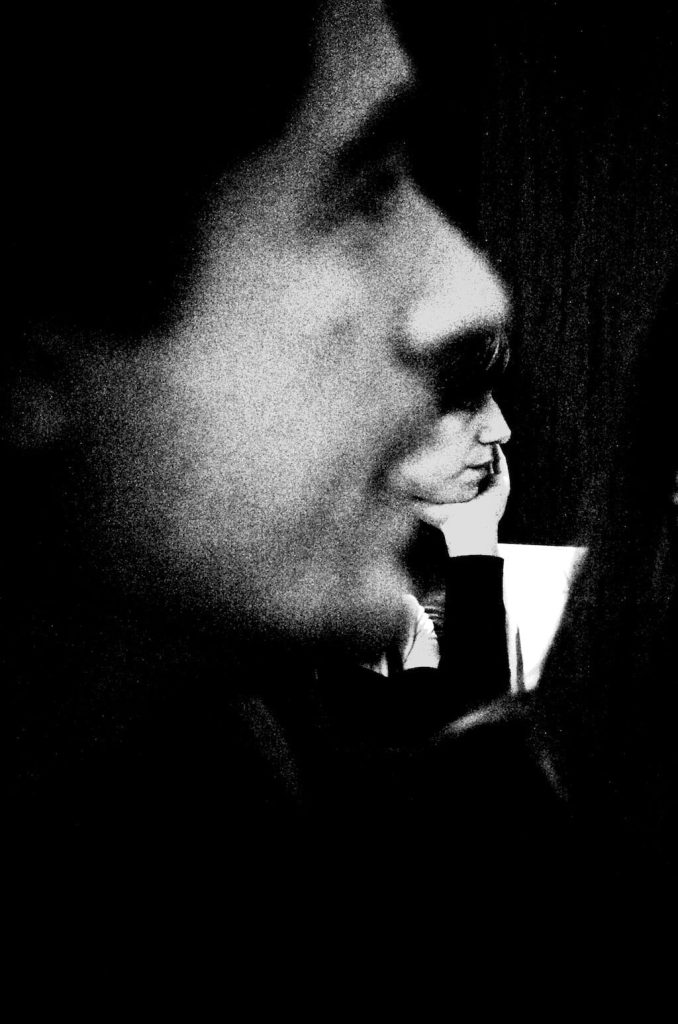
No es una selección, simplemente ocurre. Nunca escenifico mis tomas fotográficas, nunca le digo a la gente qué hacer o dónde ponerse. Si alguien está sentado en un lugar con la luz detrás, lo fotografío así. Nunca los muevo y siempre me atrevo a probar tomas «imposibles». Me encanta la «imposibilidad» del contraluz. Es un desafío que afronto con humildad y amor. De alguna manera, las fotos siempre resultan de mi agrado después. Puedo fotografiar a cualquiera en cualquier lugar —para obtener un resultado de mi agrado personal, por supuesto.
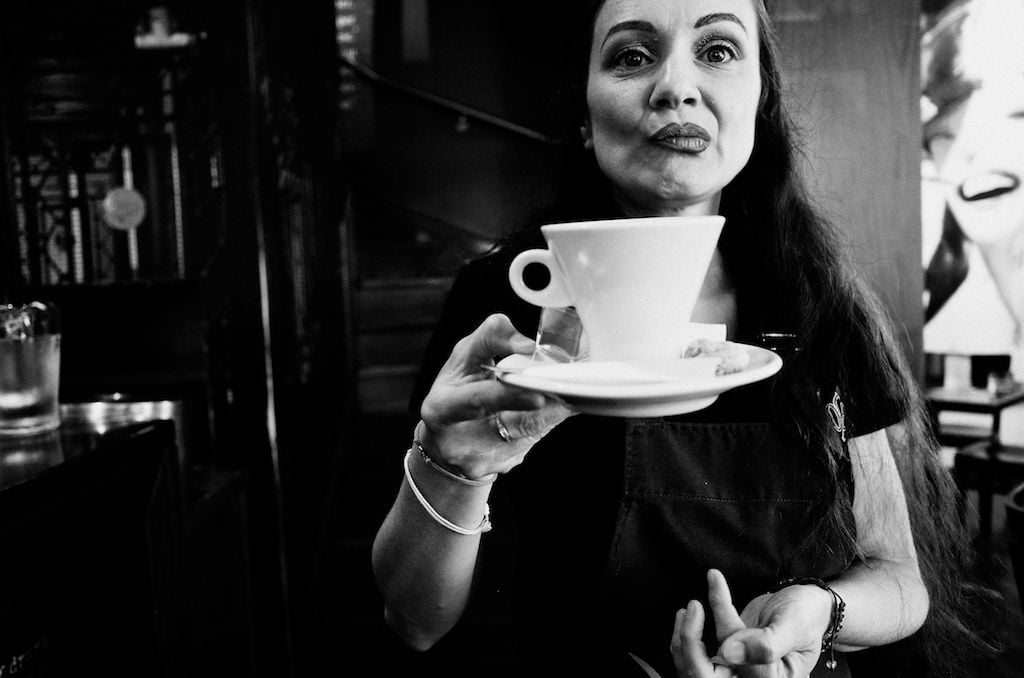
Tu forma de representación en blanco y negro supone casi de inmediato una suerte de atmósfera íntima, pero también de extremos… El contraste define con fuerza cada composición. ¿Qué papel juega la pasión —el dolor de la marcha, esa lucha— en esto, así como, quizás, otro impulso? ¿Cabría hablar de violencia como impulso, por el contrario, de cierta contención?
Ninguna violencia, solo la pasión que emana cada persona o situación. Algunos sujetos y escenas se expresan o representan mejor en un blanco y negro de alto contraste y otros en tonos más suaves. El sujeto dicta el grado de contraste o suavidad, la ligereza o pesadez del estado de ánimo. Todo está entrelazado y surge de forma automática y muy natural, no puedo explicarlo y ciertamente no planeo de antemano lo que voy a fotografiar. Nunca tengo una idea previa de lo que va a suceder. Así que a veces siento que estoy tomando el crédito por algo que simplemente sucede a través de mí, no por mí. Siempre me gusta señalar eso.
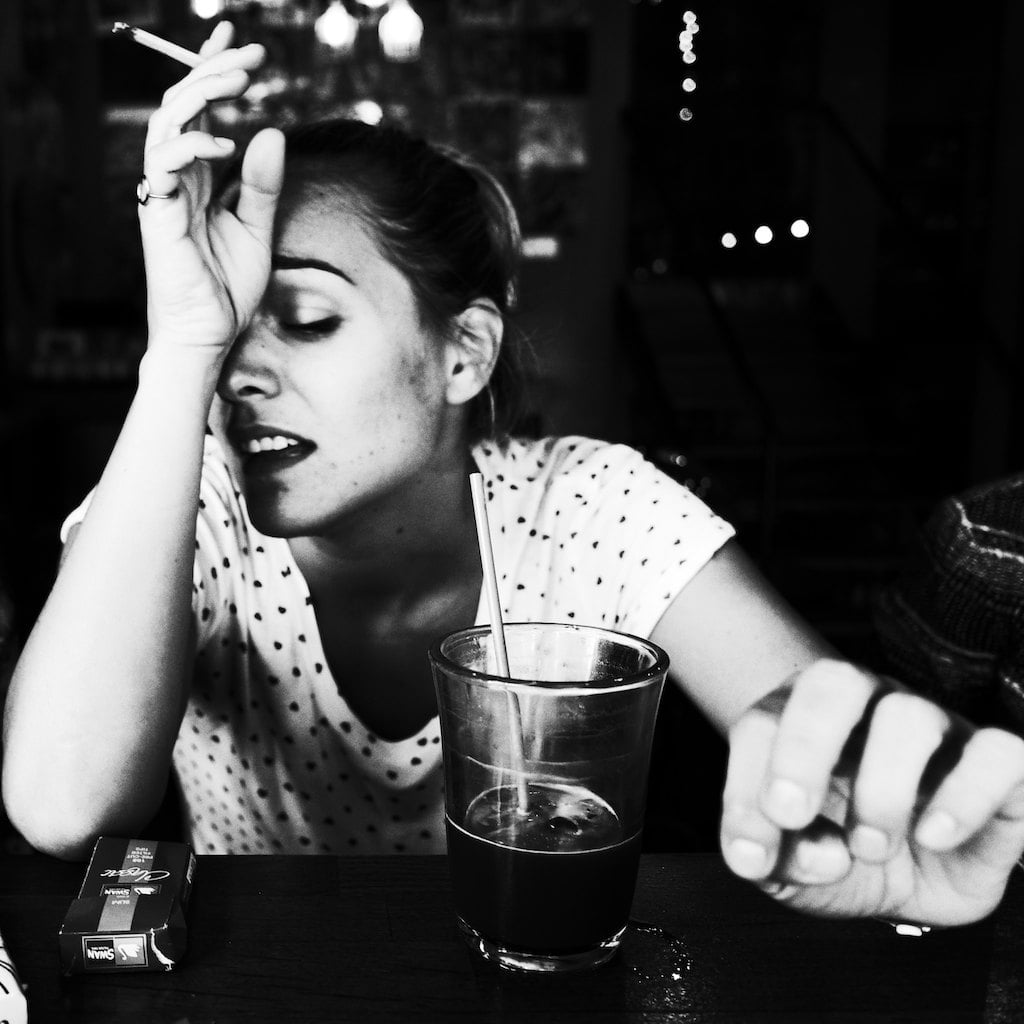
¿Qué obras, tanto de las artes visuales como de otros campos, han influido en tu visión de la fotografía, no solo a nivel estético, sino también conceptual?
Siempre he sido una amante del cine negro hasta el punto de que la intriga, el misterio, el estilo, el ambiente, la agudeza de los diálogos y las interacciones de los personajes, así como el elemento inesperado que forma parte de todo buen cine negro, se inyectaron en mi fotografía y la moldearon. Surgió de forma muy natural, no lo elegí, simplemente empecé a fotografiar y mis fotos salieron así.
Una experiencia especialmente memorable en tu trabajo a lo largo de estos años…
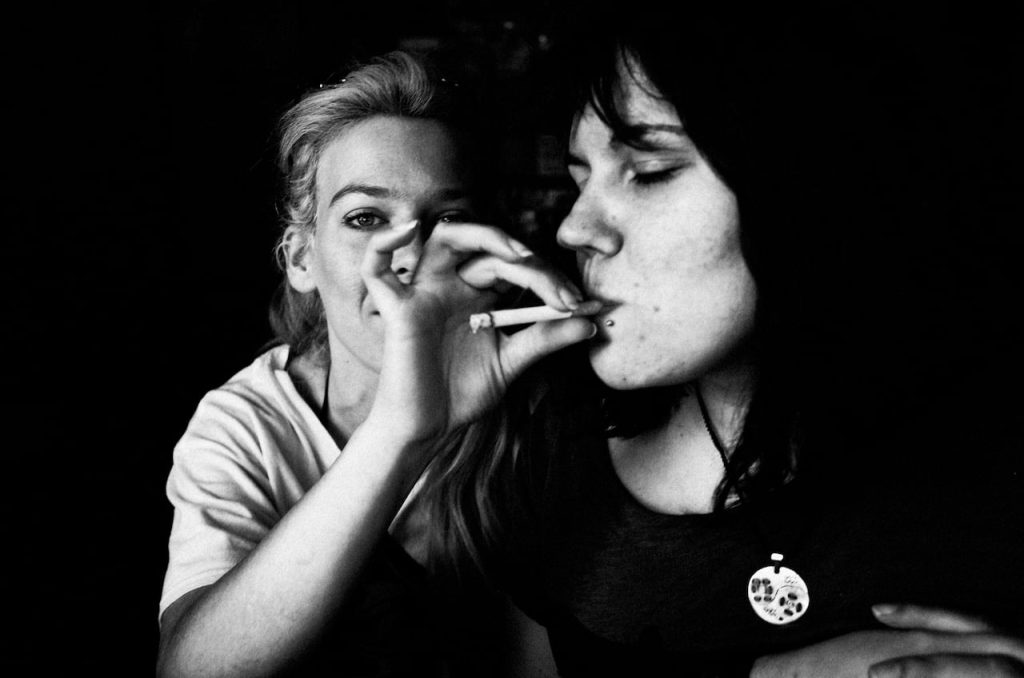
No tanto memorable, sino divertida y apreciada como recuerdo… Una vez estaba en Venecia visitando a un muy buen amigo mío, Enrico Facchetti, un gran fotógrafo veneciano que también fotografía en blanco y negro pero tiene un estilo diferente al mío. A él le gusta colocar a sus modelos y controlar sus escenas. Así que solíamos reunirnos con él y una amiga que servía como modelo con el fondo de algunos de los hermosos escenarios de la Bienal de Venecia —hacíamos esto cada año, quizás dos veces, hasta hace poco. Así que él «dirige» su escena y yo me quedo cerca, sin intervenir, pero también fotografiando desde diferentes ángulos y a mi manera más espontánea. Fotografiando más cerca de la modelo, a veces fotografiando detalles del cuerpo… Él era muy meticuloso y yo era muy despreocupada. Esto ocurrió varias veces y en algunas de ellas él terminó furioso y decepcionado —con sus resultados comparados con los míos. Porque él hacía todo el trabajo preliminar, como decía, pero pensaba que mis fotos eran mejores. Por supuesto, esta es su opinión, porque él es un gran fotógrafo y sus tomas son siempre magníficas…
El público, sin duda, reacciona al impacto de las imágenes. ¿De qué manera te gustaría que lo hicieran? ¿Alguna pregunta, quizá?
Si también los fotografiaría a ellos. Porque sé que el resultado será una sorpresa para ellos y me gusta observar cómo la gente maneja las sorpresas…
[Todas las imágenes, del sitio Web de la artista: Angie Stergio]
(ENGLISH —ORIGINAL — VERSION)
To Pass, To Remain: A Conversation with Angie Stergio about Her Work
Translation by Tiffany Amber Elías Trimble
Our presence in the world often leaves far less impact than we expect. Or the complete opposite. Determining this, they say, is the job of History. But History is indeed relative; it is not written by the victors, but by the survivors, and here we already have an important guideline for our assessment. The consistency of our journey through life is debatable, to say the least. Destiny, in reality, asks nothing of anyone; it does not demand things of them, as it is said to do; it simply happens. We are its participants, precipitating now one set of events, now another—sometimes consciously, yet never knowing their real impact, let alone their ultimate reach. This does not make us shadows, not at all. It is the light of our own gaze that illuminates that very reality we speak of and allows us to marvel, to pursue understanding it, to strive to comprehend it. Our imprint in time, as if that were not enough, is time itself: we create this measure, in reality. The image of a human body in a picture underscores the conception of a human world for humans. The order that mundus itself presupposes depends precisely on our capacity to connect and relate one element to another, to recognize, conceptualize, and define our environment in order to then operate in and with it.
The work of Angie Stergio raises these and other questions through a subtle use of light and shadow. Our participation, our role, the way we appear in the world and seek to remain in it—perhaps through the wonder of others and of everyone, together—turns everyday life into a complex «beyond» that exceeds the mere scene. Very kindly, she receives us among her work, and we speak with her.
In your work, the focus on the human figure, especially on women, is clear. You project an image of her as central, but also, perhaps, gravitating… Since when? How and why did this proposal arise? That is to say, in what way does the presence of bodies shape your artistic work?
My photographic journey started in 2013 when circumstances offered me plenty of time to follow my great passion, photography. I started to shoot what was around me, mostly people in the cafes I frequented, as I had plenty of time on my hands. It came very naturally. Photographing people, their figures, and body parts has become a labor of love for me because photographing means looking attentively, observing, and valuing every gesture, expression, and movement—looking with eyes wide open as if seeing something for the first time, without filters of perception, cherishing it. And through this “process”—which occurs automatically—you see something brand new in your photographic subject, something surprising every time, even after having photographed a certain person multiple times. This is what loving is, for me.
In your images, light emerges largely from behind the forms. How does this selection happen? What do you see in a particular setting or space, beyond its aesthetic appeal, to make your captures?
It is not a selection; it just happens. I never stage my photographic scenes; I never tell people what to do or where to stand. If someone is sitting in a place with the light behind them, I shoot them like that. I never move them and I always dare to try “impossible” shots. I love the “impossibility” of contrelu (backlight). It’s a challenge that I meet with humility and love. Somehow the photos always turn out to my liking afterward. I can photograph anyone anywhere—to produce a result to my personal liking, of course.
Black and white almost immediately suggests a kind of intimate atmosphere, but also one of extremes… Contrast strongly defines each composition. What role does passion—the pain of the journey, that struggle—play in this, as well as, perhaps, another impulse? Could one speak of violence as an impulse, or, on the contrary, of a certain restraint?
No violence, just the passion that every person or situation emits. Some subjects and scenes are better expressed or depicted in high-contrast monochrome and others in lighter tones. The subject dictates the degree of contrast or softness, the lightness or heaviness of the mood. It is all interwoven and it comes automatically and very naturally; I cannot explain it and I certainly don’t plan beforehand what I am going to shoot. I never have a prior idea of what is going to happen. So sometimes I feel that I am taking credit for something that just happens through me, not by me. I always like to point that out.
What works, both from the visual arts and from other fields, have influenced your vision of photography, not only on an aesthetic level, but also conceptually?
I have always been a film noir lover to the degree that the intrigue, the mystery, the style, the mood, and the wittiness of the dialogues and interactions of the characters—as well as the unexpected element that forms part of every good film noir—simply injected itself into my photography and shaped it. It came very naturally; I did not choose it, I just started shooting and my photos came out like this.
A particularly memorable experience in your work over these years…
Not so much memorable, but funny and cherished as a memory… I was once in Venice visiting a very good friend of mine, Enrico Facchetti, a great Venetian photographer who also shoots in black and white but has a different style from me. He likes to position his models and control his scenes. So we used to meet with him and a friend who would serve as a model against the background of some of the beautiful settings of the Venice Biennale—we did this every year, maybe twice, until recently. So he “directs” his scene and I hang along, not intervening, but shooting as well from different angles and in my more spontaneous way. Shooting closer to the model, sometimes shooting body details… He was very meticulous and I was very carefree. This happened several times and in a few of them he ended up furious and disappointed—with his results compared to mine. Because he did all the preliminary work, as he said, but he thought that my photos were better. Of course this is his opinion, because he is a great photographer and his shots are always magnificent…
The public, without a doubt, reacts to the impact of the images. In what way would you like them to do so? Perhaps a certain question?
If I would photograph them as well. Because I know that the result will be a surprise to them and I like to observe how people handle surprises…