
Materiales y finitos: Aproximación a la obra de Massimiliano Corteselli
Por Juan Pablo Torres Muñiz
En cuanto a fotografía, conviene distinguir lo más claramente posible entre registro y exposición. Lo primero, atiende fines documentales y puede, de hecho, debe ser elocuente, llevar consigo una importante carga informativa. Lo segundo, como se desprende del mismo término, va más allá: revela y, por tanto, ofrece lo fotografiado a significación, mas no cualquiera. Aunque pueda haber múltiples interpretaciones de la cosa, el hecho o el suceso capturados, depende de la forma, que comprende distintos aspectos técnicos y de estilo, el fondo principal, el eje, digamos, del mensaje que configura el arte fotográfico como situación comunicativa cuestionadora, fuente de asombro.
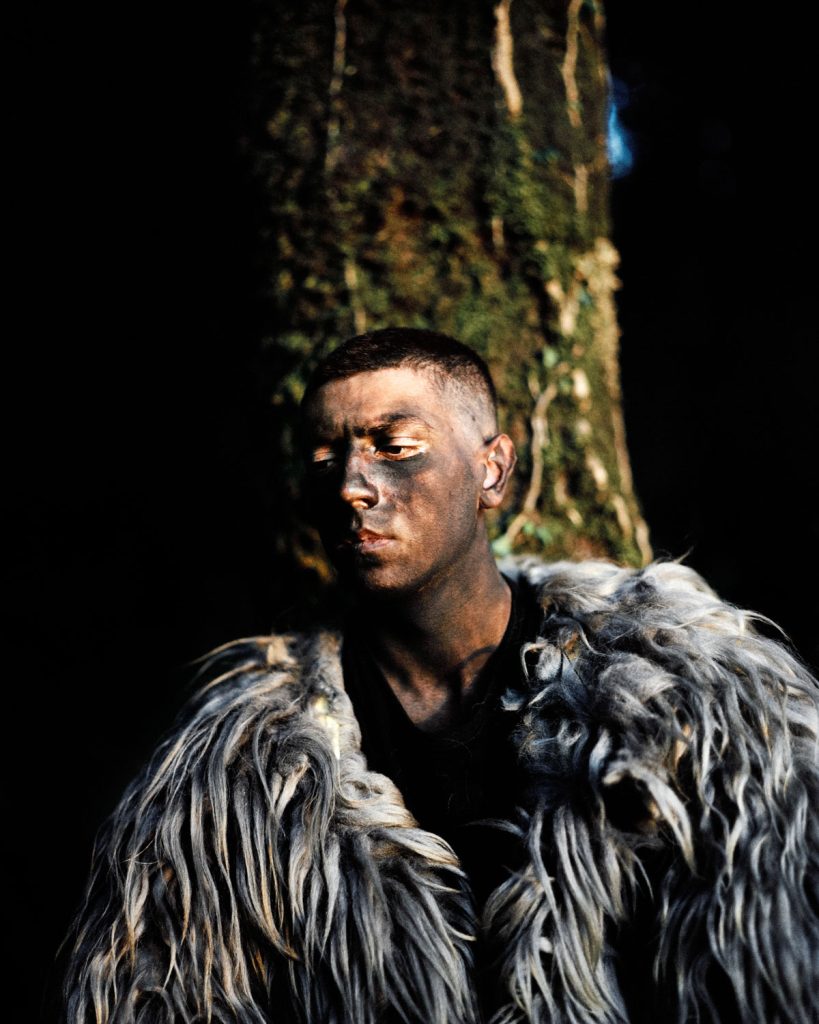
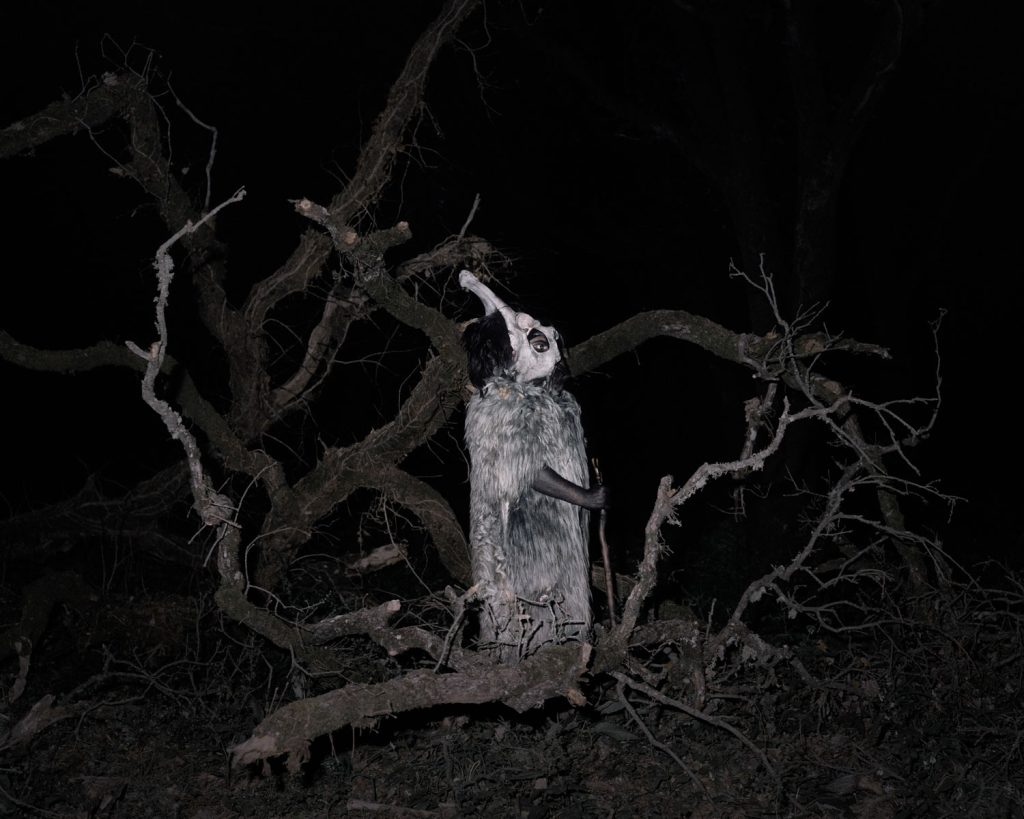
claramente, la fotografía de Massimiliano Corteselli, lejos de detenerse en el registro, insiste en la exposición. Desvela en sus imágenes, cuerpos —ya sean humanos, vegetales o terrosos— no como objetos neutrales, sino como entidades cargadas de una historia bajo su piel, superficie o halo. Su trabajo, particularmente en la serie Contrapasso, consiste en una suerte de declaración en pos de lo material, por la textura como testimonio. Las superficies rugosas, las cicatrices quemadas, la aspereza de una piel humana marcada por el fuego: nada de esto se presenta por casualidad, suerte de la captura de un ojo atento, mucho menos se trata de un ornamento estético. En cada caso, se apela al contraste, a la división, a la imposición de una objetividad que, en lugar de apartarnos, nos insta a penetrar, con la luz, en el misterio de la composición, no ya de la fotografía, sino de nuestra realidad como sede y red de encuentros en symploké *.
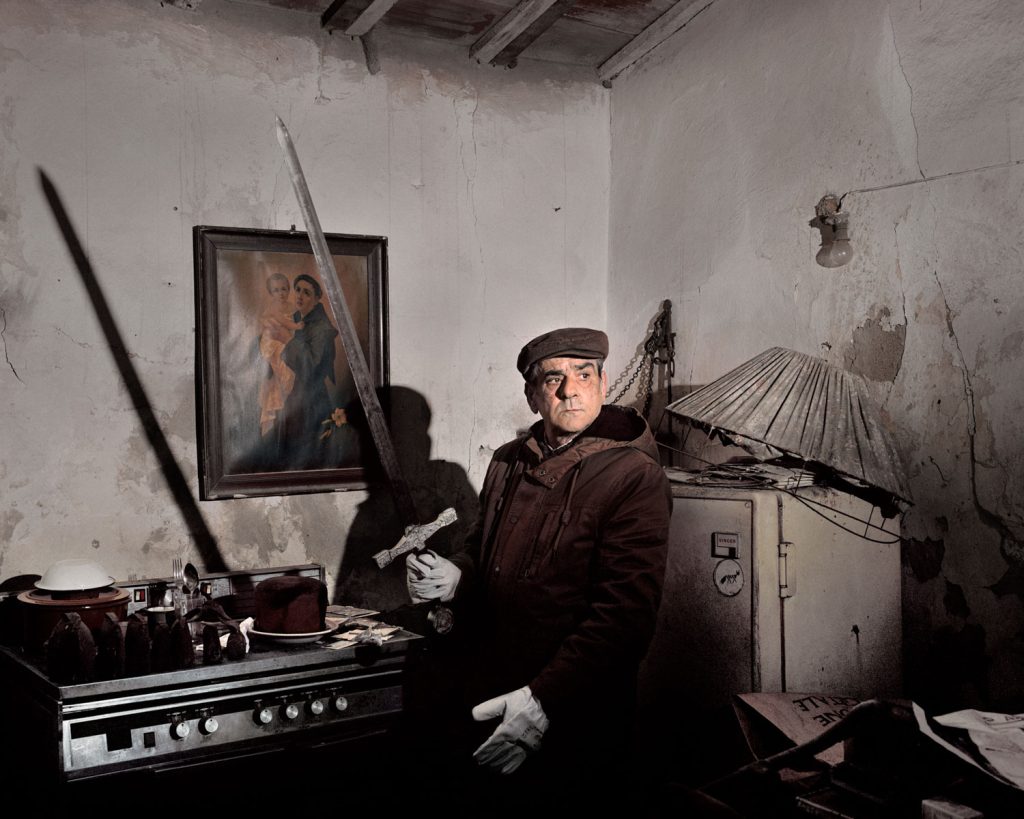
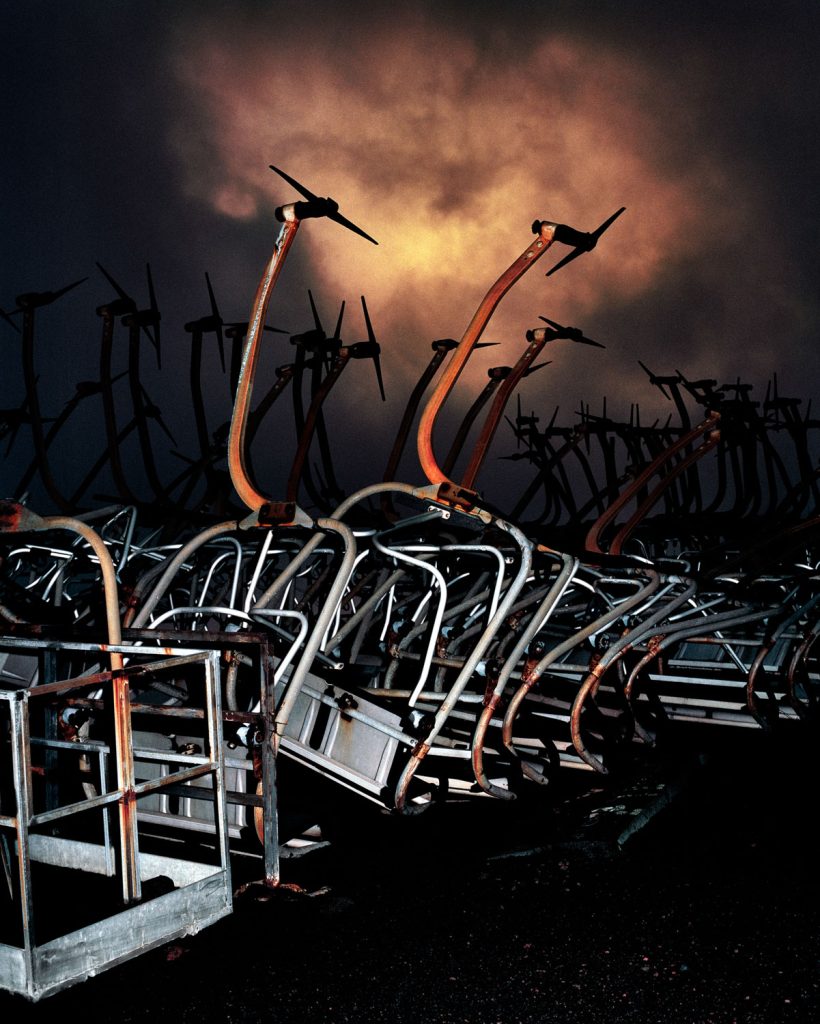
Corteselli construye cada imagen con una precisión casi quirúrgica. Pero el juego entre sombra y brillo no busca equilibrio, sino confrontación. El balance se da, por tanto, no sólo en la composición fotográfica, sino en la relación entre la imagen y el exterior, cuya vista, desde luego, carece al natural de acentos así. Los volúmenes de los cuerpos no parecen estar ahí para representarse a sí mismos, sino para recordarnos que cada forma es resultado de una violencia previa, un acto de destrucción que ha moldeado lo que vemos. Y esa violencia palpita, pulsa y, más precisamente, vibra en el ambiente y, sobre todo, las superficies.
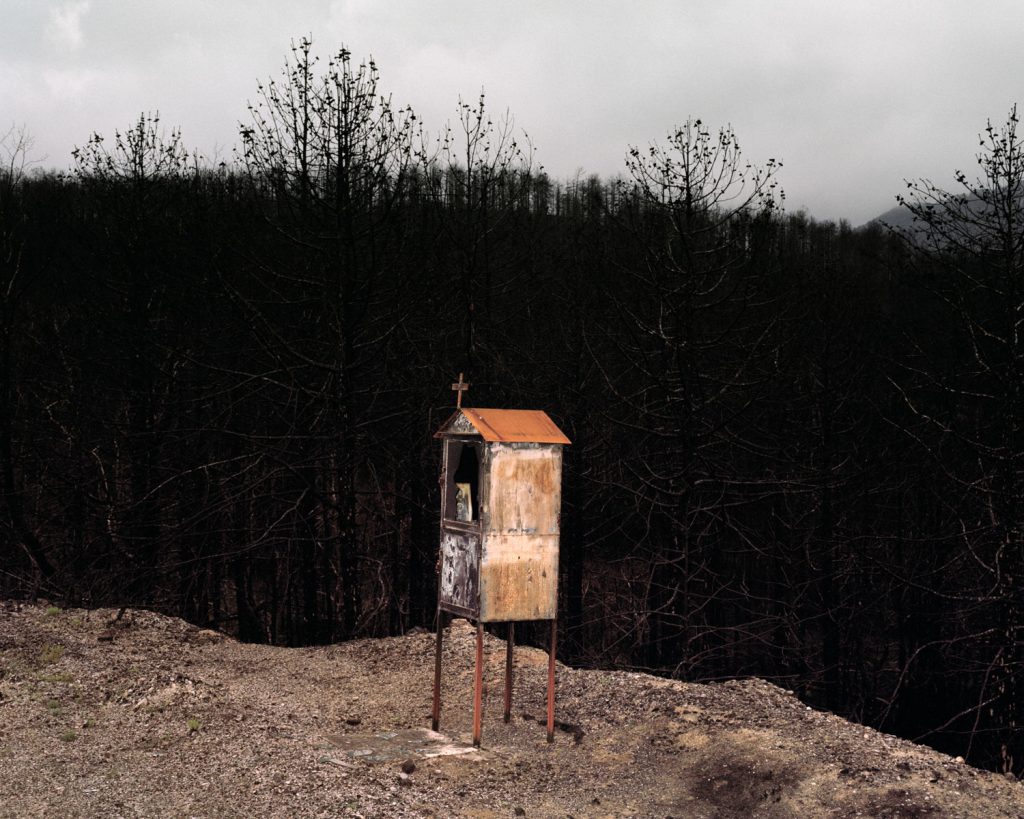
En Contrapasso, el artista da cuenta de esa ley de perpetuo retorno: de la violencia creativa, que implica una previa destrucción, cuanto menos la disolución de un orden anterior, a la aparente calma y, luego, el vacío del final, que no es sino un aspecto relativo a la escala del tiempo, previo a la nueva gesta, también violenta. La materia se corrompe, necesariamente, pero de la corrupción emergen los elementos sustanciales, prestos de vuelta a la compleja generación de más vida. En todo caso, siempre quedan huellas. Y es la certeza que emana de ellas, lo que expone Corteselli.
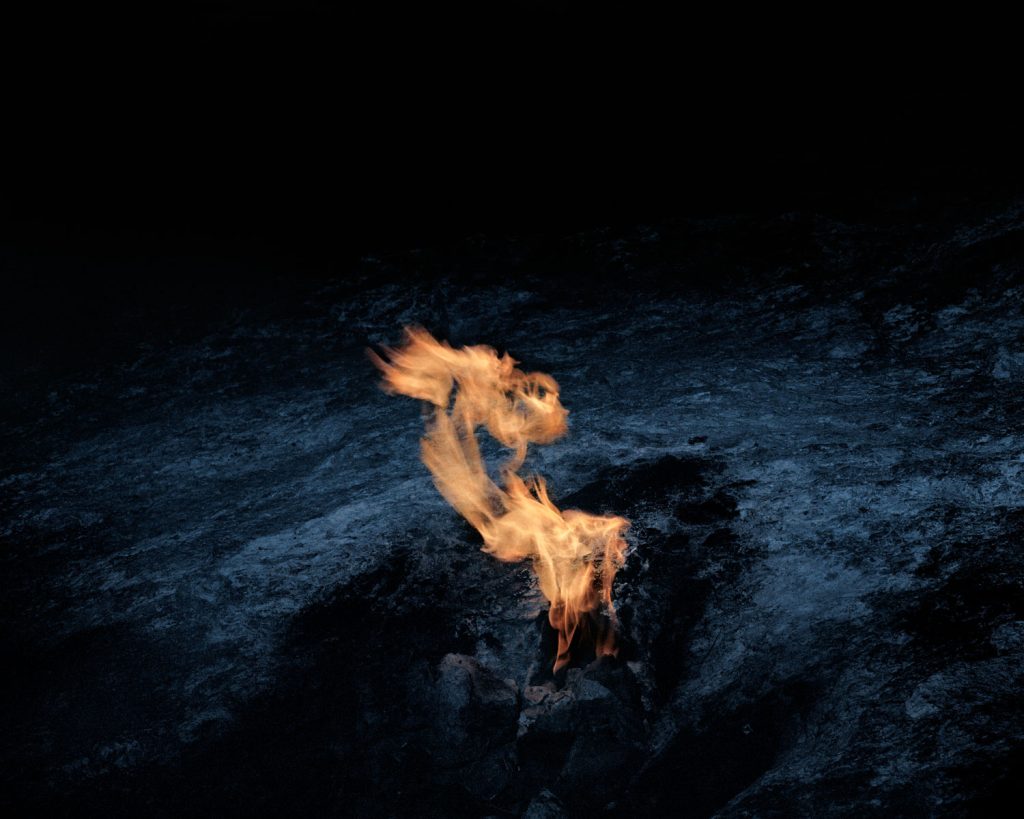
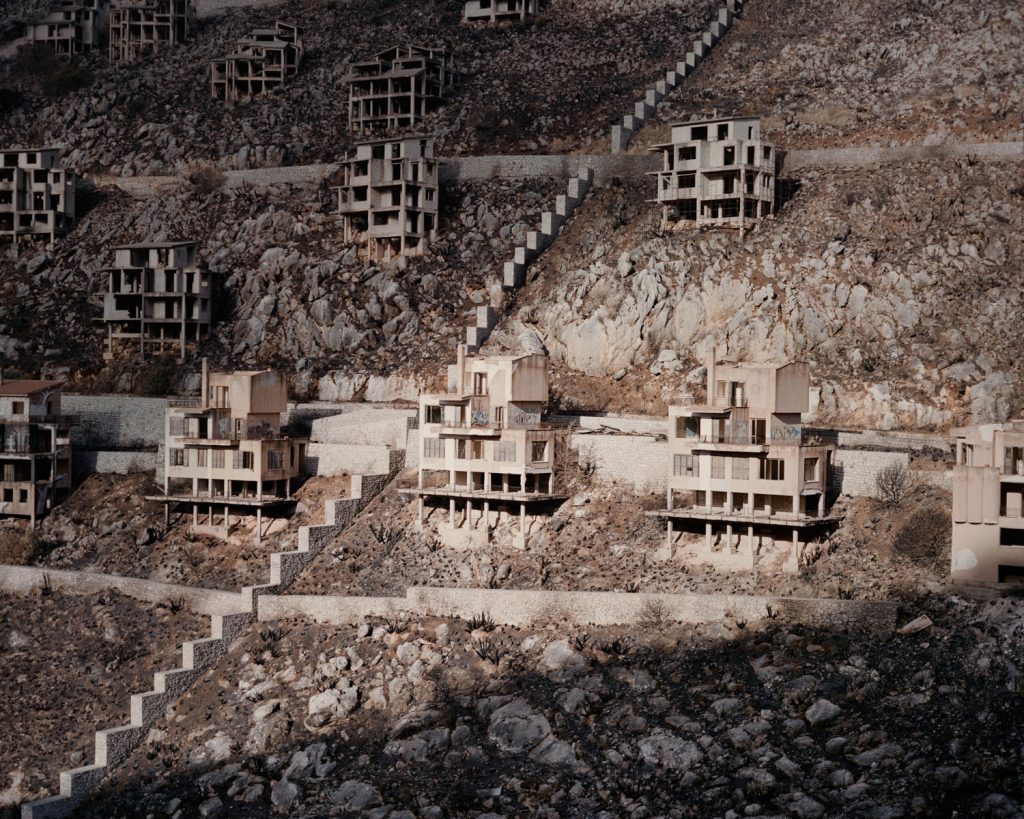
Hay en su obra una constante dialéctica entre fuerza humana y naturaleza. Ni las edificaciones ni los incendios son meros accidentes. En tal sentido, sus imágenes inculpan nuestro afán por vencer, a fuerza de voluntad y técnica, lo que no cesa. No hay inocencia en ningún paisaje de la muestra, ni en la mirada de quien lo habita. Todo parece decir, incluso: aquí, tras la brega, incluso contra ella, hubo pactos, acuerdos tácitos entre corrupción e indiferencia.
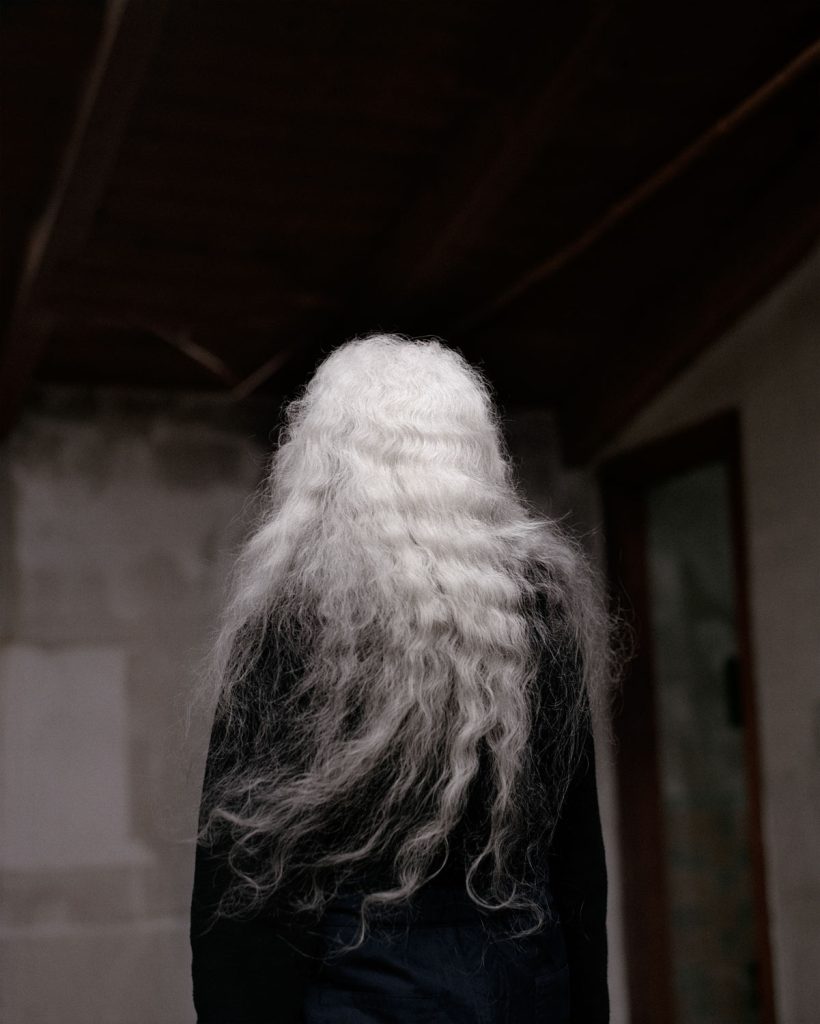
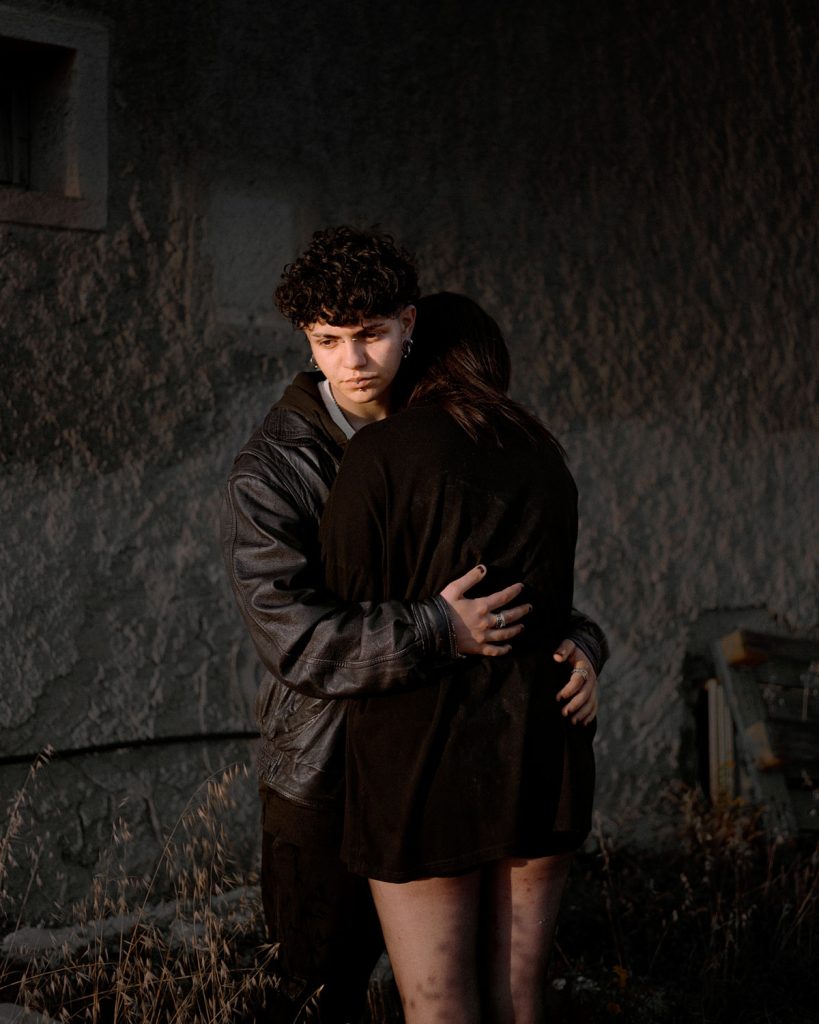
En esta misma dinámica, llama poderosamente la atención cómo la obra aborda la corporeidad como elemento de separación. En efecto, aquí los cuerpos no unen. Cada imagen tienta la idea de que, entre nosotros y el mundo, en tanto orden conjunto e ideal, hay una distancia infranqueable, una materia que nos recuerda que, en buena medida, no somos transparentes ni ante nosotros mismos. Las texturas rugosas, las formas retorcidas, las posturas ambiguas (¿defensivas?, ¿agresivas?), todo sugiere que el cuerpo no es puente, sino frontera. Y, sin embargo, la vía atravesada por el mismo aliento del tiempo. La vida, si se quiere, la muerte, también.
¿Cuán engañosa es la idea de habitar un cuerpo en este mundo, si somos cuerpo, en gran parte, de forma tan directa? ¿Cómo enfrentar la corrupción de la memoria y de la propia lucidez ante accidentes de lo más normales? ¿Cómo se convive con la culpa, herencia del tiempo mismo en su carrera, cuando se disfraza de rutina? Más allá, inclusive: ¿Cómo se enfrenta la humanidad a sus propias llamas, sabiendo que ellas nacen de su interior?
Massimiliano Corteselli plantea preguntas en piel, pelos, carne, hueso, concreto, herrumbre, ceniza, humo. Y fuego. Sin consuelo, nada más confrontación.
* Relación sinalógica entre las partes de un todo: las partes son diferentes entre sí y se relacionan, cada una, al menos con otra, mas no todas entre sí.
[Todas las imágenes, del sitio web del artista: Massimiliano Corteselli / Photographer]
ENGLISH VERSION
Materials and Finites: An Approach to the Work of Massimiliano Corteselli
Translated by Carmen Leonard
Regarding photography, it is useful to distinguish as clearly as possible between recording and exposing. The former serves documentary purposes and can, in fact must, be eloquent, carrying a significant informational charge. The latter, as the term itself implies, goes further: it reveals and, therefore, offers the photographed subject for signification, but not just any signification. Although there can be multiple interpretations of the captured thing, fact, or event, it depends on the form—which comprises various technical and stylistic aspects—the main substance, the axis, let’s say, of the message that configures photographic art as a questioning communicative situation, a source of astonishment.
Clearly, the photography of Massimiliano Corteselli, far from stopping at recording, insists on exposing. It unveils in its images—bodies, whether human, vegetal, or earthy—not as neutral objects, but as entities laden with a history beneath their skin, surface, or halo. His work, particularly in the series Contrapasso, consists of a sort of declaration in favor of the material, for texture as testimony. The rough surfaces, the burned scars, the roughness of human skin marked by fire: none of this is presented by chance, as the lucky capture of an attentive eye, much less is it an aesthetic ornament. In each case, it appeals to contrast, to division, to the imposition of an objectivity that, instead of pushing us away, urges us to penetrate, with the light, into the mystery of the composition—no longer of the photograph, but of our reality as the seat and network of encounters in symploké.
Corteselli constructs each image with an almost surgical precision. But the play between shadow and shine does not seek balance, but confrontation. Balance is achieved, therefore, not only in the photographic composition, but in the relationship between the image and the exterior, whose view, of course, naturally lacks such accents. The volumes of the bodies do not seem to be there to represent themselves, but to remind us that every form is the result of a prior violence, an act of destruction that has shaped what we see. And that violence palpitates, pulses, and, more precisely, vibrates in the atmosphere and, above all, on the surfaces.
In Contrapasso, the artist gives an account of that law of perpetual return: of creative violence, which implies a prior destruction, at least the dissolution of a previous order, to the apparent calm and, then, the void of the end, which is but an aspect relative to the scale of time, prior to the new feat, also violent. Matter necessarily corrupts, but from corruption emerge the substantial elements, ready again for the complex generation of more life. In any case, traces always remain. And it is the certainty emanating from them that Corteselli exposes.
There is in his work a constant dialectic between human force and nature. Neither the edifices nor the fires are mere accidents. In this sense, his images indict our striving to overcome, by force of will and technique, that which does not cease. There is no innocence in any landscape of the exhibition, nor in the gaze of whoever inhabits it. Everything seems to say, even: here, after the struggle, even against it, there were pacts, tacit agreements between corruption and indifference.
Within this same dynamic, it is powerfully striking how the work addresses corporeality as an element of separation. Indeed, here bodies do not unite. Each image tempts the idea that between us and the world, as a joint and ideal order, there is an insurmountable distance, a matter that reminds us that, to a great extent, we are not transparent even to ourselves. The rough textures, the twisted forms, the ambiguous postures (defensive? aggressive?), all suggest that the body is not a bridge, but a border. And yet, the path traversed by the very breath of time. Life, if you will, death, too.
How deceptive is the idea of inhabiting a body in this world, if we are, so directly, largely body? How does one face the corruption of memory and one’s own lucidity in the face of the most normal accidents? How does one live with guilt, the heritage of time itself in its race, when it disguises itself as routine? Further still: How does humanity face its own flames, knowing that they are born from within?
Massimiliano Corteselli poses questions in skin, hair, flesh, bone, concrete, rust, ash, smoke. And fire. Without consolation, nothing but confrontation.
*A sinalogical relationship between the parts of a whole: the parts are different from each other and each relates to at least one other, but not all to each other.
[All images, from the artist’s website: https://www.massimilianocorteselli.com/]