
La realidad y el asombro: Aproximación a la obra de William Reinsch
Por Juan Pablo Torres Muñiz
Si el romanticismo oscuro de Caspar David Friedrich proyectaba la angustia subjetiva sobre paisajes seductores, y el simbolismo de un Odilon Redon la traducía en bestiarios oníricos, he aquí, con William Reinsch, una suerte de síntesis contemporánea: Su muestra Naked Island constituye, no un paisaje exterior, sino la propuesto de uno para la psique. Nada de inconsciente freudiano como caos, sino como un mapa, incluso un laboratorio donde los materiales de la realidad —el cuerpo, el objeto cotidiano— son sometidos a una descomposición y recomposición particular para iluminar las tensiones constitutivas de la persona en el mundo actual. Mitologías personales como medios de operación crítica.
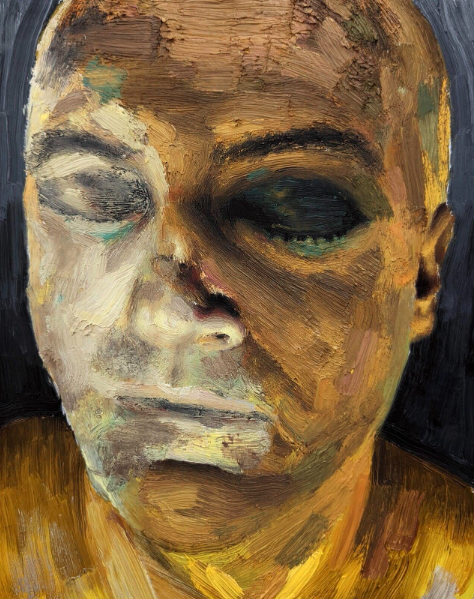
La originalidad de Reinsch no reside en la invención de formas precisamente nuevas, sino en el rigor con el que aplica su método de ficcionalización pictórica. De hecho, insiste mediante la composición —acercándose siempre en demasía a los objetos de representación—; las formas, su definición; el color y la textura, contra el cuerpo en tanto símbolo de vida, la carne como bien eterno, preferido en su representación más pulida y como autocontenido. En Naked Island, giran sobre sí mismos para exponer siempre rasgos de enfermedad. No son vehículos de deseo ni de supuesto poder, sino testimonios de una materialidad frágil y perecedera, evidencia de un fracaso de la voluntad idealista.
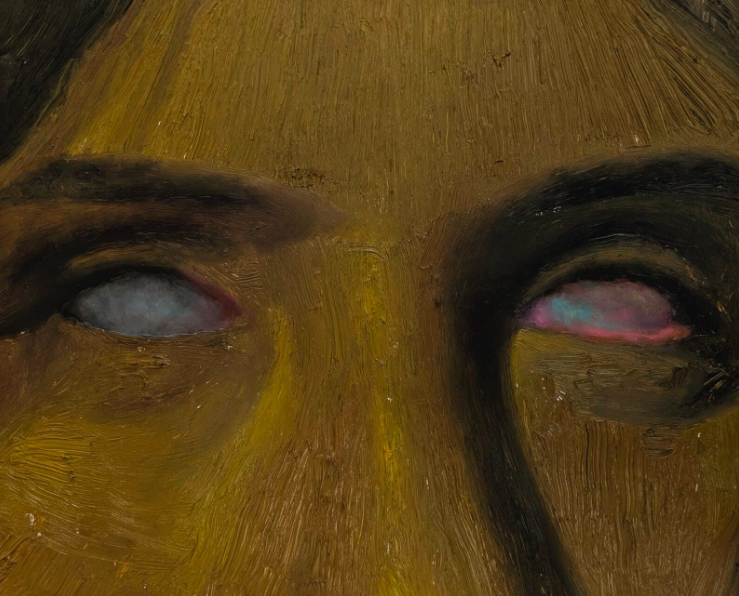
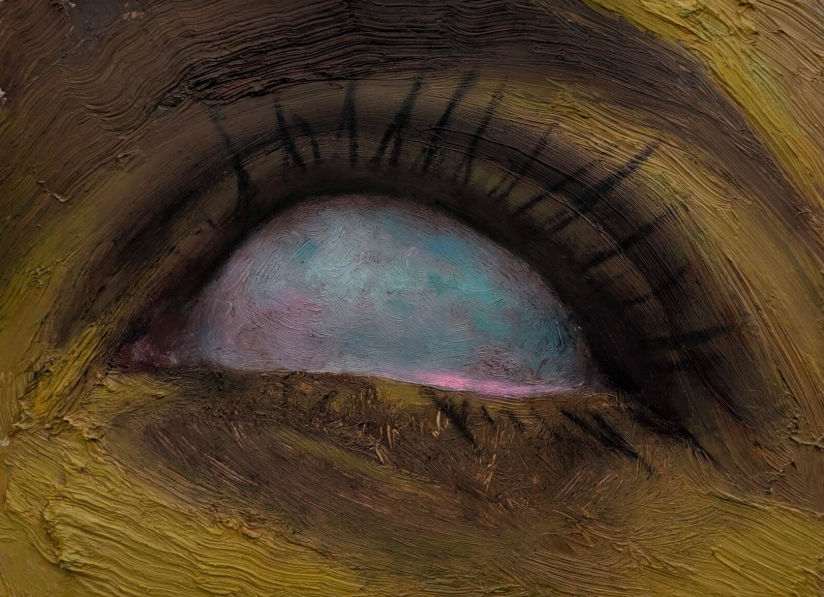
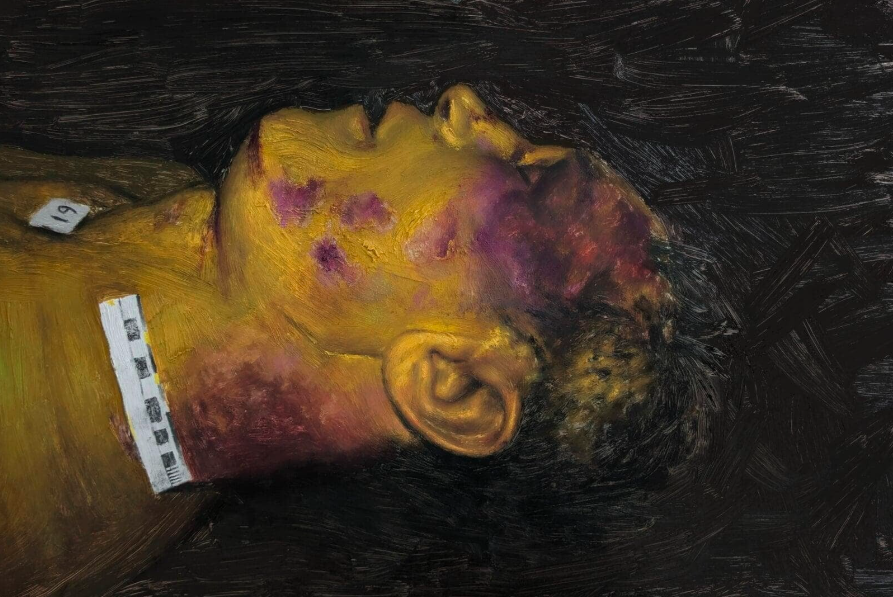
Aquí no hay heroicidad, solo la presencia cruda y vulnerable del organismo biológico. Con apenas sutiles cambios de color —una palidez cadavérica, un rubor enfermizo, ese amarillo persistente—, modulaciones de tono y contraste, Reinsch logra impregnar la piel pintada de cierta tensión metabólica: latencia del mal, el perecimiento silencioso de la carne que la cultura hedonista se empeña en negar.
Esta exploración de la finitud constituye el núcleo de su cuestionamiento: el reniego de la muerte y el mal metafísico que de éste brota. La obra de Reinsch sugiere que el verdadero mal —entendido como sufrimiento existencial, no moral— no nace de la muerte en sí, que es un hecho material neutro, sino de la rebelión impotente contra la propia condición mortal. El hombre que se cree amo de sus construcciones, se subleva contra el límite ontológico esencial: su finitud. Esta sublevación, este renegar de lo que no tiene en sí nada de malo (el ciclo natural de la vida y la muerte), genera una neurosis colectiva, una búsqueda patológica de inmortalidad a través del consumo, la imagen y las ideologías. Los personajes de Reinsch, en su isla-psique, parecen aislados en este conflicto. Todo gesto de auxilio se convierte aquí en metáfora de encapsulamiento y despersonalización. Simplemente, no cabe.
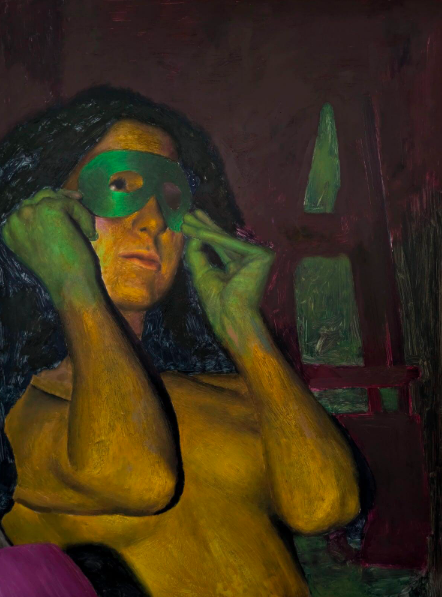
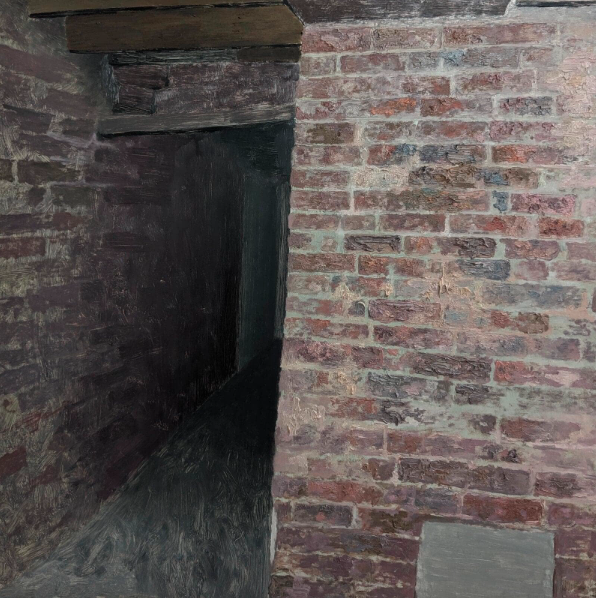
La técnica de Reinsch es clave de la problematización, su dominio la hace especialmente elocuente. Su método emplea una serie de collages intervenidos; es decir que parte de la manipulación digital para luego realizar un montaje orgánico manual. Así, la experimentación combina y tensiona fragmentos de realidad (cuerpos, objetos) hasta hallar la composición que maximiza la potencia de la imagen a través de la textura. Su coloración construye la forma con un realismo frío y deliberado, negación de la efusión expresionista. Del mismo modo, la luz sirve como instrumento de disección: proviene de fuentes indeterminadas, a menudo reflejada en las superficies iridiscentes, creando contrastes violentos entre zonas de oscuridad profunda y leves destellos artificiales. Esta iluminación, acentúa el aislamiento y la extrañeza. La paleta, predominantemente oscura, se ve interrumpida por colores reflectantes antinaturales; el resultado: un contraste brutal en su levedad. La composición, cargada de un equilibrio claustrofóbico, producto de una aproximación exagerada, sitúa a las figuras en espacios indefinidos, comprimidos, donde el vacío circundante pesa más que cualquier otro elemento.
Una contribución notable, esta obra crea una mitología visual donde la fragilidad del cuerpo y el artificio de la supervivencia chocan, ilumina la contradicción fundamental de nuestro tiempo: la búsqueda de una inmortalidad simbólica a través de instituciones que, en última instancia, dada la persistente idealización, se desconfiguran, nos despersonalizan y aíslan aún más. Un recordatorio de que, frente al ruido adolescentizante del mercado, se encuentran, siempre, la realidad… y el asombro.
[Todas las imágenes, del sitio Web del artista: Home | William Reinsch]
ENGLISH VERSION
Reality and Astonishment: An Approach to the Work of William Reinsch
Translation by Tiffany Amber Elías Trimble
If the dark Romanticism of Caspar David Friedrich projected subjective anguish onto seductive landscapes, and the Symbolism of Odilon Redon translated it into oneiric bestiaries, here, with William Reinsch, we find a kind of contemporary synthesis. His exhibition Naked Island constitutes not an exterior landscape, but a proposed one for the psyche. This is not the Freudian unconscious as chaos, but as a map—even a laboratory—where the materials of reality (the body, the everyday object) are subjected to a particular decomposition and recomposition to illuminate the tensions inherent to the individual in today’s world. Personal mythologies serve here as vehicles for critical operation.
Reinsch’s originality lies not in the invention of strictly new forms, but in the rigor with which he applies his method of pictorial fictionalization. Indeed, he insists through composition—cropping uncomfortably close to his subjects; through the definition of forms; and through color and texture, set against the body as a symbol of life or the flesh as an eternal commodity, typically preferred in its most polished and self-contained representation. In Naked Island, these forms turn in on themselves to expose constant traits of illness. They are not vehicles of desire or supposed power, but testimonies to a fragile, perishable materiality—evidence of the failure of the idealist will.
Here there is no heroism, only the raw and vulnerable presence of the biological organism. With only subtle color changes—a cadaverous pallor, a sickly flush, that persistent yellow—and modulations of tone and contrast, Reinsch manages to imbue the painted skin with a certain metabolic tension: a latency of evil, the silent perishing of the flesh that hedonistic culture strives to deny.
This exploration of finitude constitutes the core of his inquiry: the denial of death and the metaphysical evil that springs from it. Reinsch’s work suggests that true evil—understood as existential rather than moral suffering—is not born from death itself, which is a neutral material fact, but from the impotent rebellion against our own mortal condition. The man who believes himself master of his constructions revolts against the essential ontological limit: his finitude. This revolt, this disavowal of what is in itself not evil (the natural cycle of life and death), generates a collective neurosis—a pathological quest for immortality through consumption, imagery, and ideology. Reinsch’s characters, on their psyche-island, seem isolated in this conflict. Every gesture of aid becomes a metaphor for encapsulation and depersonalization. Simply put, it does not fit.
Reinsch’s technique is key to this problematization; his mastery makes it especially eloquent. His method employs a series of «intervened collages»; that is, he begins with digital manipulation and follows with an organic, manual montage. Thus, his experimentation combines and strains fragments of reality (bodies, objects) until finding the composition that maximizes the image’s power through texture. His coloring constructs form with a cold, deliberate realism—a denial of expressionist effusion. Similarly, light serves as an instrument of dissection: it comes from indeterminate sources, often reflected off iridescent surfaces, creating violent contrasts between zones of deep darkness and slight artificial glimmers. This lighting accentuates isolation and strangeness. The palette, predominantly dark, is interrupted by unnatural reflective colors; the result is a contrast at once brutal and subtle. The composition, laden with a claustrophobic balance born of an exaggeratedly close perspective, places the figures in undefined, compressed spaces where the surrounding void weighs more than any other element.
A notable contribution, this work creates a visual mythology where the fragility of the body and the artifice of survival clash. It illuminates the fundamental contradiction of our time: the quest for symbolic immortality through institutions that, ultimately—given our persistent idealization—become distorted, depersonalizing and isolating us further. It is a reminder that, against the infantilizing noise of the market, one always finds reality… and astonishment.