La inquietud del instante: Conversación con Sasa Gyoker sobre su obra
Con Juan Pablo Torres Muñiz
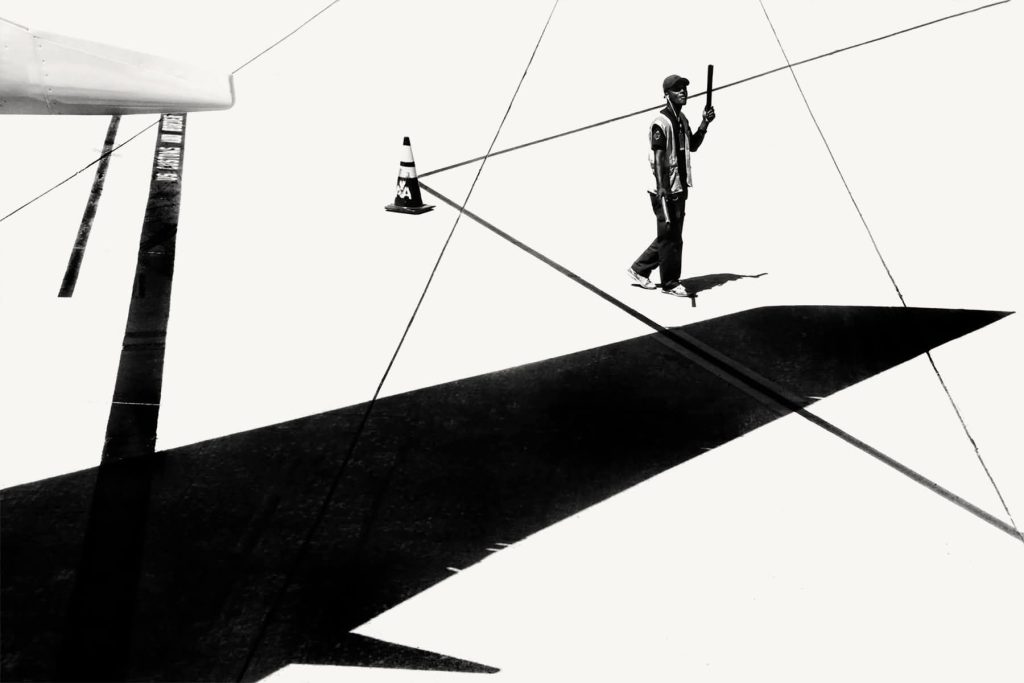
La fotografía de paisaje se ha enfrentado a menudo al riesgo constante de la reducción a postal, a la reproducción de lo llamativo sin la incomodidad de lo real; la complacencia en lugar del cuestionamiento. Frente a la simple espectacularidad, la obra de Sasa Gyoker, fotógrafa húngara afincada en Canadá, se presenta como una pausa y una interrogación. Desde sus primeras imágenes de los marginados en Budapest hasta su actual búsqueda de lo inefable en la naturaleza, Gyoker ha construido una trayectoria coherente. Su formación como historiadora del arte, su trabajo en la Galería Nacional de Canadá y su posterior desarrollo como diseñadora gráfica la dotaron de un ojo entrenado en la composición y la tradición visual, pero fue en la fotografía donde encontró el vehículo para su búsqueda más profunda.
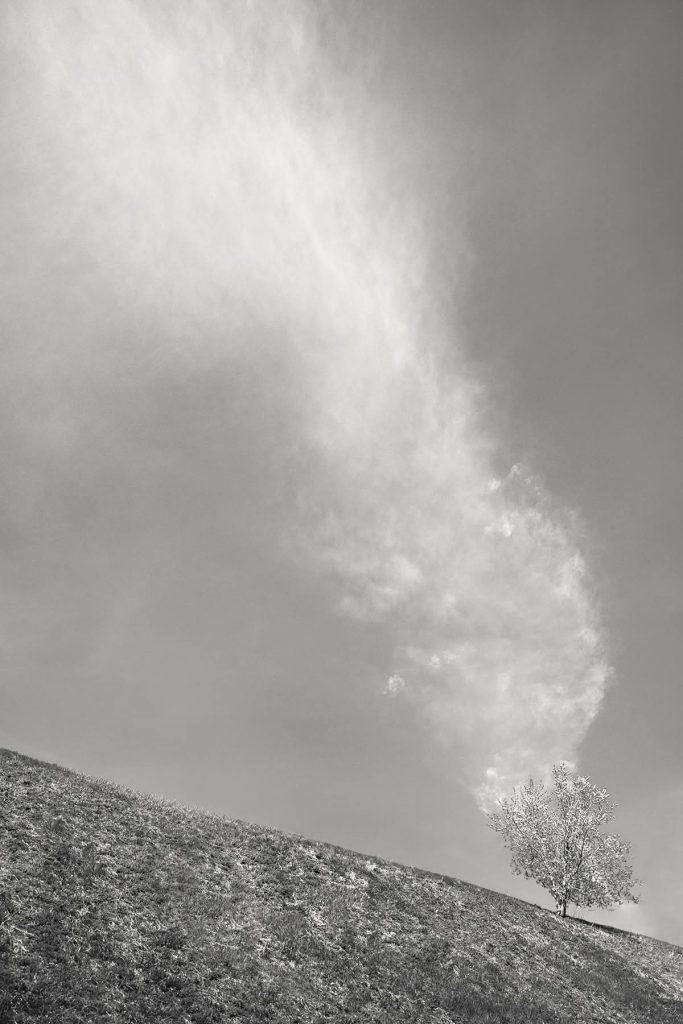
Su obra no pretende documentar un paisaje, sino traducir una experiencia. La conciencia agridulce de la transitoriedad de todas las cosas impregna sus imágenes, confiriéndoles un aire inconfundible de elegía visual. Sus composiciones, siempre depuradas, a menudo en blanco y negro, hablan de un esfuerzo por reducir el mundo a su esencia gráfica. En tal sentido, lejos de funcionar como fondo o escenario, la naturaleza hace las veces de interlocutor semiótico: la luz revela el sentido, así como la textura del momento. Cada elemento reporta una función, aunque no sin misterio, siempre desde la inquietud del instante. En sus encuadres, que frecuentemente juegan con el espacio negativo, se percibe claramente un eco de la tradición de la pintura a tinta china y una clara influencia de la estética zen.
Para Gyoker, la cámara se convierte así en un medio para la meditación, y su labor con ella, un camino a lo profundo interrogador. Conversamos con ella para adentrarnos en éste, el universo de su propuesta.
Está claro que, por así decirlo, tienes algo importante que decir. ¿Cómo se convirtió la fotografía en tu medio para hacerlo? ¿Qué te llevó a presentar tu visión desde detrás de la cámara?
Cogí una cámara a una edad muy temprana. Mi padre, arquitecto, adoraba tomar fotografías durante nuestros paseos habituales por Budapest, y compartía conmigo qué temas le resultaban interesantes y por qué. Aunque no intentaba emularlo, sus palabras resonaron en mí. Una vez, me compró una maravillosa y vieja cámara analógica de telémetro Zeiss Ikon «Ikonta» plegable que producía impresionantes fotografías cuadradas en blanco y negro. Era un amante de los marginados, por así decirlo, y mis primeras fotografías eran crudas: de los oprimidos, los excluidos, de personas que luchaban en la vida. Mi alma adolescente sentía una afinidad particular con ellos. Más tarde, me encantó experimentar con otros temas. Dado que nací en un floreciente y suave mes de mayo, un mes al que siempre quieres regresar en el hemisferio norte, mi enfoque se desplazó gradualmente hacia temas naturales y la belleza, como si buscara el hogar primordial.
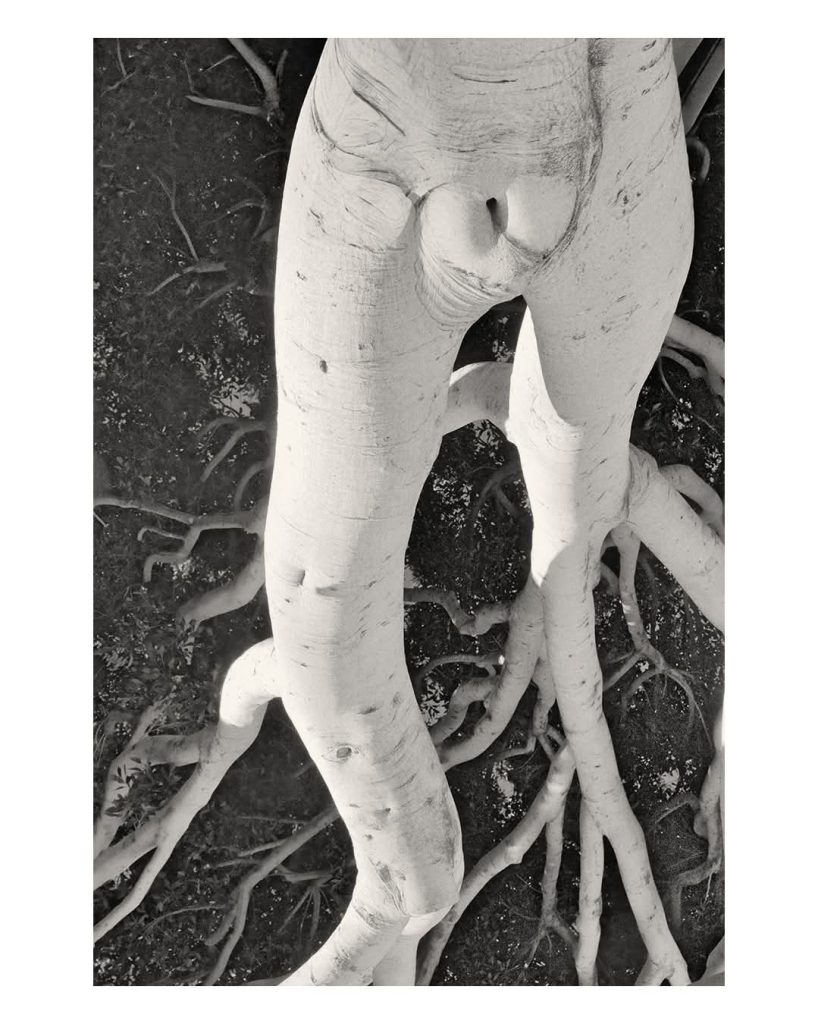
Estaba cautivada por la belleza, ya fuera expresada en el arte, la arquitectura o la naturaleza, y mi búsqueda de lo Inefable me llevó a buscarla a dondequiera que iba. La encontré no solo en lugares espectaculares, sino también en los rostros de las personas, en elementos ocultos de la naturaleza y en las hermosas interrelaciones gráficas entre sus elementos visuales.
Hice mi maestría en historia del arte y trabajé en la Galería Nacional de Canadá durante muchos años, envuelto por la belleza que era una especie de refugio y consuelo, un mundo al que sentía que pertenecía. Solo después de varios años encontré mi vocación en el diseño gráfico y la fotografía, que me ofrecían un mayor potencial creativo.
¿Dar vida a una visión o encontrarla en la realidad? En otras palabras: ¿utilizar la fotografía o servir a la imagen que se revela?
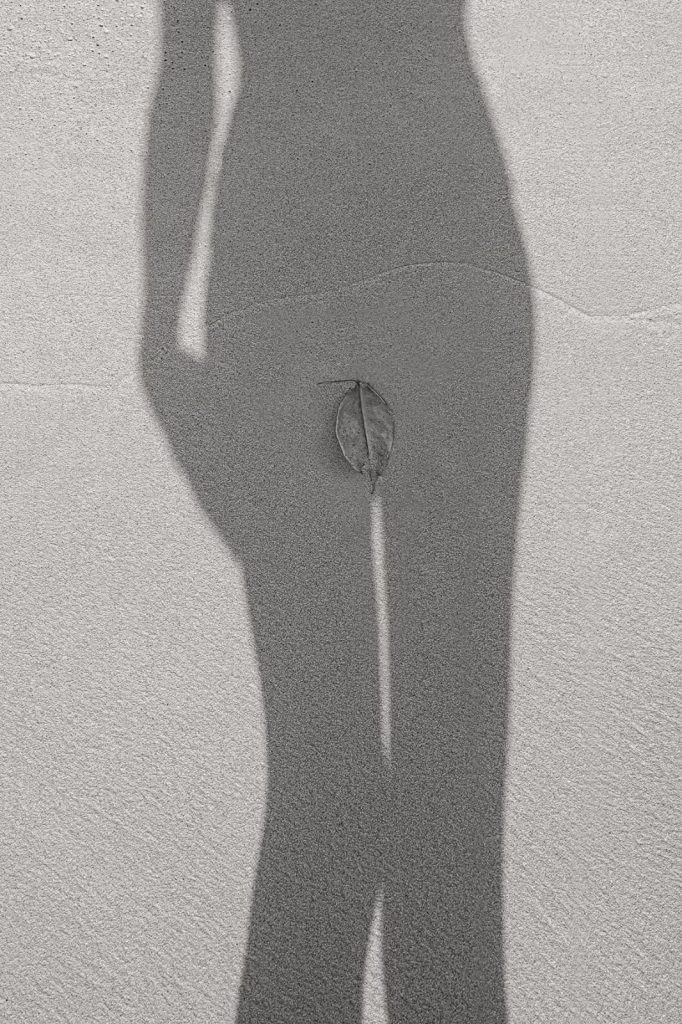
Intento vaciarme de mí misma, por así decirlo, al salir, esté donde esté. Me gustaría estar abierto, receptivo y ser digno de asombro. No salgo con imágenes preconcebidas en mente. Mi objetivo es permitirme ser utilizado por la naturaleza, por así decirlo.
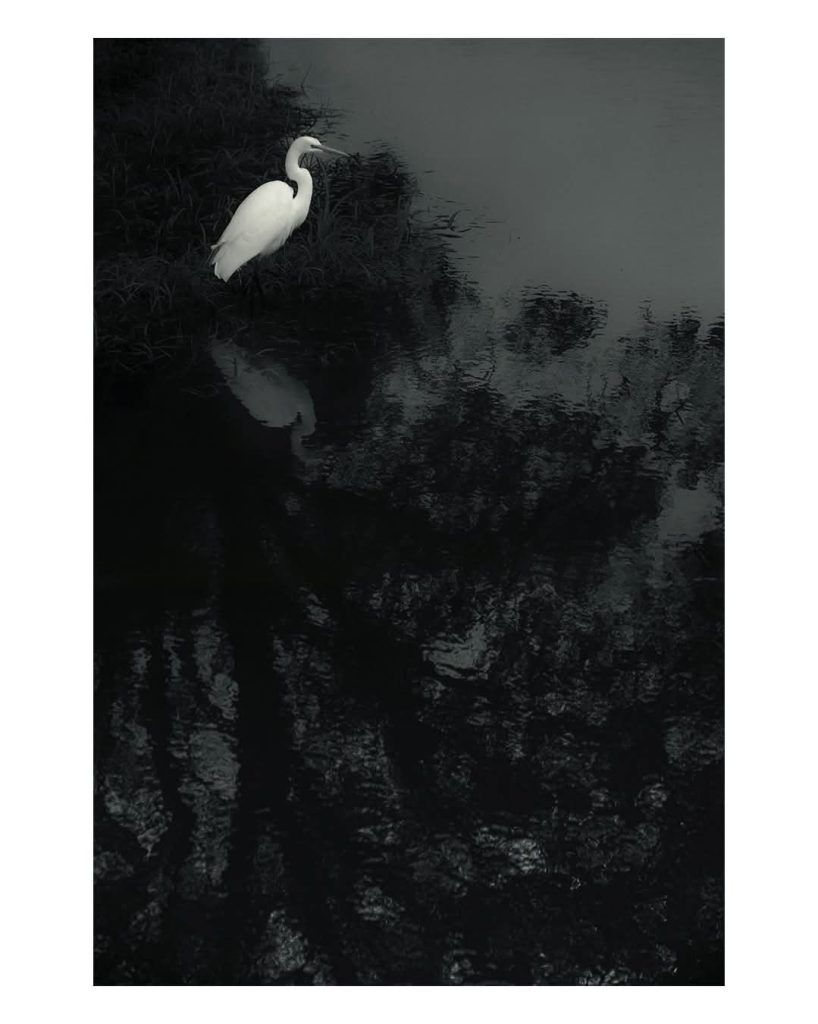
Hubo un período en el que me sentía molesta al ver una magnífica garza blanca alejarse volando antes de que pudiera tomar mi cámara, pero ese arrepentimiento se ha desvanecido lentamente. Pienso en una analogía con un jardín zen que leí una vez. Al parecer, los jardineros zen de Japón no se consideran separados de los jardines en sí, imponiéndoles un diseño humano arbitrario, sino que permiten que las manifestaciones de la naturaleza sugieran la disposición y revelen su carácter integral.
Queda claro que la naturaleza tiene una enorme importancia en tu trabajo, pero ¿qué es lo que te motiva de ella, en particular, y de qué manera lo hace?
Hay una afinidad con ciertos temas que admito que todavía encuentro irresistibles después de muchos años, temas que hablan del concepto japonés de Mono no aware (que se podría llamar la conciencia tierna de la transitoriedad de todas las cosas). Esto abarca también una ligera nostalgia, ya que el momento presente es ahora, y solo ahora, y nunca volverá a ser exactamente igual. Así que hay un sentido de absoluta preciosidad y fragilidad que van de la mano, y me gustaría darle alguna expresión, ya sea a través de nubes cirros cepilladas en el cielo, ondas caligráficas en un estanque, el brillo en las hojas de los álamos o el manto fresco de nieve que cubre la tierra.
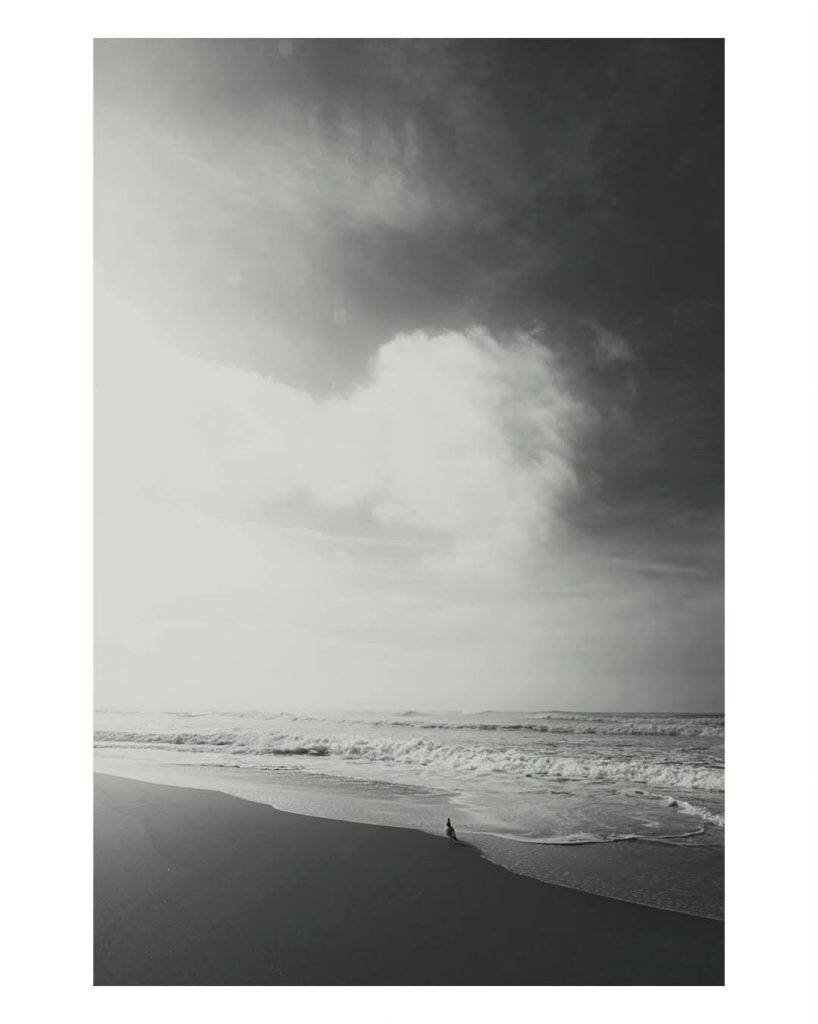
La gran mayoría de tu trabajo es en blanco y negro… ¿Cómo expresa, en contrastes y matices, lo que corresponde en cada caso?
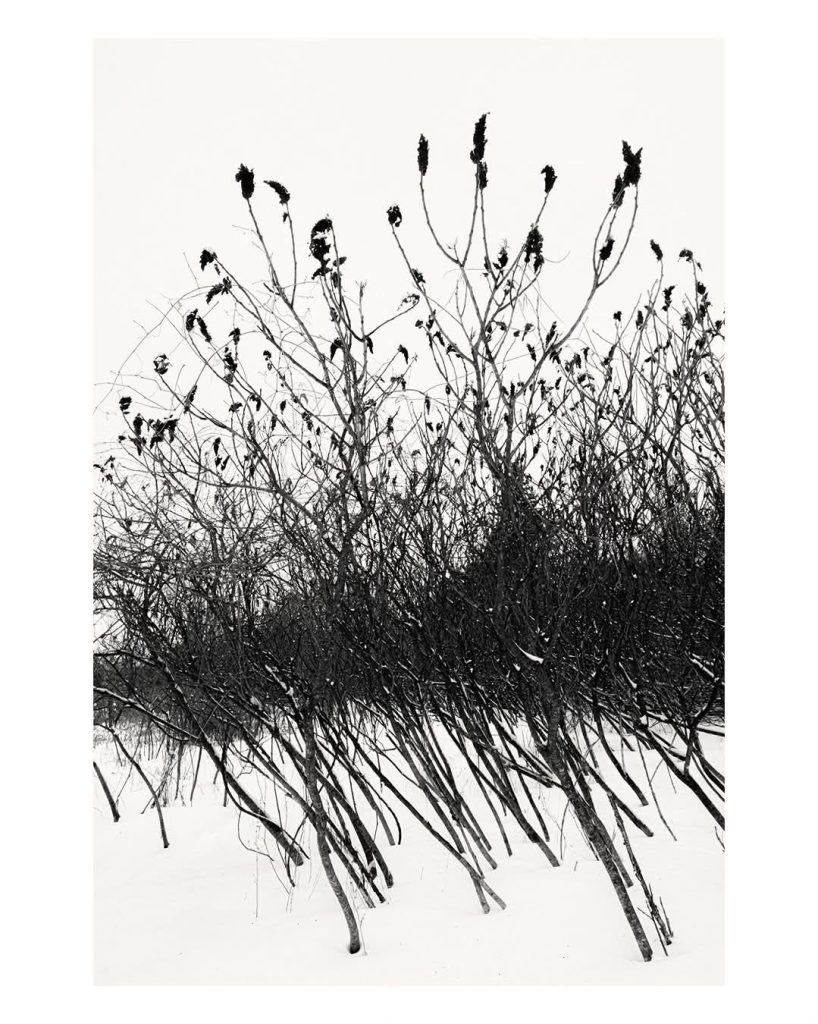
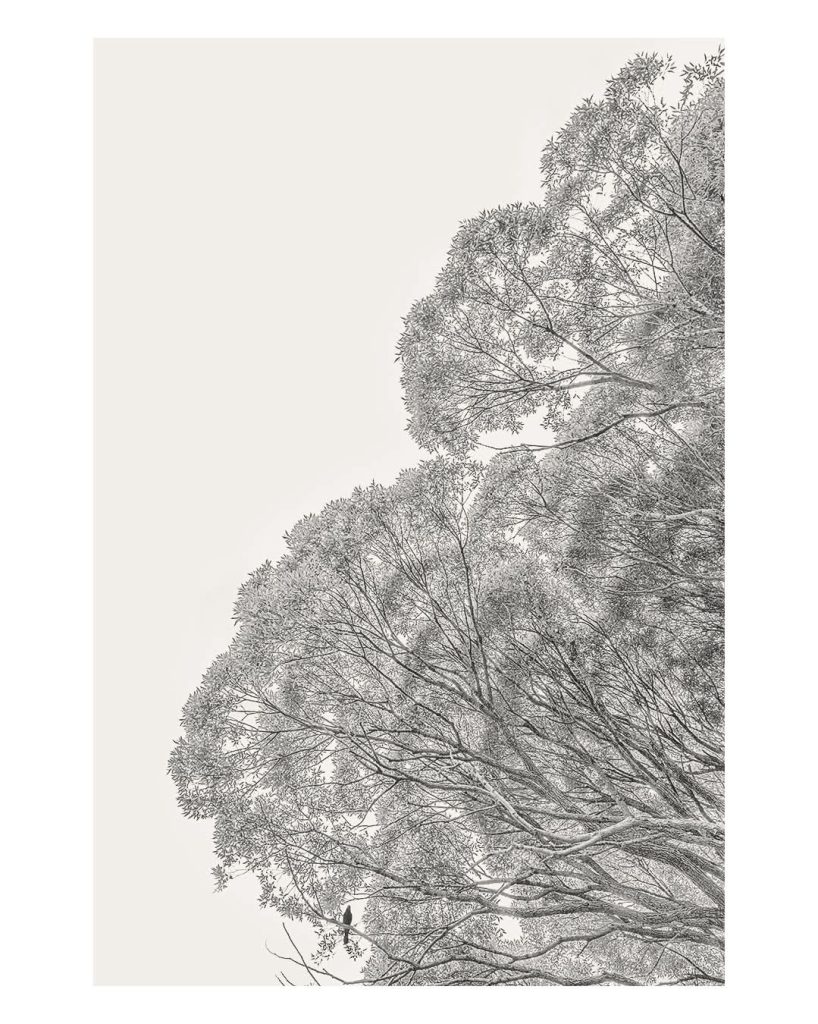
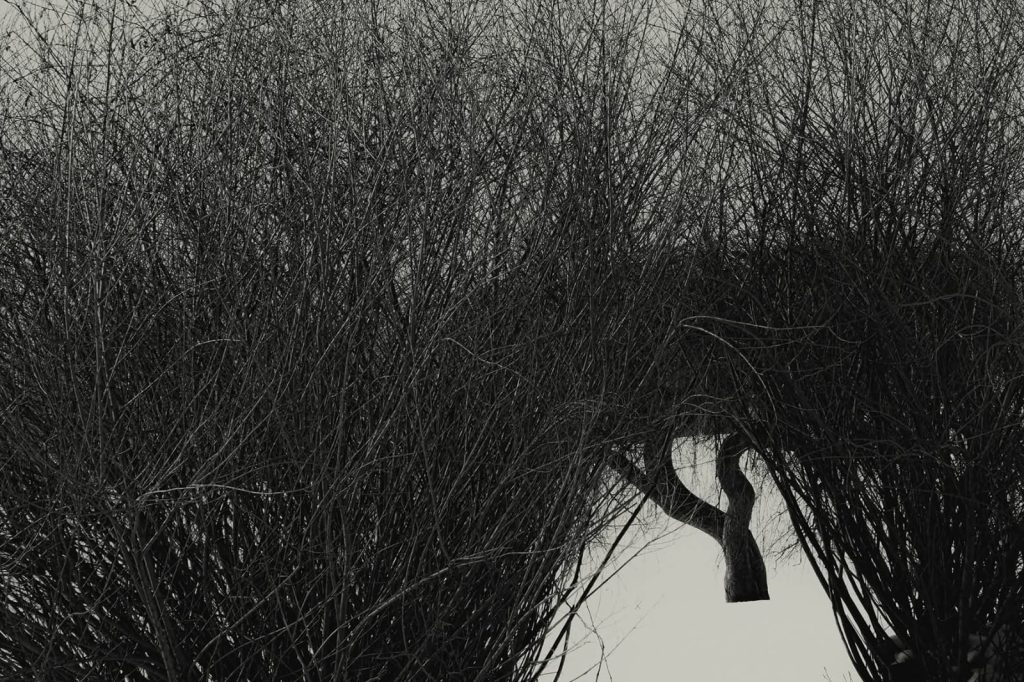
Encuentro, en la mayoría de los casos, que el potencial gráfico de las imágenes monocromáticas se adapta mejor a los temas que fotografío. Tomemos el invierno, por ejemplo: no podría pensar en nada más que en blanco y negro al ver las siluetas gráficas y escultóricas de los elementos naturales sobre la nieve prístina. También encuentro que el blanco y negro permite que el espacio negativo forme parte del encuadre más fácilmente, mientras que los matices y los detalles se vuelven parte integral de la imagen. También está la sensación de Ichi-go, Ichi-e, el término japonés para apreciar el momento presente, que trato de plasmar en una toma que espero resuene también en los demás.
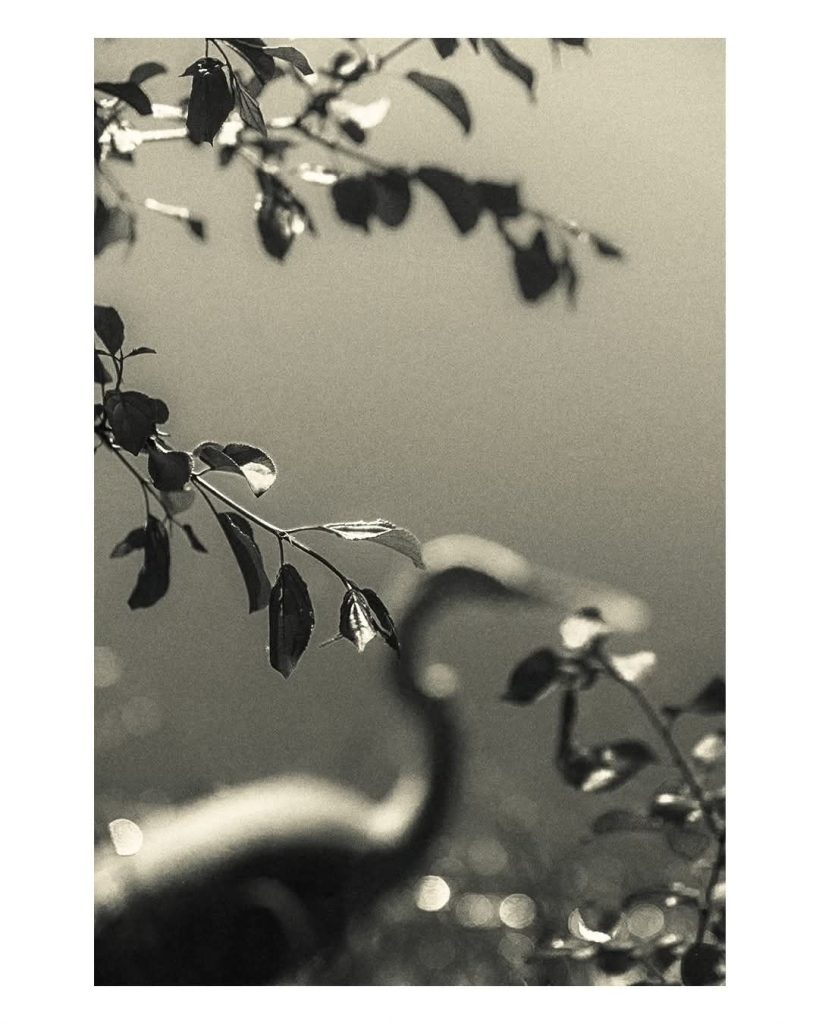
¿Qué otras obras, incluso de otros campos fuera de la fotografía, consideras que dialogan con tu trabajo?
Casi siempre uso haikus o fragmentos de poemas para acompañar mis fotos de la naturaleza. Encuentro que un tema, un estado de ánimo o un movimiento a veces evoca un verso de poesía; están unidos por una resonancia interior compartida, por así decirlo. Otras veces, compongo yo mismo los haikus. Juntos, espero que estas imágenes y palabras puedan abrir un espacio más profundo para la contemplación tranquila.
¿Qué crees que ha cambiado en tu trabajo fotográfico desde el principio hasta hoy? ¿En qué medida podemos hablar de evolución o más bien de transformación? ¿Y qué tan profunda o específica es esa transformación en términos de forma?
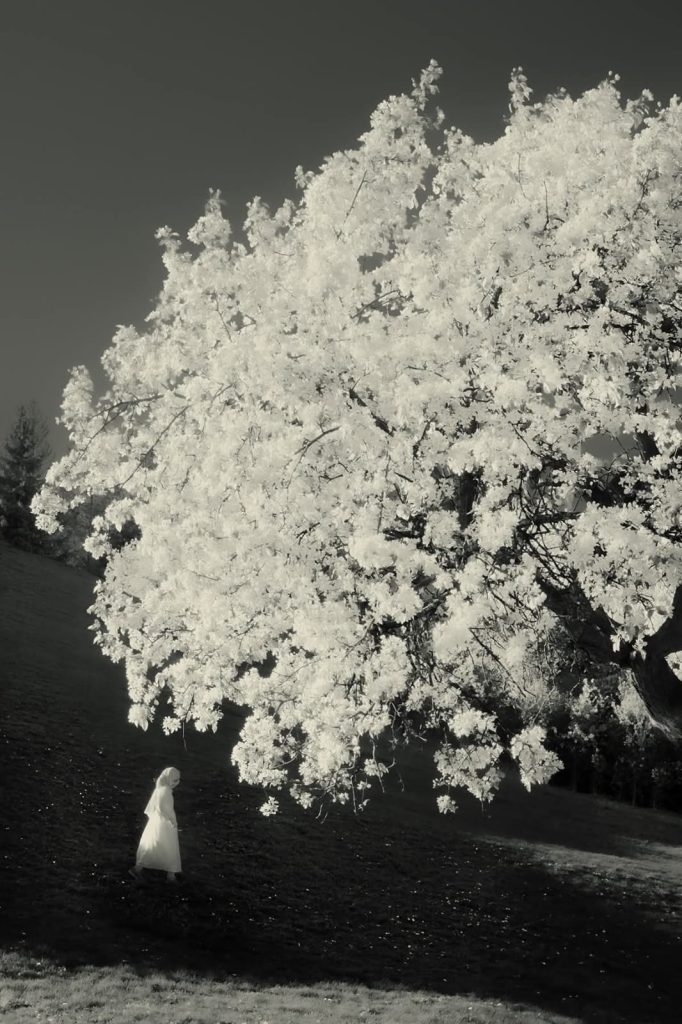
Busco encontrar un estado de «flujo», de entrega y de pérdida (o podrías llamarlo igualmente, paradójicamente, de encuentro) de mí mismo. Espero que mi cámara ya no sea solo una herramienta para registrar lo que hay, por hermoso que sea el tema, sino para ofrecer un portal hacia un espacio suave y lúdico donde el límite entre mi estado interno y el mundo exterior se disuelva por completo. También hay tomas nacidas de referencias literarias o musicales que pueden venir a la mente sin darse cuenta.
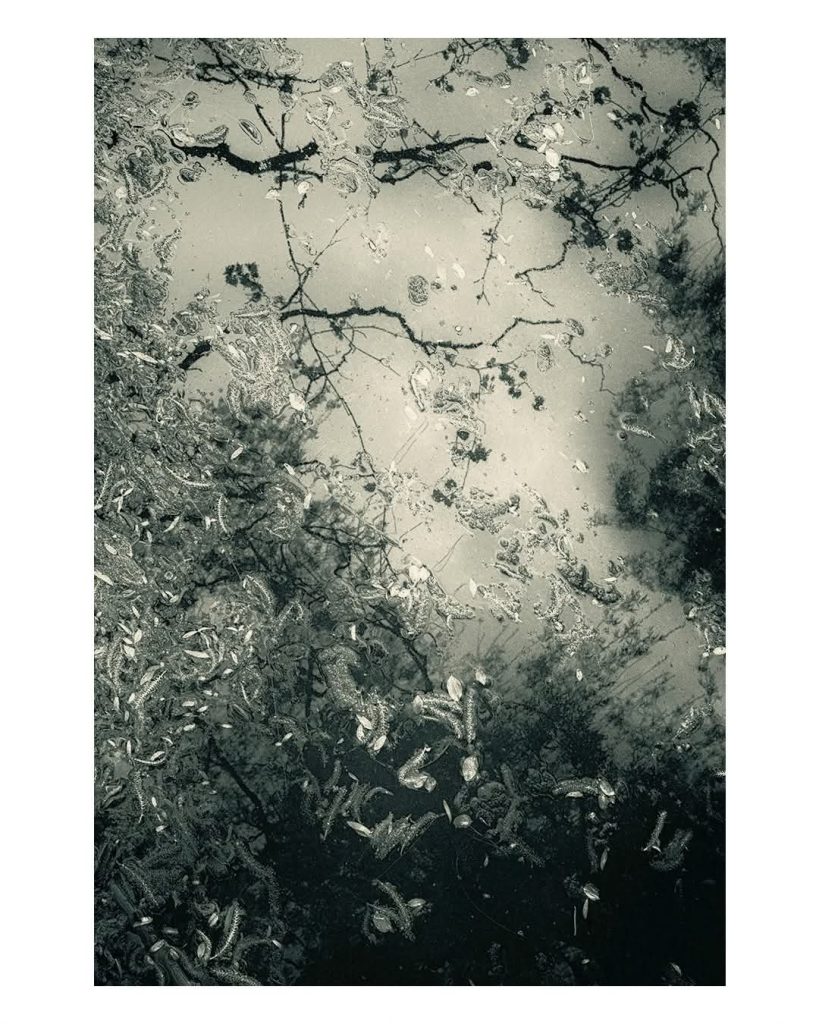
¿Hacia dónde se dirige ahora tu trabajo?
Espero avanzar, muy suavemente, hacia una abstracción más meditativa, desdibujando los límites entre lo «externo» y lo «interno», y entre el mundo fenoménico y el Noúmeno. En cuanto a cómo va a suceder esto, realmente no puedo decirlo. Todo lo que sé es que me gustaría hacer shinrin yoku —baños de bosque, por así decirlo— con mi cámara, el mayor tiempo posible.
[Todas las imágenes, del sitio web de la artista: Sarolta Gyoker | Fine Art Photography]
(ENGLISH —ORIGINAL— VERSION)
The Restlessness of the Instant: A Conversation with Sasa Gyoker about Her Work
Translation by Tiffany Amber Elias Trimble
Landscape photography has often faced the constant risk of reduction to a postcard, to the reproduction of the striking without the discomfort of the real; complacency instead of questioning. Against mere spectacularity, the work of Sasa Gyoker, a Hungarian photographer based in Canada, presents itself as a pause and an interrogation. From her early images of the marginalized in Budapest to her current search for the ineffable in nature, Gyoker has built a coherent trajectory. Her training as an art historian, her work at the National Gallery of Canada, and her subsequent development as a graphic designer provided her with an eye trained in composition and visual tradition, but it was in photography where she found the vehicle for her deepest search.
Her work does not aim to document a landscape, but to translate an experience. The bittersweet awareness of the transitoriness of all things permeates her images, giving them an unmistakable air of visual elegy. Her compositions, always refined, often in black and white, speak of an effort to reduce the world to its graphic essence. In this sense, far from functioning as a backdrop or setting, nature acts as a semiotic interlocutor: light reveals meaning, as well as the texture of the moment. Each element reports a function, although not without mystery, always from the restlessness of the instant. In her frames, which frequently play with negative space, one clearly perceives an echo of the tradition of Chinese ink painting and a clear influence of Zen aesthetics.
For Gyoker, the camera thus becomes a means for meditation, and her work with it, a path to the profound interrogator. We spoke with her to delve into this, the universe of her proposal.
It is clear that, so to speak, you have something important to say. How did photography become your medium? What led you to present your vision from behind the camera?
I picked up a camera at a very young age. My father, an architect, loved taking photographs during our regular walks in Budapest, and would share with me what subjects he found interesting and why. Although I did not try to emulate him, his words struck a chord in me. Once, he bought me a wonderful old folding Zeiss Ikon “Ikonta” rangefinder analog camera that produced stunning black-and-white square photographs. I was a lover of the underdog, so to speak, and my first pictures were raw—of the downtrodden, the outcast, of people who were struggling in life. My teenage soul felt a particular kinship with them. Later on, I loved experimenting with other subjects. Given that I was born in a blooming, gentle May, a month you always want to return to in the Northern Hemisphere, my focus gradually shifted towards natural subjects and beauty, as if to seek the primal home.
I was besotted by beauty, whether expressed in art, architecture, or nature, and my search for the Ineffable led me to seek it everywhere I went. I found it not only in spectacular places, but also in people’s faces, in hidden elements of nature and in the beautiful graphic interrelationships between its visual elements.
I did my Master’s degree in art history and worked at the National Gallery of Canada for many years, enveloped by beauty that was a kind of refuge and a solace—a world where I felt I belonged. It was only after several years that I found my vocation in graphic design and photography, which afforded me greater creative potential.
Bringing a vision to life or finding it in reality? In other words: using photography or serving the image that reveals itself?
I try to empty myself of myself, so to speak, when venturing out, wherever I am. I would like to be open, receptive, and worthy of wonder. I do not set out with any preconceived images in mind. My aim is to allow myself to be used by nature, as it were.
There was a period when I felt upset seeing a marvellous white egret flying away before I could pick up my camera, but that regret has slowly faded away. I think of an analogy with a Zen garden that I once read about. Apparently, the Zen gardeners of Japan do not consider themselves separate from the gardens themselves, imposing arbitrary human design upon them, but rather allow nature’s manifestations to suggest the layout and reveal their integral character.
It is clear that nature has enormous importance in your work, but what about it, in particular, motivates you, and in what way does it do so?
There is an affinity with certain themes that I admit that I still find irresistible after many years—themes that speak to the Japanese concept of Mono no aware (which one could call the tender awareness of the transitoriness of all things). This encompasses a slight nostalgia as well, as the present moment is now, and now only, and it will never be exactly the same ever again. So there is a sense of utter preciousness and fragility that go hand in hand, and I would like to give some expression to it, whether via cirrus clouds brushed on the sky, calligraphic ripples in a pond, or the glimmer on the poplar leaves, or the fresh blanket of snow covering the earth.
The vast majority of your work is in black and white… How does it express, in contrasts and nuances, what corresponds in each case?
I find, in most cases, the graphic potential of monochrome images more suited to the subjects I shoot. Take winter, for instance—I could not think of anything other than black and white when seeing the graphic sculptural silhouettes of natural elements on the pristine snow. I also find that black and white allows negative space to be part of the frame more readily, while nuances and details become integral to the image. There is also the feeling of Ichi-go, Ichi-e, the Japanese term for cherishing the present moment, that I try to embody in a shot that hopefully resonates with others as well.
What other works, even from other fields outside photography, do you consider your work to be in dialogue with?
I almost always use either haikus or excerpts from poems to accompany my photos of nature. I find that a theme, a mood, or a movement at times evokes a line of poetry—they’re bound by a shared inner resonance, as it were. Other times, I compose the haikus myself. Together, I hope these images and words may open up a deeper space for quiet contemplation.
What do you think has changed in your photographic work from the beginning to today? To what extent can we speak of evolution or rather of transformation? And how deep or specific is that transformation in terms of form?
I seek to find a state of «flow», of surrender and losing (or you could equally call it, paradoxically, finding) myself. I hope that my camera is no longer a tool merely to record what is there, however beautiful the subject may be, but to offer a portal into a soft, playful space where the boundary between my internal state and the external world completely dissolves. There are also shots born out of literary or musical references that can come to mind unawares.
Where is your work heading now?
I hope to move, ever so gently, deeper into meditative abstraction, blurring the boundaries between “external” and “internal”, and between the phenomenal world and the Noumenon. As to how this is going to happen, I can’t really say. All I know is that I would like to do shinrin yoku—forest bathing, as it were — with my camera, as long as possible.
[All the images, from: Sarolta Gyoker | Fine Art Photography]