
En busca de intimidad: Conversación con Henri Senders acerca de su obra
Con Juan Pablo Torres Muñiz
La ambigüedad, como recurso de planteamiento en la labor artística, para la composición de un texto, de una imagen, es de las primeras y más potentes tentaciones. Con sus consecuencias: el menor fallo de pulso delata pronto una incertidumbre honda, por detrás de la que se pretende sembrar, en el dominio mismo del artefacto o, peor, en la concepción misma de la idea a transmitir, repentinamente convertida en excusa de un alarde sofisticado. Disimula algo la falta de potencia cuestionadora, pero sólo entre neófitos. Cuando, por el contrario, es ofrecida por manos diestras, surge como seductor punto de partida para el lector, para el espectador, a fin de que se sienta más bien autor de una interpretación original. Un logro.
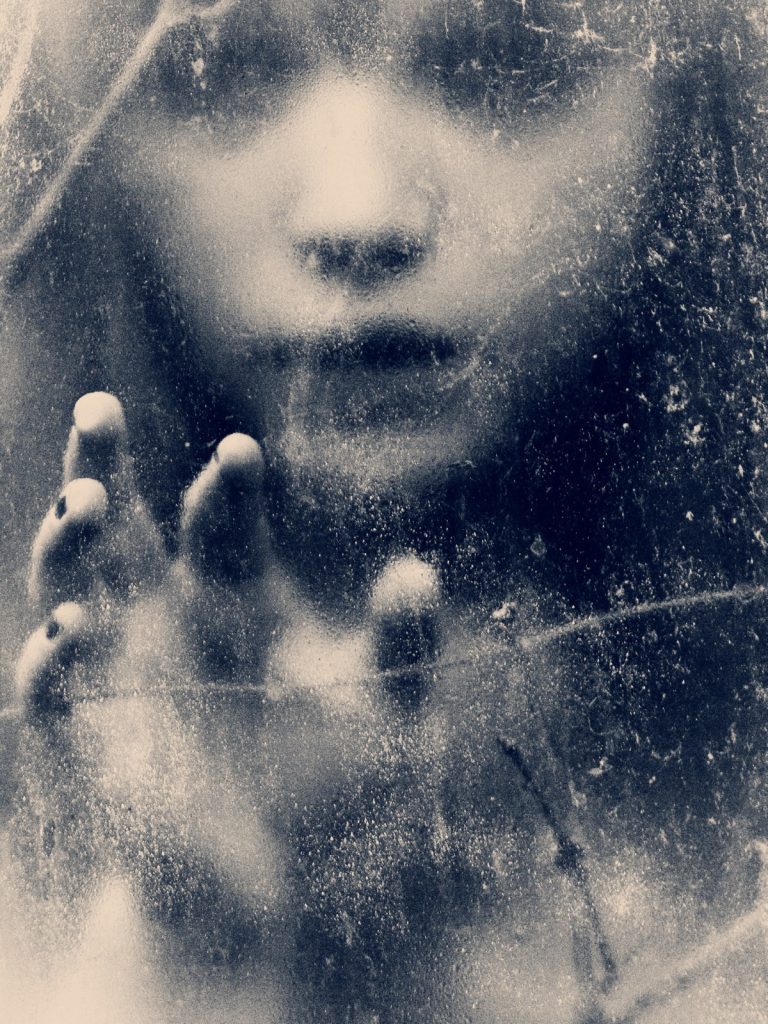
Henri asiente… Cuanto se sabe de antemano, pues no se pregunta… Pero no es el caso: su experiencia alumbra fuertemente su trabajo, en buena medida, explica su fragua.
Hablar de mi fotografía es hablar de mi vida y de cómo crecí. Ambas están entrelazadas más allá de toda posibilidad de desenredarlas…
Nací en 1958, en un pequeño pueblo de los Países Bajos. Como me sentía un extraño en el mundo, aprendí observando y analizando a los demás: escuchando sus voces, estudiando los rostros y el lenguaje corporal. Crecí entre personas que no siempre encajaban; personas que eran amables, creativas, vulnerables, pero al mismo tiempo, personas a las que otros evitaban debido a adicciones, alcohol, … y yo me sentía cómodo con ellas.
Experimenté (demasiada) pérdida, bien de cerca (la primera vez a los 6 años) y aprendí a entender cómo incluso las buenas personas pueden cometer errores terribles, pero más importante: cómo una conversación, una palabra amable y compasiva, una mano tendida, un refugio seguro por un día… pueden marcar la diferencia en la vida de alguien.
Al final, las imágenes que capturo, las personas con las que trabajo, reflejan a las que conocí entonces, a las que amé y que aún busco y amo ahora. Por supuesto, estas imágenes también me reflejan a mí, lo que estoy buscando y lo que es importante para mí.
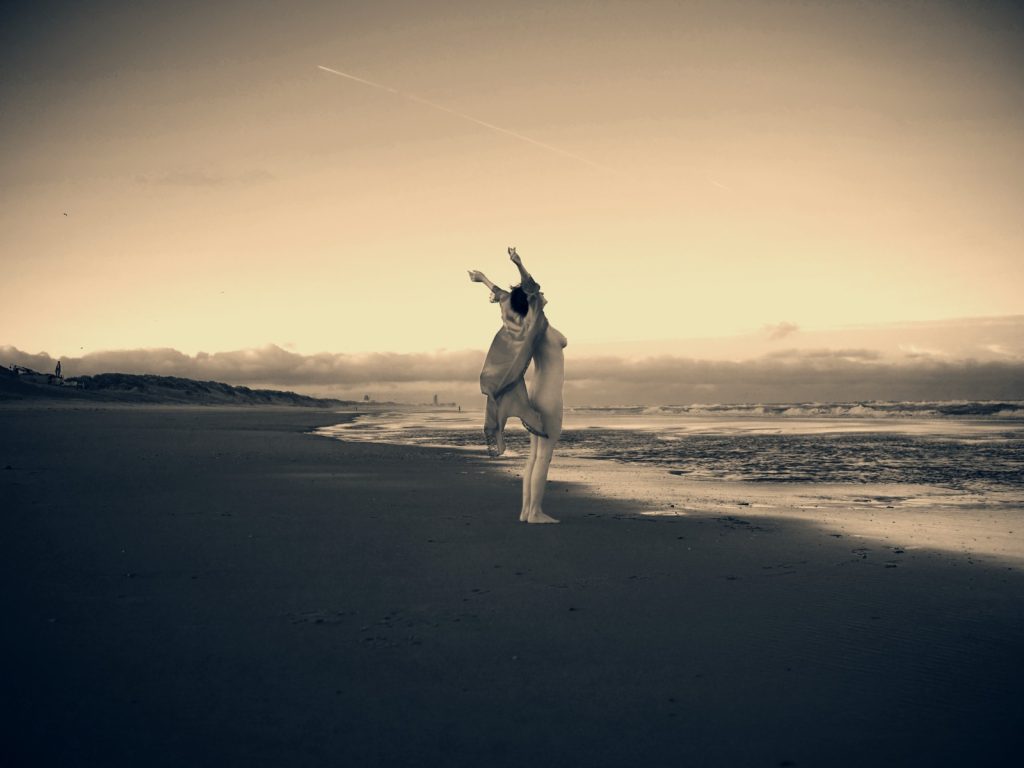
Sin embargo, tuvo que haber un primer paso… a esto que ahora vemos…
En 2006, a la edad de 47 años, empecé a fotografiar «modelos» casi de la nada; había sufrido burn-out y necesitaba hacer algo que pudiera distraerme de mis luchas y darme energía. No tenía experiencia previa con el arte, y mucho menos con la fotografía (ni siquiera me gustaba ir a los museos), pero empecé como hago con la mayoría de las cosas: simplemente haciéndolo (una y otra vez).
Tu noción de belleza, sin embargo, contrasta abiertamente con la visión estética popular sobre todo en el ámbito anglosajón; se aproxima más bien a la poética de la tradición grecorromana… Lejos de una apelación a la arbitrariedad perceptiva, nos vemos en ella ante un rango determinado de sentidos, entre los cuales, por gracia de la composición, las formas, consistencia y el color, aparte, desde luego, el acierto de oportunidad, la respuesta parece más bien una sola. El silencio es elocuente, sobre todo, cuando invita a asentir en el común acuerdo…
La belleza puede encontrarse en lo imperfecto; cuando tengo que elegir entre una foto bien iluminada, nítida como una navaja, de un cuerpo perfecto en una pose perfecta o la de una mujer anciana, con la vida reflejada en sus ojos y manos, fotografiada con luz suave, a través de una capa de polvo… es una elección fácil para mí: quiero capturar a la persona frente a mi lente: su esencia, sus luchas, sus esperanzas y sueños, su belleza e imperfecciones.
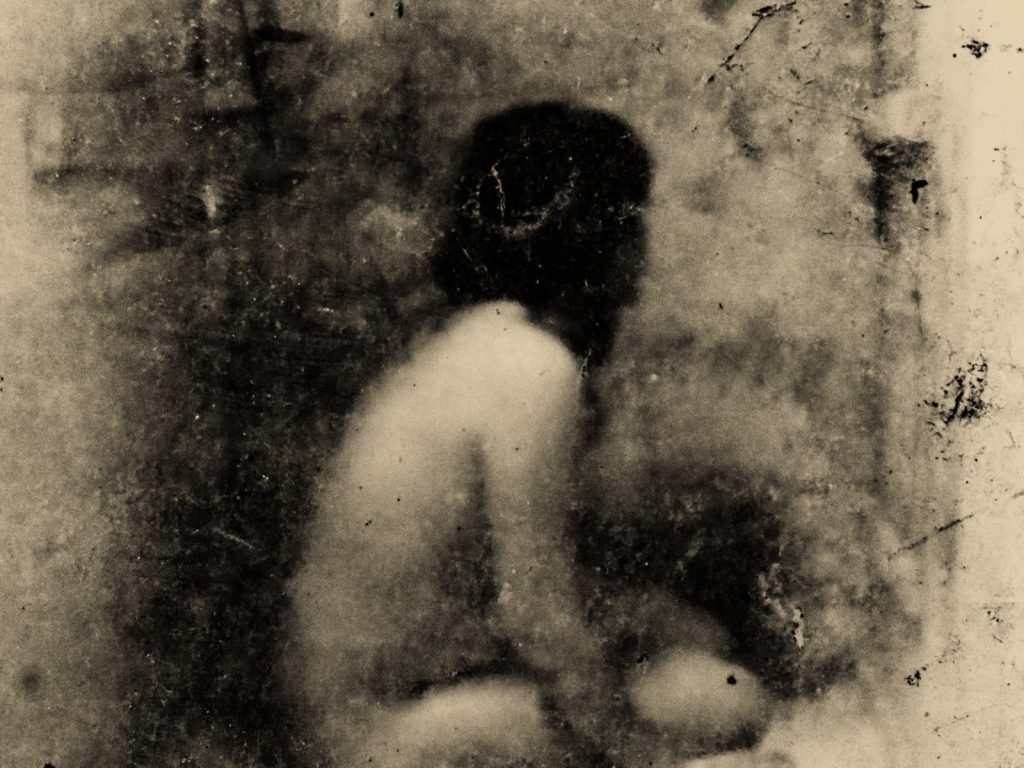
Acoges a quienes hacen las veces de modelo en tu obra. Se da una suerte de descubrimiento…
Dado que la mayoría de la gente se queda al menos un par de días con mi pareja y conmigo, no hay presión para crear nada de inmediato, en este preciso instante: podemos esperar hasta que el momento se sienta adecuado; incluso si eso significa que no se toman fotos durante toda la estancia y alguien tiene que volver otra vez.
Tu trabajo fotográfico gira en torno a la imagen de la mujer, o más bien, proyecta una imagen de la mujer, alrededor de la cual gravita todo lo demás… ¿Desde cuándo? ¿Cómo? ¿Y… por qué? Es decir, ¿de qué forma es la mujer en realidad mucho más que una identidad en tu trabajo artístico?
Fotografío a la mujer porque me intriga, los hombres no y a menudo siento que las comprendo mejor. También me resulta mucho más fácil capturar a la mujer de una manera interesante que a los hombres (con mi amor por la intimidad y la atmósfera tiendo a capturar a los hombres de una manera femenina).
Las personas (mujeres) que capturo necesitan reflejar su alma y su vida en general. Eso es todo. Y al hacer eso, reflejan cosas que están más allá de la racionalidad y que son esenciales para nosotros como seres humanos: sentir y ser sentidos.
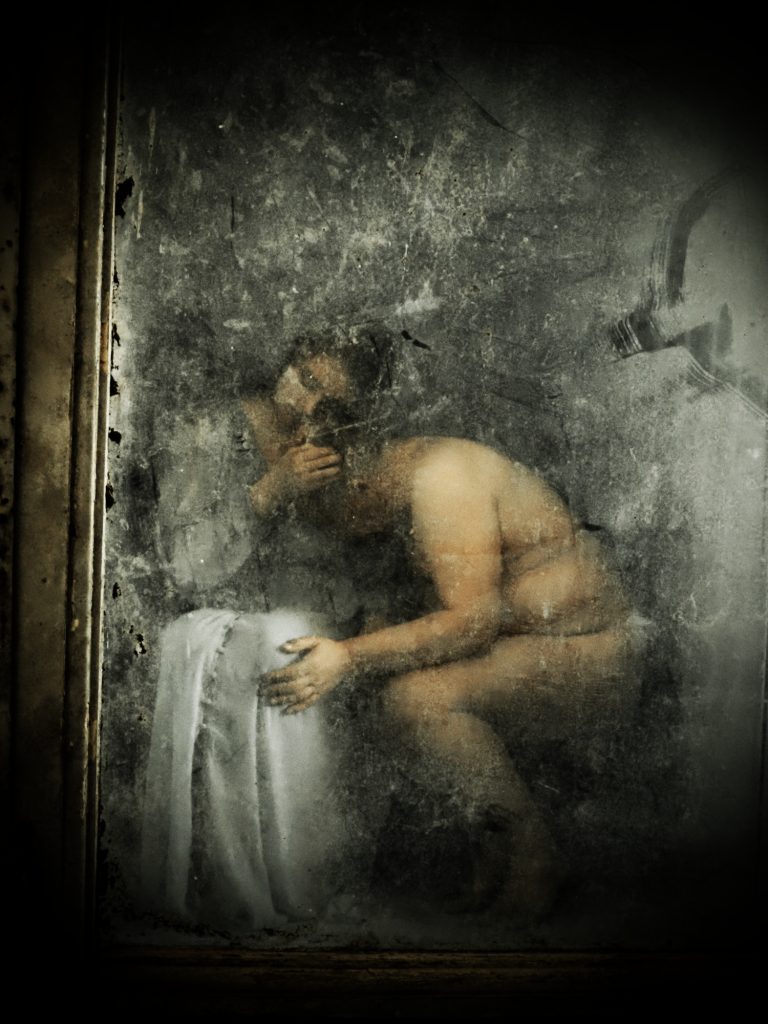
Está claro que la luz emana de ellas, de las damas que eliges. Pero ¿cómo se da esta selección? ¿Qué ves en ellas, de particular, más allá de su belleza evidente?
Las personas con las que colaboro son elegidas por intuición. Nunca estoy buscando cuerpos perfectos o caras perfectas. Normalmente, es la mirada en los ojos de alguien lo que me intriga. Tampoco me importan las habilidades de modelaje; alguien sólo necesita ser amable, motivado y genuino. A través de los años, la fotografía se convirtió en un encuentro con personas hermosas: hablar, caminar, comer algo y pasar un rato divertido juntos. Improvisar, mirar y esperar pacientemente el momento en que me enamoro de una imagen. Los resultados finales, las fotos, son como la cereza del pastel. Al invitar a personas a quedarse en mi casa y crear trabajo repartido en varios días, conocí a mucha gente maravillosa de muchos países diferentes. Personas que pueden parecer extrañas para otros, que no encajan del todo, que son vulnerables, que están intentando hacer un hogar seguro para sí mismas …: a menudo me refiero a ellas como mi gente.
Tu paleta de colores lleva pronto a inferir un clima intimista, pero también de extremos: o frío o, de hecho, consumido por las llamas. ¿Qué hay de la pasión en ello, o de otro impulso al que atiendes?
La forma en que uso los colores es intuitiva. Los primeros tres años de fotografía apenas trabajé con colores distintos a los tonos de gris y azul, porque no era capaz de juzgar los colores en absoluto. De un momento a otro eso cambió. A través de los años aprendí a trabajar con personas más expresivas y con movimiento (paso a paso). A través de los años aprendí a manejar colores más extremos también. La imagen básica en sí y mi estado de ánimo definen el resultado. No puedo predecirlo, ni quiero explicarlo después. Sólo necesita sentirse bien.
¿Qué trabajos, tanto de artes plásticas como de otro tipo, han influido en tu visión de la fotografía, no ya solamente a nivel estético, sino conceptual?
A nivel estético, los ojos femeninos a mi lado, mientras selecciono y edito fotos. De niño me encantaba mirar libros sobre la época medieval, la historia romana y griega. Supongo que la forma en que los pintores retrataban a las mujeres me resulta familiar. Eso es todo. No he sido influenciado por ningún otro tipo de arte o fotografía. Mi referencia es la vida, la gente con la que crecí y el deseo de conectar, de encontrar y compartir intimidad.
Una experiencia especialmente memorable en tu labor a lo largo de estos años…
Siempre he sido inseguro sobre mi trabajo… Todavía lo soy. La vida me decía que era un niño inteligente y luego un hombre inteligente (estadísticas, consultoría, mediación, política), pero crear algo hermoso no era en absoluto uno de mis talentos. Así que cuando la gente me decía que era un artista talentoso no podía lidiar con eso. Probablemente también porque mi fotografía era demasiado personal para mí. Entonces, en 2010, recibí una invitación para participar en la Bienal de Arte de Florencia 2011, algo aterrador…, pero decidí aceptar. Durante la bienal, que duró 9 días, dos veces una mujer joven repasó mis fotos y luego me miró con lágrimas en los ojos. Eso me hizo darme cuenta de que debía haber hecho algo bueno. Que, si mi trabajo conmueve a sólo a uno de cada diez mil, aun así, conmueve a mucha gente: mi gente. Eso me dio paz.
Siete años después (2018) me topé con el perfil de Lucia en un sitio web de fotografía de modelos. Sus fotos no eran interesantes, pero algo en sus ojos y las palabras que usaba me provocó. Le escribí un mensaje y tras muchos chats y unos meses después la fotografié por primera vez en Portugal. Apenas dos meses después me visitó a mí y a un amigo fotógrafo en los Países Bajos. Allí la fotografié durante una o dos horas en una cocina vieja. Unos días después seleccioné por intuición una serie de imágenes de esa sesión e hice algunas ediciones de prueba. Cuando las miramos juntos, a ambos se nos colmaron de lágrimas los ojos. Las imágenes reflejaban su vida, sus esperanzas y sueños, sus desilusiones, su dolor… Por primera vez ese pequeño sueño escondido mío se había hecho realidad: hacer una serie que reflejara la vida de alguien (la vida de una mujer) sin escenificarla.
¿Qué te gustaría que te pregunte alguien luego de haber observado detenidamente tu obra?
No lo sé. Sólo espero que ella o él tengan «esa mirada» en los ojos después.
¿Títulos?
No pongo títulos a mi trabajo, ni lo explico: todo está ahí para ver y sentir, no se necesitan palabras. Creo por intuición y desde el corazón y quiero hablarle a la intuición y al corazón de los demás.
ENGLISH (ORIGINAL) VERSION:
In Search of Intimacy: A Conversation with Henri Senders about his work
Translation by Rebeca Sanz
Ambiguity, as a resource in the approach to artistic work, for the composition of a text or an image, is one of the first and most powerful temptations. With its consequences: the slightest lapse in execution soon betrays a profound uncertainty, behind which one intends to sow doubt, in the very fabric of the artifact or, worse, in the very conception of the idea to be transmitted, suddenly turned into an excuse for a sophisticated display. It somewhat disguises a lack of questioning power, but only among the uninitiated. When, on the contrary, it is offered by skilled hands, it emerges as a seductive starting point for the reader, for the viewer, so that they feel rather like the author of an original interpretation. An achievement.
Henri nods… What is known beforehand is not questioned… But this is not the case: his experience strongly illuminates his work; to a great extent, it explains its forging.
To talk about my photography is to talk about my life and how I grew up. Both are entwined beyond the possibility of unravelling…
I was born in 1958, in a small town in the Netherlands. As I felt a stranger in the world, I learned by observing and analysing others: listening to their voices, studying faces and body language. I grew up among people who did not always fit in; people who were gentle, creative, vulnerable but at the same time, people who were being avoided by others due to addiction, alcohol, … and I felt comfortable with them.
I experienced (too much) loss from close-by (first at the age of 6) and learnt to understand how even good people can make terrible mistakes but more important: how one conversation, one kind and compassionate word, one helping hand, a safe haven for a day … can make a difference in someone’s life.
In the end, the images I capture/the people I work with, are reflecting the people I met then, loved then and still look for and love now. Of course these images also reflect me, where I’m looking for and what’s important to me.
Yet, there had to be a first step… to what we see now…
In 2006, at the age of 47, I started photographing ‘models’ almost out of the blue; I had a burn-out and I needed something to do that could take my mind of my struggles and give me energy. I had no prior experience with art, let alone photography (I did not even like to go to a museum) but I started as I do with most things: just by doing it (over and over again).
Your notion of beauty, however, openly contrasts with the popular aesthetic vision, particularly in the Anglo-Saxon sphere; it rather approaches the poetics of the Greco-Roman tradition… Far from an appeal to perceptual arbitrariness, we find ourselves before a determined range of meanings, among which, by virtue of the composition, the forms, consistency and color, and certainly the timeliness of the execution, the answer seems to be singular. The silence is eloquent, above all, when it invites us to assent in common agreement…
Beauty can be found in the imperfective; when I have to choose between a well-lit, razor-sharp photo of a perfect body in a perfect pose or one of an old woman, with life reflecting in her eyes and hands, photographed with soft light, through a layer of dust … it’s an easy choice for me : I want to capture the person in front of my lens: her essence, her struggles, her hopes and dreams, her beauty and imperfections.
You welcome those who act as models in your work. A kind of discovery takes place…
Since most people stay at least for a couple of days with my partner and me, there is no pressure in creating ‘this very instant’ : we can wait until the timing feels right ; even if that means there are no photos taken during an entire stay and someone has to come back another time.
Your photographic work revolves around the image of women, or rather, it projects an image of women, around which everything else gravitates… Since when? How? And… why? That is to say, in what way is woman actually much more than just an identity in your artistic work?
I photograph woman because they intrigue me, men do not and it feels often as if I understand them better. I also find it way more easy to capture woman in an interesting way than men (with my love for intimacy and atmosphere I tend to capture men in a feminine way).
The people (woman) I capture need to reflect their soul and life in general. That’s all. And by doing that they reflect things that are beyond rationality and that are essential for us as human beings: feeling and to be felt.
It’s clear that light emanates from them, from the ladies you choose. But how does this selection happen? What do you see in them, that is particular, beyond their evident beauty?
The people I collaborate with are chosen by intuition. I am never looking for perfect bodies or perfect faces. Usually, it is the look in someone’s eyes that intrigues me. Neither do I care about modelling skills; someone just needs to be friendly, motivated, and genuine. Through the years, photography became an encounter with beautiful people: talking, walking around, eating something, and having a fun time together. Improvising, looking, and patiently waiting for the moment that I fall in love with an image. The end results, the photos, are like the cherry on top. By inviting people to stay at my home and create work spread over multiple days, I met a lot of wonderful people from many different countries. People who might seem strange to others, who don’t really fit in, who are vulnerable, who are trying to make a safe home for themselves…: I often refer to them as ‘my people’.
Your colour palette quickly leads one to infer an intimate atmosphere, but also one of extremes: either cold or, in fact, consumed by flames. What role does passion play in this, or another impulse you are attending to?
The way I used colours is an intuitive one. The first three years of photography I barely worked with colours other than shades of grey and blue, because I was not able to judge colours at all. From one moment to the other that changed. Through the years I learned to work with more expressive people and movement (step-by-step). Through the years I learned to deal with more extreme colours too. The basic image itself and my state of mind define the result. I cannot predict it, nor do I want to explain it afterwards. It just needs to feel good.
What works, both from the visual arts and from other types, have influenced your vision of photography, not merely on an aesthetic level, but conceptually?
On an aesthetic level I’m influenced by the female eyes next to me while selecting and editing photos. As a kid I loved to look into books about medieval times, Roman and Greek history. I guess the way women were portrayed by painters resembled to me. That’s all. I’m not influenced by any other type of art or photography. My reference is life, the people I grew with and the desire to connect, to find and share intimacy.
A particularly memorable experience in your work over these years…
I’ve always been insecure about my work (still am). Life told me I was a smart kid and later an intelligent man (statistics, consulting, mediating, politics), but creating somethings beautiful was not at all one of my talents. So when people told me I was a talented ‘artist’ I couldn’t deal with that. Probably also because my photography was too personal for me. Then, in 2010, I got an invitation to participate in the Florence Art Biennale 2011 (scary but I decided to accept the invitation). During the biennale (lasting 9 days) twice a young women, went through my photos and afterwards looked at me with tears in her eyes. That did realize I must have done something good. That if I my work touches just 1 out of 10.000 it still touches a lot of people: my people. And even if I didn’t understand why, it gave me peace.
Seven years later (2018) I stumbled upon the profile of ‘Lucia’ on a website for model photography. Her photos were not interesting but something in her eyes and the words she used triggered me. I wrote her a message and many chats and a few months later I photographed her for the first time in Portugal. Barely 2 months later she visited me and friend photographer in the Netherlands. There I photographed her for 1-2 hours in a closet in an old kitchen. A few days later I picked by intuition a series of images out of that session and did some test edits. When we looked at them together, we got both tears in ours eyes. The images reflected her life, her hopes and dreams, her disillusions, her pain … For the first time that little hidden dream of me had come through: making a series that reflected someone’s life (the life of a woman) without staging it.
What would you like someone to ask you after having carefully observed your work?
I don’t know. I just hope she or he will have ‘that look’ in the eyes afterwards.
Going through your work is, in effect, stimulating…
I don’t give titles to my work, nor do I explain it: it is all there to see and feel, no words are needed. I create by intuition and from the heart and want to speak to the intuition and heart of others.