
El tiempo sin coartada: Apuntes sobre la superación poética de la narrativa clásica —y los tropiezos— en el cine de Terrence Malick
Por Juan Pablo Torres Muñiz
La escena ocurrió: espectadores abandonando la sala durante la proyección de El árbol de la vida en 2011, algunos exigiendo la devolución del importe de la entrada, y ciertas salas comerciales aceptando, como política de empresa, canjear el ticket por otra película si aquella no había sido de su agrado, una reacción que, para algunos observadores, tenía cierta lógica cuando el espectador esperaba ver una historia convencional de héroes reconocibles y se topó, en cambio, con un director que confronta a Brad Pitt con la muerte de un hijo mediante una indagación lírica que llega a desplegar imágenes del origen del universo. La misma película, presentada como candidata a la Palma de Oro en Cannes, provocó abucheos que se mezclaron con aplausos aún más ruidosos, una división de opiniones que la crítica achacó, en parte, a las desmesuradas expectativas generadas por el propio Malick. Este episodio trasciende la anécdota, constituye un síntoma. Revela que existe un contrato tácito entre el cine industrial y su espectador —un contrato que regula, entre otras cosas, cómo debe comportarse el tiempo dentro del relato— y que ese contrato, cuando se rompe, produce indignación antes que perplejidad estética.
¿Qué es exactamente lo que Terrence Malick rompe, y a qué precio? ¿En qué medida el cine poético desarrollado por Malick, que se aparta deliberadamente de la narrativa clásica y en particular de su gestión convencional del tiempo, constituye una superación legítima —no un simple capricho autoral ni una degeneración autoindulgente— de las convenciones industriales del relato fílmico, y qué límites reales, verificables, tiene esa apuesta cuando se la examina sin la reverencia que suele acompañar a las obras consagradas?
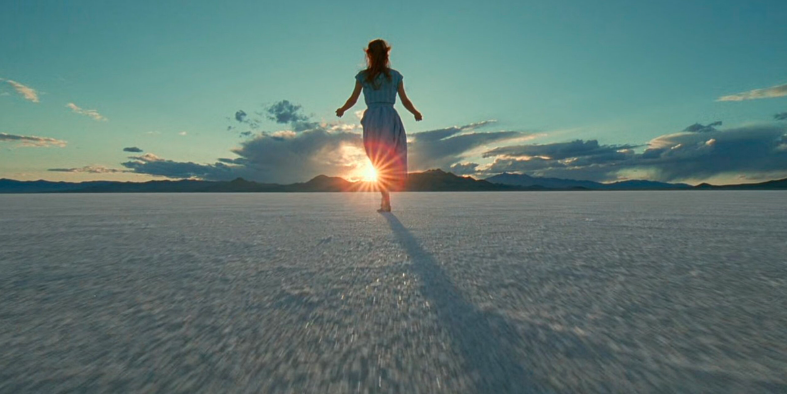
El cine de Malick, que alcanza su cumbre en La delgada línea roja (1998) y El árbol de la vida (2011), sustituye las convenciones arbitrarias —naturalizadas por la repetición histórica, no por necesidad alguna del medio— con que el cine industrial administra el tiempo, por una temporalidad más fiel a la textura real de la experiencia humana: la memoria, la asociación, la pregunta metafísica que no se resuelve en un arco de personaje. Se trata de una institución estética alternativa y, en sus mejores momentos, superior. Pero esa superioridad no es automática ni está garantizada por la sola intención poética: cuando el método fracasa, fracasa de un modo específico y documentable —por exceso de metraje sacrificado en el montaje, por personajes que pierden coherencia dramática, por un tercio final que pierde el rumbo—, y ese fracaso debe señalarse con el mismo rigor con que se señala el acierto, si se quiere hacer crítica de veras.
La palabra «narrativa» procede del latín narrare, emparentado con gnarus («conocedor», «que sabe»): narrar es, etimológicamente, dar a conocer, hacer saber algo a alguien que lo ignora. Toda narración clásica presupone, por tanto, una relación asimétrica de información entre quien cuenta y quien escucha, y una promesa: al final, el que no sabía, sabrá. La palabra «poético», en cambio, desciende del griego poiein, «hacer», «crear», «fabricar»: el poema no informa, instituye, produce una experiencia que no existía antes de la obra. Esta distinción etimológica anuncia ya la tensión de fondo entre un cine que se entiende a sí mismo como vehículo de información dramática y un cine que se entiende a sí mismo como acontecimiento perceptivo.
David Bordwell definió con precisión el paradigma dominante, la llamada narración clásica de Hollywood: una configuración normalizada de opciones para representar la historia, en la que individuos psicológicamente definidos luchan por resolver un problema claramente indicado o por conseguir objetivos específicos, en un relato que termina con una victoria decisiva o una derrota. El motor causal de esta narración es siempre el personaje, entendido como un individuo diferenciado y dotado de una serie coherente de rasgos. Sobre el manejo del tiempo en particular, este sistema exige del espectador convenciones muy específicas que se aceptan como transparentes solo por costumbre histórica: la elipsis marca los saltos temporales de manera que el espectador reconstruya sin esfuerzo lo omitido, y la analepsis (flashback), aunque se presente como el recuerdo subjetivo de un personaje, se ancla siempre en un marco objetivo de continuidad que lo precede y lo sigue, de modo que la memoria funciona como mero pretexto para un reordenamiento no cronológico del argumento. A esto se añade la exigencia de linealidad —una línea de acción debe permanecer abierta mediante un «gancho de diálogo» para que la siguiente escena la retome— y una comunicabilidad deliberadamente alta, que informa al espectador con la mayor claridad posible. Ninguna de estas convenciones es una necesidad del medio cinematográfico: son opciones normalizadas por la industria y naturalizadas por la repetición.
El cine clásico opera bajo lo que denomina el esquema sensorio-motriz: una continuidad entre percepción, afección y acción en la que el tiempo queda subordinado al movimiento de la trama. Es un cine que presupone —y con su propio funcionamiento demuestra— una fe en que el sujeto puede actuar eficazmente sobre el mundo. Tras la Segunda Guerra Mundial, en el neorrealismo italiano y después en autores como Welles o Rossellini, ese vínculo sensorio-motriz entra en crisis: el nexo entre lo percibido y lo actuado se rompe o se difiere, permitiendo que «otra cosa» ocupe el intervalo, y emerge así una suerte de imagen del tiempo en sí, lo que Deleuze pretendió llamar imagen-tiempo directa, que ya no subordina el tiempo al movimiento, sino que lo presenta en sí mismo. El personaje deja de ser un agente que resuelve problemas para convertirse en una suerte de vidente que atestigua situaciones ópticas y sonoras puras que ya no remiten necesariamente a la acción. Esta mutación histórica del lenguaje cinematográfico —documentada académicamente mucho antes de que Malick rodara su primera película— es el terreno filosófico sobre el que su cine poético se asienta y que conviene tener presente para no confundir su propuesta con una rareza sin genealogía.
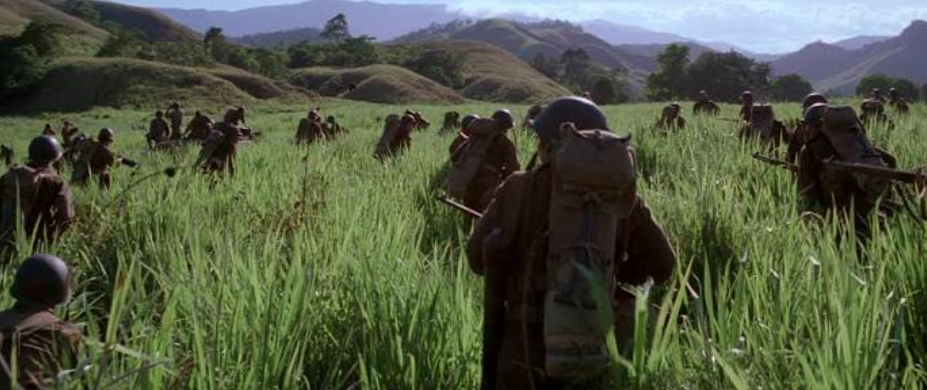
El cine clásico exige del espectador concesiones arbitrarias en el manejo del tiempo, y que Malick, al rehusarlas, no comete una torpeza, sino que ejecuta un rechazo deliberado y coherente con su proyecto. La razón de este rechazo es que el sistema de continuidad clásico fue diseñado para maximizar la legibilidad comercial y la identificación psicológica del espectador con un protagonista orientado a metas —tal como muestra la propia definición de Bordwell citada arriba—, subordinando sistemáticamente el tiempo al desarrollo de una acción dramática localizable en agentes individuales. Cuando el objeto de una película no es la resolución de un conflicto entre agentes, sino la relación entre un acontecimiento particular y un orden que lo excede —la existencia de la maldad en el corazón de la naturaleza, la razón por la que un niño muere, el sentido de una guerra en la que los soldados no saben por qué deben matar—, la forma causal-lineal no es simplemente insuficiente: es una traición categorial al objeto mismo del filme. El análisis crítico coincide en que el conflicto bélico de La delgada línea roja podría haber sido cualquier otro, Vietnam o Yugoslavia, porque lo que verdaderamente se examina es un contexto existencial más amplio y no la victoria táctica sobre una colina. El famoso arranque de la película, en el que la voz de un narrador que no pertenece a ningún personaje visible pregunta qué significa la guerra en el corazón de la naturaleza mientras la cámara sigue a un caimán que se sumerge y se funde en el agua, es la traducción visual exacta de esa renuncia: no hay allí ningún gancho de diálogo, ninguna línea de acción que abrir.
El montaje de Malick no es un adorno visual ni mucho menos, sino su tesis formal. Se ha señalado con acierto que su montaje tiende a empujar la escena fuera de la continuidad lineal mediante insertos de elementos naturales y una cámara que se sale de la historia que está contando, acompañada de una voz en off que exterioriza pensamientos y sentimientos por encima de la verosimilitud narrativa inmediata. En El árbol de la vida, esta estrategia alcanza su forma más ambiciosa: Malick busca, mediante el uso de la música como elemento vertebrador, un equilibrio entre el desorden propio del relato de evocación poética y el orden mínimo que todo relato cinematográfico necesita para ser inteligible, en una película cuyo tono reflexivo responde a un afán de trascender la narración discursiva contenedora de acciones. No se trata, por tanto, de una falta de dominio técnico —el mismo estudio documenta el control minucioso ejercido en cada estadio de la producción, desde localizaciones hasta mezclas de sonido—, sino de una decisión: que el tiempo del filme sea el de la memoria y la asociación, no el de la meta y el obstáculo.
Malick no inventa la superación del esquema causal, sino que la radicaliza dentro de una tradición ya constituida por el cine moderno de posguerra, consecuencia de que la fe moderna en la acción eficaz sobre el mundo se había quebrado históricamente, y de que el cine clásico y el cine moderno responden a una periodización —clásico/moderno— en la que el segundo invierte la subordinación del tiempo al movimiento propia del primero. Esto es relevante porque desactiva la objeción más perezosa contra Malick —la de que su cine es un capricho personal sin fundamento—: la superación del esquema causal-acción es una posibilidad histórica del medio cinematográfico ya explorada y teorizada varias décadas antes de que él rodara La delgada línea roja, y su mérito específico consiste en haberla llevado, con recursos de producción propios de Hollywood, al terreno del cine bélico y del drama familiar americano, géneros que la industria consideraba territorio exclusivo de la narración canónica.
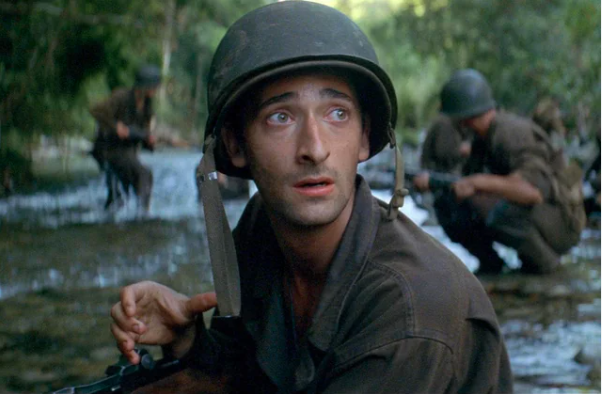
Se acusa a Malick de autoindulgencia y pretensión. No es una objeción menor ni puede despacharse con una defensa reverencial del autor. La reseña de Fotogramas sobre El árbol de la vida fue explícita al respecto: es probable que la desmesurada ambición de la película, presentada de antemano como obra maestra, perjudicara sus propios objetivos. Más de un actor declaró no haber encontrado en pantalla la emoción que transmitía el guion y reprochó al director no haberle explicado con claridad qué esperaba de su personaje. Y sobre La delgada línea roja existe un dato editorial verificable que hace inevitable la crítica: el montaje final redujo una versión original de más de cinco horas a ciento setenta minutos, lo que implicó eliminar por completo las intervenciones de actores como Billy Bob Thornton —cuya narración en off de tres horas de duración fue descartada íntegramente—, Martin Sheen, Gary Oldman o Mickey Rourke, y redujo a un papel secundario a Adrien Brody, pese a que su personaje era, en la novela y en el guion original, el protagonista central de la historia. El propio tercio final de la película, tras la toma de la colina, ha sido señalado como el tramo en que Malick no logra sostener el nivel de coherencia alcanzado hasta entonces, produciendo la sensación de que la película carece de rumbo determinado.
Al respecto, cabe distinguir dos fenómenos que la crítica adversa tiende a confundir. Uno es el rechazo legítimo del contrato clásico, que produce en el espectador acostumbrado a la comunicabilidad alta una genuina desorientación —la reacción en Cannes, mitad abucheo mitad ovación, es precisamente el síntoma de un contrato roto, no la prueba de un fracaso objetivo—. El otro es el fracaso editorial propiamente dicho: cuando el desmontaje de seis horas de metraje a menos de tres deja cicatrices visibles —un protagonista narrativo convertido en comparsa, un acto final sin norte—, no estamos ante una superación poética de la causalidad, sino ante un defecto de artesanía que ninguna teoría del tiempo-imagen redime. Lo que aquí se sostiene es que el segundo fenómeno es real y que ni siquiera las dos películas cumbre del cineasta están exentas de él.
Pero cabe, además, otra objeción: que el cine poético malickiano, al renunciar a la alta comunicabilidad que Bordwell identifica como rasgo distintivo de la narración clásica, se vuelve opaco para el espectador medio, incapaz de reconstruir siquiera el argumento mínimo. La reacción documentada de espectadores confesando no entender la película, y calificándola de extraña o pretenciosa, es un fenómeno masivo. La respuesta a esta objeción no puede consistir en descalificar al espectador por su supuesta incapacidad —gesto habitual y perezoso de cierta crítica autocomplaciente—, sino en precisar los términos del debate: la comunicabilidad alta es un valor relativo al proyecto de la narración clásica, no un criterio universal de calidad cinematográfica; un cine que desafía la noción habitual de tiempo necesita reducir la comunicabilidad narrativa para liberar espacio perceptivo a la experiencia temporal en sí misma. Ahora bien, esta respuesta tiene un límite que debe reconocerse: la incomunicabilidad deliberada solo se justifica cuando genera, a cambio, una experiencia perceptiva genuina y no una mera acumulación de imágenes bellas sin tensión interna. El propio recorrido crítico del cineasta ofrece la prueba de que este equilibrio no es automático: mientras que en La delgada línea roja y en El árbol de la vida la crítica especializada reconoce mayoritariamente que la fragmentación temporal está al servicio de una pregunta filosófica precisa —el mal en la naturaleza, el sentido de la existencia frente a la muerte de un hijo—, otras entregas de su filmografía han sido señaladas por la misma crítica que lo defiende como ejemplos de recreación en la naturaleza que ya no cumple función alguna, calificando algunos de esos planos como innecesarios. La incomunicabilidad, en suma, no es una coartada permanente: es una apuesta de riesgo que unas veces se cobra y otras no.
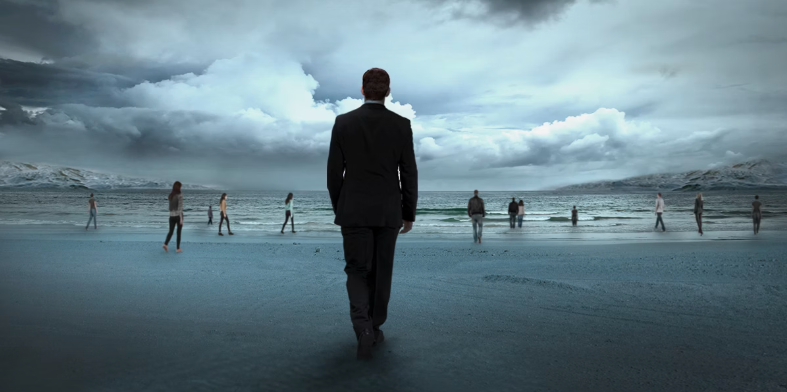
Sí: el cine de Terrence Malick, en La delgada línea roja y El árbol de la vida, constituye una superación legítima de las convenciones con que la narrativa clásica administra el tiempo fílmico. Las supuestas exigencias del medio cinematográfico no son sino opciones históricas normalizadas por la industria, y el cine moderno, desde el neorrealismo en adelante, ya había demostrado la posibilidad de un régimen temporal distinto, del que Malick es heredero consciente y radicalizador singular. Su montaje poético, lejos de ser un simple gesto de estilo, traduce visualmente una tesis: que ciertas preguntas —por el mal, por la muerte, por el sentido último de un acontecimiento particular— no pueden alojarse en la forma causal-lineal sin quedar traicionadas.
Nada de esto exime al autor de fallos reales. La diferencia entre el cine poético logrado y el cine poético fallido no reside en la intención, que en Malick es siempre la misma, sino en si el desorden lírico consigue, o no, producir el orden perceptivo mínimo sin el cual ninguna obra, por más elevada que sea su pretensión, puede comunicar nada a nadie.
Las implicaciones de este diagnóstico exceden el caso Malick. La industria cinematográfica sigue exigiendo, como condición casi contractual de legibilidad comercial, que toda película administre el tiempo mediante las mismas convenciones de siempre. Estas convenciones presuponen una fe particular —la fe en que el sujeto puede actuar eficazmente sobre el mundo y que ese actuar es lo único digno de ser narrado— que numerosas experiencias humanas contemporáneas ya no comparten sin reservas. Un cine que se atreve a preguntar por el tiempo mismo, y no solo por lo que ocurre en él, constituye una institución estética abierta en el sentido más exacto del término: una que no cristaliza sus propias convenciones como si fueran necesidades del medio, que mantiene visible y cuestionable su propio artificio, y que exige del espectador el mismo esfuerzo de juicio maduro que cualquier institución que aspire a ampliar, y no a administrar, la experiencia de quien la habita. Ese esfuerzo, sin embargo, solo se justifica cuando la obra lo honra con el rigor formal que su propia ambición reclama. Malick, no obstante, sus yerros, llega acaso más lejos que casi nadie en la industria de las grandes salas, todavía.
Referencias bibliográficas:
Alzola, P. (s. f.). Una lectura del primer cine de Terrence Malick desde la fenomenología. Dialnet. https://dialnet.unirioja.es/descarga/articulo/6745769.pdf
Bordwell, D. (1996). La narración clásica: El ejemplo de Hollywood. En La narración en el cine de ficción (pp. 156-167). Paidós.
Deleuze, G. (1983/1984). La imagen-movimiento: Estudios sobre cine I. Paidós.
Deleuze, G. (1985/1987). La imagen-tiempo: Estudios sobre cine II. Paidós.
El Arte del Cine. (s. f.). Análisis – Terrence Malick. https://elartedelcine.pythonanywhere.com/an%C3%A1lisis/Terrence_Malick/
El Criticón. (2020, 27 de abril). La delgada línea roja. https://warrenelcriticon.wordpress.com/2020/04/27/la-delgada-linea-roja/
El espectador imaginario. (2011). El árbol de la vida. https://www.elespectadorimaginario.com/pages/octubre-2011/criticas/el-arbol-de-la-vida.php
Encadenados. (s. f.). La delgada línea roja (The thin red line, 1998), de Terrence Malick. https://encadenados.org/otros-articulos/la-delgada-linea-roja-the-thin-red-line-1998-de-terrence-malick/
Espinof. (2009, 25 de agosto). La delgada línea roja, el mundo de Terrence Malick. https://www.espinof.com/criticas/la-delgada-linea-roja-el-mundo-de-terrence-malick/amp
Espinof. (2011, 5 de julio). Festival de Cannes 2011: The Tree of Life, un precioso y amargo viaje. https://www.espinof.com/criticas/festival-de-cannes-2011-the-tree-of-life-un-precioso-y-amargo-viaje
El antepenúltimo mohicano. (2016, marzo). Cineclub: La delgada línea roja (1998). https://www.elantepenultimomohicano.com/2016/03/la-delgada-linea-roja-1998.html
FilmAffinity. (s. f.). Críticas de El árbol de la vida (2011). https://www.filmaffinity.com/es/reviews/1/447606.html
laFuga, revista de cine. (s. f.). Aventura del tiempo en el cine moderno. https://www.lafuga.cl/aventura-del-tiempo-en-el-cine-moderno/224
Massanet, A. (2025, 1 de mayo). Terrence Malick, la mirada del poeta. ctxt.es. https://ctxt.es/es/20250501/Culturas/49239/Adrian-Massanet-Terrence-Malick-cine-filmografia-arte-La-delgada-linea-roja-El-nuevo-mundo.htm
Tesis doctoral. (2011). La naturaleza agraciada en el cine de Terrence Malick. Claves de lenguaje fílmico y estrategias narrativas en El árbol de la vida. Dialnet. https://dialnet.unirioja.es/servlet/tesis?codigo=187586
Wikipedia. (s. f.). El árbol de la vida (película de 2011). https://es.wikipedia.org/wiki/El_%C3%A1rbol_de_la_vida_(pel%C3%ADcula_de_2011)
El escultor del tiempo: claves de la filosofía cinematográfica de Gilles Deleuze. Redalyc. https://www.redalyc.org/journal/3798/379857582006/html/
Teseopress. (s. f.). Deleuze y la filosofía del cine. https://www.teseopress.com/deleuze/chapter/capitulo-ii-deleuze-y-la-filosofia-del-cine/
(ENGLISH VERSION)
Time Without Alibi: The Poetic Surpassing of Classical Narrative —and the Stumbles— in the Cinema of Terrence Malick
Translation by Tiffany Amber Elías Trimble
The scene occurred: spectators leaving the auditorium during the screening of The Tree of Life in 2011, some demanding a refund, and certain commercial theaters accepting, as company policy, to exchange the ticket for another film if the first had not been to their liking —a reaction that, for some observers, had a certain logic when the spectator expected to see a conventional story of recognizable heroes and instead encountered a director who confronts Brad Pitt with the death of a son through a lyrical inquiry that even unfolds images of the origin of the universe. The same film, presented as a candidate for the Palme d’Or at Cannes, provoked boos that mingled with even louder applause, a division of opinion that critics attributed, in part, to the excessive expectations generated by Malick himself. This episode transcends anecdote; it constitutes a symptom. It reveals that there exists a tacit contract between industrial cinema and its spectator —a contract that regulates, among other things, how time should behave within the narrative— and that this contract, when broken, produces indignation rather than aesthetic perplexity.
What exactly does Terrence Malick break, and at what price? To what extent does the poetic cinema developed by Malick, which deliberately departs from classical narrative and particularly from its conventional management of time, constitute a legitimate surpassing —not a mere authorial whim nor a self-indulgent degeneration— of the industrial conventions of film narrative, and what real, verifiable limits does this gamble have when examined without the reverence that usually accompanies consecrated works?
Malick’s cinema, which reaches its peak in The Thin Red Line (1998) and The Tree of Life (2011), replaces the arbitrary conventions —naturalized by historical repetition, not by any necessity of the medium— with which industrial cinema administers time, for a temporality more faithful to the real texture of human experience: memory, association, the metaphysical question that is not resolved in a character arc. It is an alternative aesthetic institution and, in its best moments, superior. But this superiority is neither automatic nor guaranteed by poetic intention alone: when the method fails, it fails in a specific and documentable way —by an excess of footage sacrificed in the editing, by characters who lose dramatic coherence, by a final third that loses its way— and this failure must be pointed out with the same rigor with which success is noted, if one truly wants to do criticism.
The word «narrative» comes from the Latin narrare, related to gnarus («knowing,» «one who knows»): to narrate is, etymologically, to make known, to let someone know something they ignore. Every classical narrative therefore presupposes an asymmetrical relationship of information between the teller and the listener, and a promise: at the end, the one who did not know will know. The word «poetic,» on the other hand, descends from the Greek poiein, «to make,» «to create,» «to fabricate»: the poem does not inform; it institutes, it produces an experience that did not exist before the work. This etymological distinction already announces the underlying tension between a cinema that understands itself as a vehicle of dramatic information and a cinema that understands itself as a perceptual event.
David Bordwell precisely defined the dominant paradigm, the so-called classical Hollywood narrative: a normalized configuration of options for representing the story, in which psychologically defined individuals struggle to solve a clearly indicated problem or achieve specific goals, in a narrative that ends with a decisive victory or defeat. The causal motor of this narrative is always the character, understood as a differentiated individual endowed with a coherent series of traits. Regarding the management of time in particular, this system demands very specific conventions from the spectator, which are accepted as transparent only by historical habit: the ellipsis marks temporal jumps so that the spectator effortlessly reconstructs what is omitted, and the analepsis (flashback), although presented as the subjective memory of a character, is always anchored in an objective framework of continuity that precedes and follows it, so that memory functions as a mere pretext for a non-chronological rearrangement of the plot. Added to this is the demand for linearity —a line of action must remain open through a «dialogue hook» so that the next scene can pick it up— and a deliberately high communicability, which informs the spectator as clearly as possible. None of these conventions is a necessity of the cinematographic medium: they are options normalized by the industry and naturalized by repetition.
Classical cinema operates under what is called the sensory-motor schema: a continuity between perception, affection, and action in which time is subordinated to the movement of the plot. It is a cinema that presupposes —and demonstrates through its own functioning— a faith that the subject can act effectively upon the world. After the Second World War, in Italian neorealism and later in authors like Welles or Rossellini, this sensory-motor link enters into crisis: the nexus between what is perceived and what is acted upon is broken or deferred, allowing «something else» to occupy the interval, and thus emerges a kind of direct time-image, which no longer subordinates time to movement, but presents it in itself. The character ceases to be an agent who solves problems to become a kind of seer who witnesses pure optical and sound situations that no longer necessarily refer to action. This historical mutation of cinematic language —academically documented long before Malick shot his first film— is the philosophical ground on which his poetic cinema rests, and it is worth keeping in mind to avoid confusing his proposal with a rarity without genealogy.
Classical cinema demands arbitrary concessions from the spectator in the management of time, and Malick, by refusing them, does not commit an error, but executes a deliberate and coherent rejection consistent with his project. The reason for this rejection is that the classical continuity system was designed to maximize commercial legibility and the spectator’s psychological identification with a goal-oriented protagonist —as shown by Bordwell’s definition cited above— systematically subordinating time to the development of a dramatic action located in individual agents. When the object of a film is not the resolution of a conflict between agents, but the relationship between a particular event and an order that exceeds it —the existence of evil at the heart of nature, the reason why a child dies, the meaning of a war in which soldiers do not know why they must kill— the causal-linear form is not simply insufficient: it is a categorical betrayal of the film’s very object. Critical analysis agrees that the war conflict in The Thin Red Line could have been any other, Vietnam or Yugoslavia, because what is truly examined is a broader existential context and not the tactical victory over a hill. The famous opening of the film, in which the voice of a narrator who does not belong to any visible character asks what war means at the heart of nature while the camera follows a crocodile that submerges and melts into the water, is the exact visual translation of that renunciation: there is no dialogue hook, no line of action to open.
Malick’s editing is not a visual adornment at all, but his formal thesis. It has been rightly pointed out that his editing tends to push the scene out of linear continuity through inserts of natural elements and a camera that moves out of the story it is telling, accompanied by a voice-over that externalizes thoughts and feelings beyond immediate narrative verisimilitude. In The Tree of Life, this strategy reaches its most ambitious form: Malick seeks, through the use of music as a structuring element, a balance between the disorder inherent to the poetic evocation narrative and the minimal order that any cinematic narrative needs to be intelligible, in a film whose reflective tone responds to a desire to transcend the discursive narrative containing actions. It is not, therefore, a lack of technical mastery —the same study documents the meticulous control exercised at every stage of production, from locations to sound mixing— but a decision: that the film’s time be that of memory and association, not that of goal and obstacle.
Malick does not invent the surpassing of the causal schema, but radicalizes it within a tradition already constituted by post-war modern cinema, a consequence of the fact that the modern faith in effective action upon the world had been historically broken, and that classical cinema and modern cinema respond to a periodization —classical/modern— in which the second reverses the subordination of time to movement characteristic of the first. This is relevant because it deactivates the laziest objection against Malick —that his cinema is a personal whim without foundation—: the surpassing of the causal-action schema is a historical possibility of the cinematographic medium already explored and theorized several decades before he shot The Thin Red Line, and his specific merit consists in having taken it, with Hollywood production resources, into the terrain of war cinema and the American family drama, genres that the industry considered exclusive territory of canonical narrative.
Malick is accused of self-indulgence and pretension. This is not a minor objection nor can it be dismissed with a reverential defense of the author. The Fotogramas review of The Tree of Life was explicit in this regard: it is likely that the film’s excessive ambition, presented in advance as a masterpiece, harmed its own objectives. More than one actor declared not having found on screen the emotion that the script conveyed, and reproached the director for not having clearly explained what he expected of his character. And regarding The Thin Red Line, there is a verifiable editorial fact that makes criticism inevitable: the final cut reduced an original version of more than five hours to one hundred and seventy minutes, which meant completely eliminating the interventions of actors such as Billy Bob Thornton —whose three-hour voice-over narration was entirely discarded—, Martin Sheen, Gary Oldman, or Mickey Rourke, and reduced Adrien Brody to a secondary role, despite the fact that his character was, in the novel and in the original script, the central protagonist of the story. The very final third of the film, after the taking of the hill, has been pointed out as the section in which Malick fails to sustain the level of coherence achieved until then, producing the feeling that the film lacks a defined direction.
In this regard, two phenomena that adverse criticism tends to confuse must be distinguished. One is the legitimate rejection of the classical contract, which produces in the spectator accustomed to high communicability a genuine disorientation —the reaction at Cannes, half boos half ovation, is precisely the symptom of a broken contract, not proof of objective failure—. The other is the editorial failure proper: when the dismantling of six hours of footage into less than three leaves visible scars —a narrative protagonist turned into an extra, a final act without direction—, we are not facing a poetic surpassing of causality, but a craftsmanship defect that no theory of the time-image redeems. What is argued here is that the second phenomenon is real and that even the filmmaker’s two peak films are not exempt from it.
But there is also another objection: that Malickian poetic cinema, by renouncing the high communicability that Bordwell identifies as a distinctive trait of classical narrative, becomes opaque to the average spectator, unable even to reconstruct the minimum plot. The documented reaction of spectators confessing not to understand the film, and describing it as strange or pretentious, is a massive phenomenon. The response to this objection cannot consist of disqualifying the spectator for their supposed inability —a habitual and lazy gesture of certain self-complacent criticism—, but in specifying the terms of the debate: high communicability is a value relative to the project of classical narrative, not a universal criterion of cinematographic quality; a cinema that challenges the habitual notion of time needs to reduce narrative communicability to free perceptual space for the temporal experience itself. However, this response has a limit that must be recognized: deliberate incommunicability is only justified when it generates, in exchange, a genuine perceptual experience and not a mere accumulation of beautiful images without internal tension. The filmmaker’s own critical trajectory offers proof that this balance is not automatic: while in The Thin Red Line and The Tree of Life specialized criticism mostly recognizes that the temporal fragmentation is at the service of a precise philosophical question —evil in nature, the meaning of existence in the face of the death of a son—, other films in his filmography have been pointed out by the same criticism that defends him as examples of recreation in nature that no longer fulfills any function, qualifying some of those shots as unnecessary. Incommunicability, in short, is not a permanent alibi: it is a risky gamble that sometimes pays off and sometimes does not.
Yes: the cinema of Terrence Malick, in The Thin Red Line and The Tree of Life, constitutes a legitimate surpassing of the conventions with which classical narrative administers filmic time. The supposed demands of the cinematographic medium are nothing but historical options normalized by the industry, and modern cinema, from neorealism onwards, had already demonstrated the possibility of a different temporal regime, of which Malick is a conscious heir and singular radicalizer. His poetic editing, far from being a mere stylistic gesture, visually translates a thesis: that certain questions —about evil, about death, about the ultimate meaning of a particular event— cannot be housed in the causal-linear form without being betrayed.
None of this exempts the author from real failures. The difference between achieved poetic cinema and failed poetic cinema does not reside in intention, which in Malick is always the same, but in whether the lyrical disorder manages, or not, to produce the minimum perceptual order without which no work, however high its pretension, can communicate anything to anyone.
The implications of this diagnosis exceed the Malick case. The film industry continues to demand, as an almost contractual condition of commercial legibility, that every film manage time through the same conventions as always. These conventions presuppose a particular faith —the faith that the subject can act effectively upon the world and that this acting is the only thing worthy of being narrated— which numerous contemporary human experiences no longer share without reservations. A cinema that dares to ask about time itself, and not only about what happens in it, constitutes an open aesthetic institution in the most exact sense of the term: one that does not crystallize its own conventions as if they were needs of the medium, that keeps its own artifice visible and questionable, and that demands of the spectator the same effort of mature judgment as any institution that aspires to expand, and not to administer, the experience of those who inhabit it. This effort, however, is only justified when the work honors it with the formal rigor that its own ambition demands. Malick, despite his errors, perhaps goes further than almost anyone else in the major theater industry, still.