
El cuerpo como ancla: Conversación con Alan Spazzali sobre su obra
Por Juan Pablo Torres Muñiz
Por mucho que se pretenda, el arte no se ha democratizado; por el contrario, y se nota. El arte es crítico en sí mismo, exige una serie de conocimientos previos, toda la experiencia vital posible e inteligencia suficiente para su interpretación; asimismo, requiere una crítica autónoma, con las mismas exigencias, nada más que para ponerlo todo en contraste. Lo que sí que se ha democratizado es el acceso a recursos expresivos que pueden o no alumbrar arte. Actualmente, la realización de imágenes artísticas, es decir, elocuentes por sí mismas en su visión, cuestionadoras de conceptos e instituciones, implica una concepción previa potente, no en menosprecio de la forma, sino en aras de un balance adecuado, de plena congruencia entre el fondo y su manifestación formal. Ahora bien, esto ciertamente devuelve al recurso técnico automatizado a su condición real, de mera ayuda.
En este contexto, hay quienes exploran el empleo de medios que, ora a su estricta voluntad, ora sugiriéndoles vías alternativas, les permiten materializar su visión, poniendo en cuestión, paradójicamente, la posibilidad de una definición clara de la realidad, así como de la identidad de uno a través del tiempo, con el cuerpo como principal ancla de este lado de la memoria, las proyecciones, ideales y ensueños. Es el caso de Alan Spazzali, con quien conversamos al respecto.
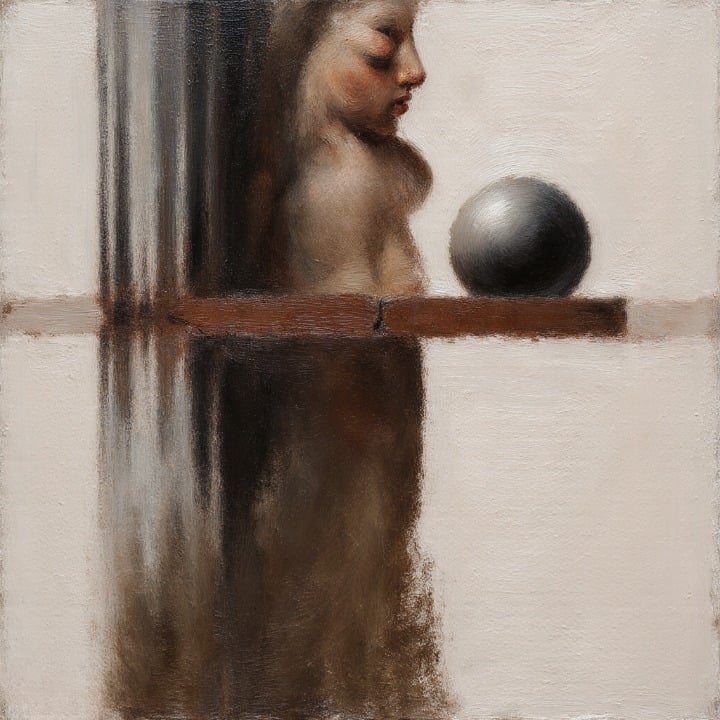
¿Desde cuándo y por qué, la pintura como arte? ¿Tu labor surge por alguna razón particular? ¿Hay algún evento o situación que la haya determinado?
La pintura aparece para mí como una forma de necesidad estructural, no como una vocación.
Comencé temprano, sin ninguna epifanía ni trauma fundacional: el gesto precedió a la intención. Con el tiempo, comprendí que la pintura era el único medio capaz de contener una tensión específica entre control y distorsión, entre lo visible y lo retenido. Mi obra no surge de un evento biográfico sino de una larga acumulación, casi geológica, de observación, silencio y extrañamiento. La pintura se convirtió en el lugar donde este sedimento podía tomar forma sin explicación.
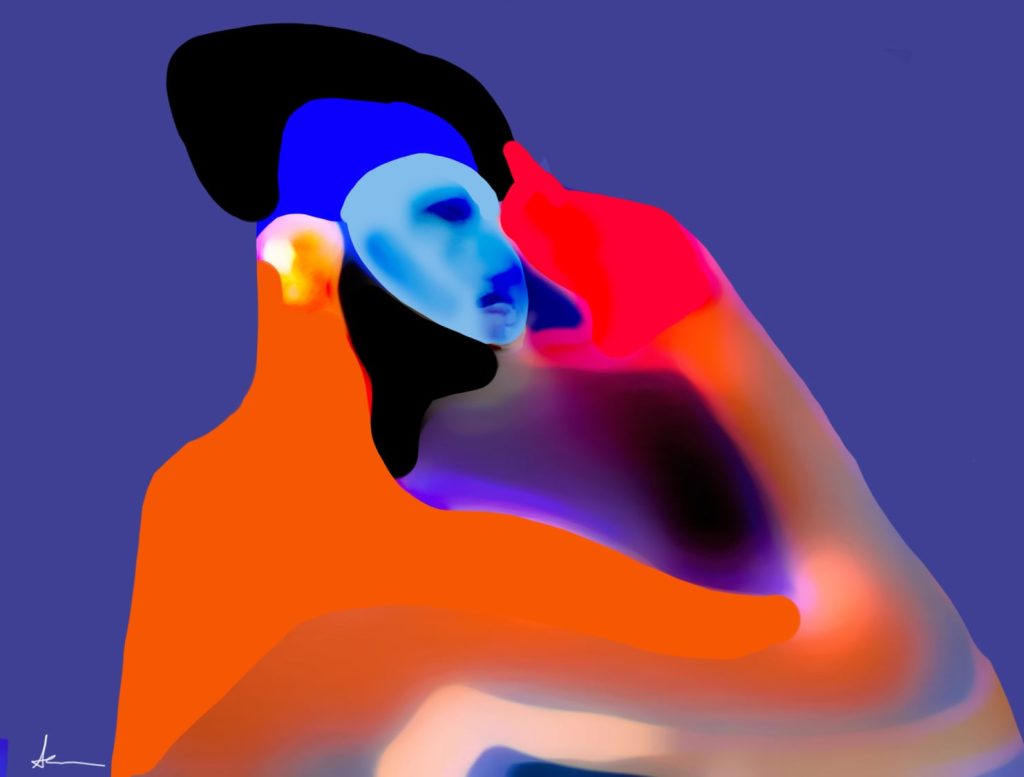
¿Cuáles fueron y son tus principales influencias?
Mis influencias son discontinuas y a menudo indirectas.
De la pintura: Francis Bacon por la violencia del contenido, Lucian Freud por la densidad de la carne, Marlene Dumas por la ambigüedad de la presencia.
Del cine: Fassbinder, Lynch y el primer Almodóvar —cada uno a su manera explorando la fractura entre identidad y actuación.
De la literatura: Clarice Lispector, Don DeLillo y Roberto Bolaño por su capacidad de habitar la zona inestable entre la interioridad y la opacidad.
Pero la influencia más profunda es el rostro humano observado en la vida real: sus asimetrías involuntarias, sus microfallos, sus intentos teatrales de coherencia.
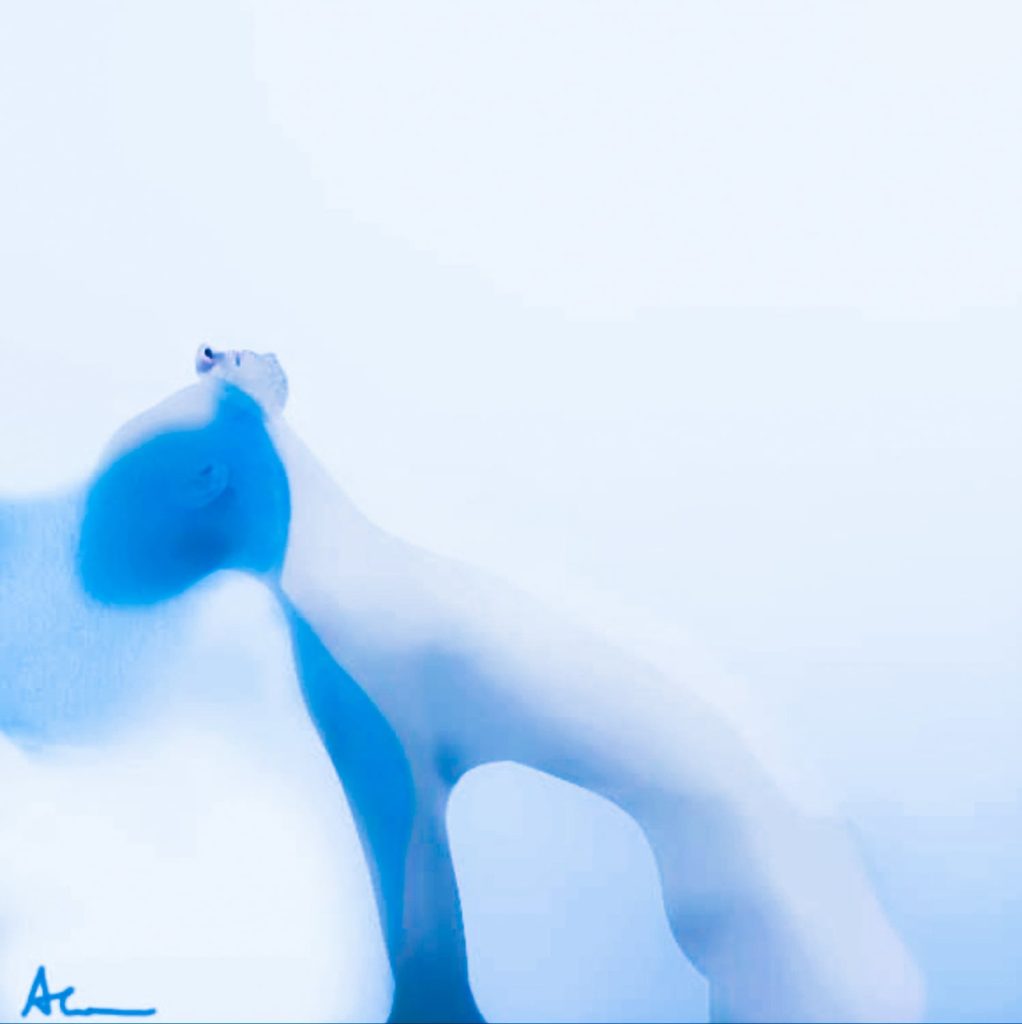
¿Por qué los cuerpos? ¿Por qué sus alteraciones? ¿Qué relación ves entre la carne y la personalidad de uno, más allá de lo obvio?
El cuerpo es la ficción más frágil que poseemos.
Sus alteraciones —sutiles o extremas— revelan la distancia entre quienes creemos ser y lo que el mundo percibe. Trabajo sobre esa distancia.
La deformación, en mi práctica, no es un acto de violencia sino un método de verdad: al alterar la carne, expongo la arquitectura interna de la personalidad, sus fracturas, sus intentos de autoreparación.
El cuerpo se convierte en un mapa de negociaciones, fracasos y resistencias. Nunca es un objeto estable; es un campo de fuerzas.
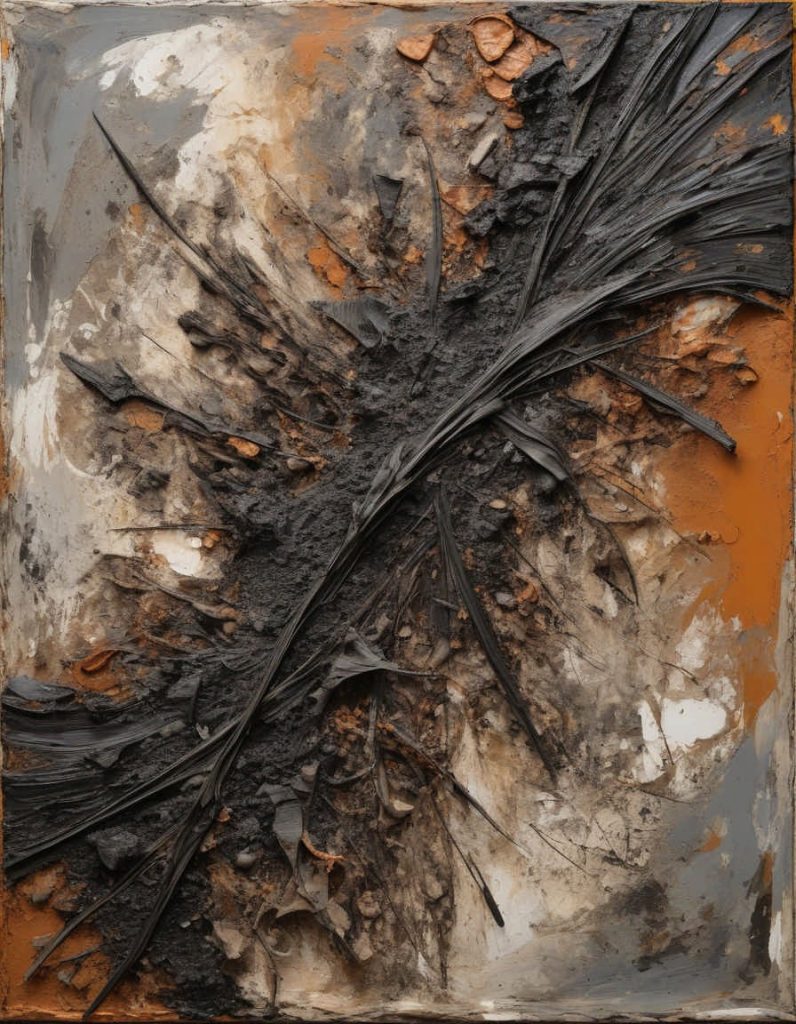
¿Hasta qué punto puede entenderse tu enfoque como una aproximación a la soledad, quizás como un medio de autoconocimiento, a través de la figura humana?
La soledad no es un tema en mi obra; es la atmósfera en la que ocurre la obra.
Las figuras que pinto no son retratos sino estados de conciencia. Habitan un espacio suspendido donde la identidad es cuestionada, estirada o disuelta.
Si hay autoconocimiento, es indirecto: al deformar al otro, observo los mecanismos mediante los cuales nos construimos a nosotros mismos.
La soledad es estructural, no sentimental.
¿Qué papel juegan el histrionismo y la teatralidad en tu obra?
La teatralidad es un residuo, no un objetivo.
Me interesa el momento en que la máscara falla —cuando la actuación se resquebraja y algo involuntario emerge.
Mis figuras aparecen a menudo como atrapadas en un estado intermedio: ni completamente en actuación ni completamente auténticas.
Esa tensión entre pose y colapso es donde la imagen respira.
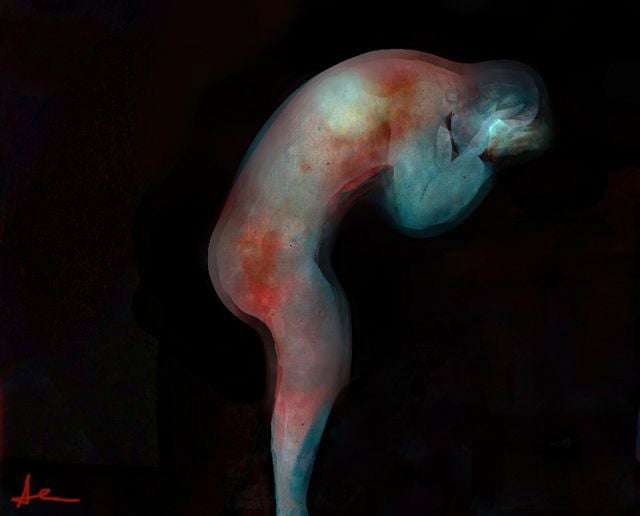
La composición, las formas y el color dicen cada uno su parte, pero ¿cómo cobra vida cada imagen? ¿Cuánto planificas, qué ocurre fuera del lienzo y qué ocurre en él?
El proceso se divide en dos fases:
Antes del lienzo: un largo período de observación, acumulación de referencias y calibración silenciosa. Trabajo con material fotográfico, pero nunca como plantilla —más bien como un campo de posibilidades.
En el lienzo: el plan se disuelve. La imagen emerge a través de una secuencia de desviaciones controladas. Permito que la figura se deforme, que me resista, que proponga direcciones inesperadas.
El color nunca es decorativo; es estructural. La composición es una negociación entre orden y fractura.
La imagen final es el resultado de esta tensión, no de un diseño predeterminado.
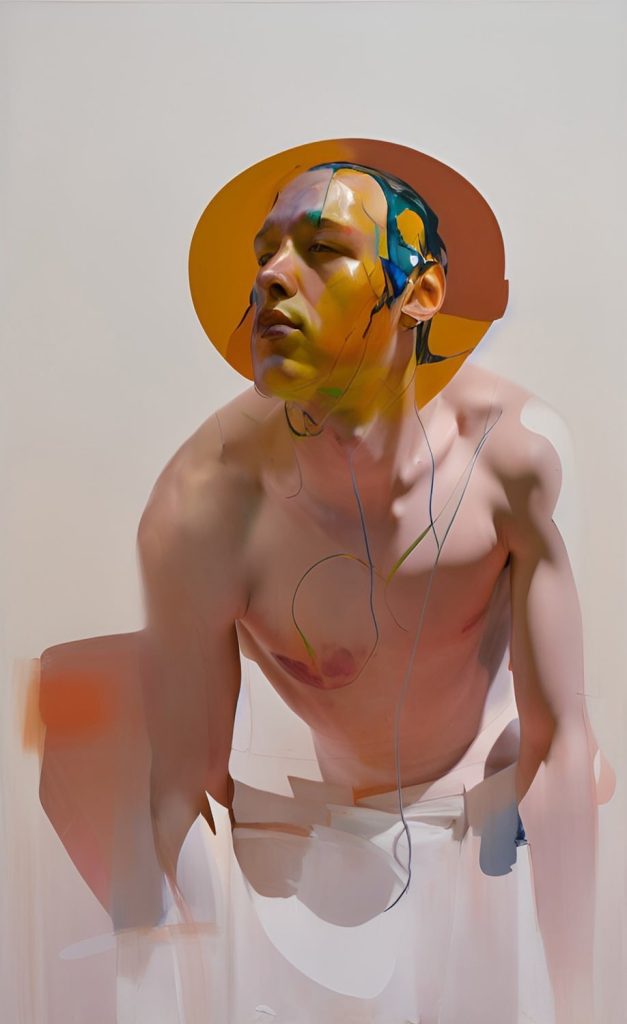
¿Qué propuestas artísticas fuera de la pintura consideras que dialogan con la tuya?
El cine, por su capacidad de construir atmósferas psicológicas.
La fotografía contemporánea, especialmente el trabajo que interroga la identidad a través de la distorsión o la fragmentación.
El arte performático, en su exploración del cuerpo como lugar de inestabilidad.
Y ciertas corrientes de la danza contemporánea, donde el movimiento se convierte en una forma de arquitectura existencial.
¿Qué se avecina en tu obra?
Una exploración más profunda de la deformación sin emoción —una gramática que estoy refinando, donde el cuerpo se convierte en una superficie neutral sobre la cual las tensiones internas se manifiestan sin melodrama.
Me estoy moviendo hacia un enfoque más matérico, post-identitario: menos narrativo, más estructural; menos descriptivo, más tectónico.
El próximo ciclo llevará la figura al borde de la reconocibilidad, sin abandonar nunca lo humano.
(ENGLISH —ORIGINAL — VERSION)
The Body as Anchor: A Conversation with Alan Spazzali on His Work
Translation by Tiffany Amber Elías Trimble
No matter how much one might claim otherwise, art has not been democratized; on the contrary, and it shows. Art is critical in itself, it demands a series of prior knowledge, as much life experience as possible, and sufficient intelligence for its interpretation; likewise, it requires an autonomous critique, with the same demands, merely to bring everything into contrast. What has been democratized is access to expressive resources that may or may not give rise to art. Currently, the creation of artistic images —that is, images that are eloquent in themselves through their vision, that question concepts and institutions— implies a powerful prior conception, not in disparagement of form, but for the sake of an appropriate balance, of full congruence between content and its formal manifestation. That said, this certainly returns the automated technical resource to its real condition: that of mere aid.
In this context, there are those who explore the use of media that, sometimes at their strict will, sometimes suggesting alternative paths, allow them to materialize their vision, paradoxically calling into question the possibility of a clear definition of reality, as well as of one’s identity over time, with the body as the main anchor on this side of memory, projections, ideals, and daydreams. Such is the case of Alan Spazzali, with whom we spoke on this subject.
Since when and why painting as an art? Does your calling arise from any particular reason? Is there any event or situation that determines it?
Painting appears for me as a form of structural necessity, not as a vocation.
I began early, without any epiphany or founding trauma: the gesture preceded the intention. Over time, I understood that painting was the only medium capable of containing a specific tension between control and distortion, between the visible and the withheld. My work does not arise from a biographical event but from a long, almost geological accumulation of observation, silence, and estrangement. Painting became the place where this sediment could take form without explanation.
What were and are your main influences?
My influences are discontinuous and often indirect.
From painting: Francis Bacon for the violence of containment, Lucian Freud for the density of flesh, Marlene Dumas for the ambiguity of presence.
From cinema: Fassbinder, Lynch, and the early Almodóvar—each in their own way exploring the fracture between identity and performance.
From literature: Clarice Lispector, Don DeLillo, and Roberto Bolaño for their ability to inhabit the unstable zone between interiority and opacity.
But the deepest influence is the human face observed in real life: its involuntary asymmetries, its micro‑failures, its theatrical attempts at coherence.
Why bodies? Why their alterations? What relationship do you see between flesh and one’s personality, beyond the obvious?
The body is the most fragile fiction we possess.
Its alterations—subtle or extreme—reveal the distance between who we believe we are and what the world perceives. I work on that distance.
Deformation, in my practice, is not an act of violence but a method of truth: by altering the flesh, I expose the internal architecture of personality, its fractures, its attempts at self‑repair.
The body becomes a map of negotiations, failures, and resistances. It is never a stable object; it is a field of forces.
To what extent can your approach be understood as an approximation to solitude, perhaps as a means of self‑knowledge, through the human figure?
Solitude is not a theme in my work; it is the atmosphere in which the work occurs.
The figures I paint are not portraits but states of consciousness. They inhabit a suspended space where identity is questioned, stretched, or dissolved.
If there is self‑knowledge, it is indirect: by deforming the other, I observe the mechanisms through which we construct ourselves.
The solitude is structural, not sentimental.
What role does histrionics and theatricality play in your work?
Theatricality is a residue, not a goal.
I am interested in the moment when the mask fails—when the performance cracks and something involuntary emerges.
My figures often appear as if caught in an intermediate state: neither fully performing nor fully authentic.
This tension between pose and collapse is where the image breathes.
Composition, forms, and color each say their part, but how does each image come to life? How much do you plan, what happens off the canvas, and what happens on it?
The process is divided into two phases:
Before the canvas: a long period of observation, accumulation of references, and silent calibration. I work with photographic material, but never as a template—more as a field of possibilities.
On the canvas: the plan dissolves. The image emerges through a sequence of controlled deviations. I allow the figure to deform itself, to resist me, to propose unexpected directions.
Color is never decorative; it is structural. Composition is a negotiation between order and fracture.
The final image is the result of this tension, not of a predetermined design.
What artistic proposals outside of painting do you consider to be in dialogue with yours?
Cinema, for its ability to construct psychological atmospheres.
Contemporary photography, especially the work that interrogates identity through distortion or fragmentation.
Performance art, in its exploration of the body as a site of instability.
And certain strands of contemporary dance, where movement becomes a form of existential architecture.
What lies ahead in your work?
A deeper exploration of emotionless deformation—a grammar I am refining, where the body becomes a neutral surface on which internal tensions manifest without melodrama.
I am moving toward a more materic, post‑identitarian approach: less narrative, more structural; less descriptive, more tectonic.
The next cycle will push the figure to the edge of recognizability, without ever abandoning the human.