
El afán de doma de la vida: Conversación con Marc Colell a propósito de su novela «Las crines»
Por Juan Pablo Torres Muñiz
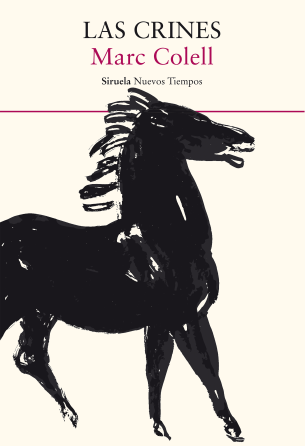
Hay libros que, durante su lectura, resultan, por decirlo de algún modo, habitables; su lectura alumbra no sólo una aproximación, a través de la ficción, a los márgenes de nuestro mundo, sino incluso cierta experiencia propia. Las crines —novela ganadora del Premio Café Gijón 2025— es, en tal sentido, un territorio donde el lector supera la condición de espectador, para convertirse más bien en testigo, testigo de una transformación que ocurre en el silencio de la contemplación. Marc Colell (Barcelona, 1975), el autor, nos ofrece un texto que fusiona paisaje, descubrimiento y conciencia en un ejercicio de introspección cuanto menos interesante.
El protagonista de Las crines —un hombre sin nombre que los vecinos de la pampa argentina bautizan como «Calesita»— llega a La Magnolia buscando soledad y encuentra, en cambio, una red de humanidad precaria, pero resistente. Esta novela epistolar nos interpela desde esa tradición que entiende la literatura como lo que es, en tanto arte: una oportunidad de cuestionar nuestros conceptos e instituciones para, así, fraguar nuevo conocimiento.
Colell, que vivió casi seis años en Argentina y que es profesor de secundaria en L’Escala (Girona), sabe que escribir es, ante todo, un acto de cuidado. En Las crines, el caballo Potricox —«viejo, manso y perezoso»— se convierte en metáfora de esa tentativa de cuidar al otro, de manera más o menos fallida. La tensión entre la soledad y la comunidad, entre el desarraigo y la hospitalidad, hace de esta novela digan del mayor interés.
Conversamos con él al respecto.
Has señalado que escribiste Las crines desde Cataluña. Esta distancia geográfica parece haber operado como una suerte de laboratorio de reflexión. ¿Crees que la literatura necesita necesariamente esa distancia —temporal, espacial, afectiva— para convertirse en verdadera crítica? ¿O es posible una escritura crítica desde la inmersión inmediata, desde el «ahora» del acontecimiento?
No creo que exista una respuesta definitiva o correcta. En mi caso, suelo necesitar cierta distancia para nombrar, como si la realidad necesitara decantarse, dejar un poso de verdad, o como si el propio recuerdo funcionara como un filtro. Pero en otros escritores debe funcionar de otro modo, por supuesto. Pienso en Saer, por ejemplo. Casi toda su obra se ambienta en el espacio «real» del litoral santafecino, una zona muy particular, la de su juventud, la de su infancia, pero escribió sus libros desde la distancia de su vida europea, desde Francia. Resulta un caso muy curioso, porque sus libros mantienen una gran plasticidad, los colores, la luz, los olores, propios de ese territorio alejado, recreado por su memoria. Me parece que su obra ejemplifica esa distancia a la que te referías y a la capacidad de recreación o reformulación del paisaje.
En Las crines, el protagonista llega a la pampa sin saber nombrar los pájaros, las plantas, la topografía. Has destacado que la lengua castellana en Argentina es «absolutamente viva» y que los argentinos tienen una «vinculación con la palabra muy especial». ¿Cómo entiendes la relación entre el léxico, el poder y la identidad? ¿Es el acto de nombrar —o de no poder nombrar— una forma de crítica social, de visibilización de las asimetrías culturales?
No quería nombrarlo todo, desplegar en el libro una especie de guía turística o folclórica. Por eso dejé que el personaje, en ocasiones, se topara con esa indeterminación, con la realidad de no poder nombrar. Me gusta indagar en esa falta. Por otro lado, y como señalas, creo que la lengua, el uso de la lengua, puede constituir, en ocasiones, un acto de resistencia. O de supervivencia. El chiste nos salva, puede salvarnos. Cuando las cosas van mal, nos queda también —o sobre todo— la palabra.
La soledad es uno de los grandes temas de su obra. ¿Consideras que la literatura tiene una función terapéutica o, al menos, diagnóstica respecto a la soledad contemporánea? ¿Es la escritura una forma de rellenar ese «órgano» que falta, o más bien de señalar su ausencia?
No lo sé. A veces pienso que sí, que siempre escribo, en último término, sobre la soledad. Pero esa soledad siempre implica, en mis libros, la búsqueda de compañía, de cuidado. Son personajes algo perdidos, que deambulan, que observan, que tratan de vincularse o que lo consiguen de manera fallida o incompleta. No escribo para curarme, en cualquier caso, sino para comprender.
Has dicho que Las crines es «un libro especial» porque explora «el cuidado o del abandono a los que sometemos» a los animales, y que estos son «metáfora de lo que somos y de cómo nos comportamos». El caballo Potricox aparece como figura central de esta economía del cuidado. ¿Cómo articulas la ética del cuidado con la poética —mucho más que la sola estética— literaria? ¿Es posible que una novela «cuide» al lector de la misma manera que el protagonista intenta cuidar al caballo?
No pretendo cuidar a nadie con mis libros. Lo que sí mantengo es una especie de ética personal con la palabra, con el cuidado sobre el texto o con mi propia exigencia. No siempre lo consigo, pero esa ética discurre por ahí, por la intención, por el propio intento. Los animales abundan en mis libros, sí, los perros, los caballos, los pájaros. No es algo que busque, simplemente aparecen, y, como dices, siempre son metáfora de otra cosa, del abuso, de la compañía, del abandono, de la protección, de la paternidad… Siempre hablo de personas. En la novela, el propio caballo, Potricox, funciona como un trasunto del mismo protagonista, y es, a la vez, un modo de escapar de otro caballo pesadillesco o de la evocación de su propia infancia.
Has declarado que trabajas «a una distancia muy corta con la escritura», que lo que buscas es «una oración, una frase», y que si algo no tiene fuerza expresiva lo eliminas. Este cuidado estilístico parece ir en contra de la lógica de la producción acelerada y del ruido informativo. ¿Entiendes tu escritura como una forma de resistencia contra la banalización del lenguaje? ¿Es el lirismo medido, esa «pieza musical que pudiera leerse por separado y con armonía», una estrategia crítica frente a la urgencia?
Sí, hablo de ese cuidado que mencionaba antes. A veces, incluso, termino las oraciones por su musicalidad, busco un sonido antes que la propia palabra o su significado. La escritura te obliga a bajar el ritmo, es un ejercicio necesariamente reposado, que no admite las prisas, la velocidad. Alguien puede pensar que escribo rápido puesto que aparecieron tres libros en tres años, pero mi dedicación a la escritura es obsesiva, interrumpida por las obligaciones del día a día, pero metódica. Por otro lado, me alegra escribir lo que quiero y cuando quiero. No podría hacerlo de otro modo.
En Las crines aparece Rosita, hija del «loco bueno de Emilio», cuya soledad e incomprensión «no lo dejan indiferente». El sistema, sugiere la novela, «no está preparado para las Rositas de este mundo». Esta atención a los excluidos, a quienes el protagonista observa, parece constituir una crítica implícita a las estructuras de integración social. ¿Cómo concibes la literatura frente a la exclusión?
La soledad, como decía, es un tema que aparece constantemente en mis novelas, en mis relatos. Los excluidos suelen parecer invisibles a nuestros ojos, los rechazamos, los ignoramos y les negamos entidad. Siempre me han interesado esas personas ajenas a lo que los demás consideran el éxito, a lo productivo, a lo funcional. También creo que es muy fácil saltar del sistema, todos estamos a algunos pasos, en realidad. Basta con una crisis, con la muerte de un ser querido, la pérdida de un trabajo, de una casa, con un problema de salud mental o física. Estamos más cerca de ese quiebre, de ese desamparo, que de la riqueza y la aparente «perfección» en la que nos espejamos. La mayoría de personas viven a dos o tres nóminas de la pobreza, pero se sienten más cerca de los millonarios. La literatura, en este caso, funcionaría como una herramienta de equilibrio, de reconocimiento, de observación.
Tu afirmación de que «la literatura es un misterio sin sentido» resuena desde Benjamin hasta Agamben. Desde esa perspectiva, es decir, si asumimos la literatura como un misterio sin sentido, ¿es la renuncia a la instrumentalización del sentido la forma más radical de crítica? O, dicho de otro modo: ¿puede una literatura que renuncia a explicar, que solo contempla y nombra, acaso la más subversiva?
Puede que sí, en el sentido de practicidad o de rendimiento. Es un misterio, en mi caso, porque no sé cuándo surgió en mí la necesidad de la escritura, esta dedicación exhaustiva, incierta, mal remunerada. Cuesta comprender cómo alguien dedica miles de horas a encadenar palabras sin saber siquiera si algo terminará saliendo, cuajando, o si tendrá algún tipo de interés para alguien más. Es algo delirante, si se mira así. Supongo que el arte, en general, es una apuesta incomprensible. Me parece que el compromiso debe estar siempre con el propio texto, como una especie de ética personal.
(ENGLISH VERSION)
The Impulse to Tame Life: A Conversation with Marc Colell about his novel «Las crines»
Translation by Tiffany Amber Elías Trimble
There are books that, during the act of reading, are—so to speak—habitable. Their reading illuminates not only a fictional approach to the margins of our world but even a certain lived experience. Las crines (The Manes)—winner of the 2025 Café Gijón Prize—is, in this sense, a territory where the reader moves beyond the status of a spectator to become a witness: a witness to a transformation that unfolds in the silence of contemplation. Marc Colell (Barcelona, 1975) offers a text that fuses landscape, discovery, and consciousness in an exercise of introspection that is nothing short of compelling.
The protagonist of Las crines—a nameless man whom the neighbors of the Argentine pampa christen «Calesita»—arrives at La Magnolia seeking solitude. Instead, he finds a network of humanity that is precarious yet resilient. This epistolary novel interpellates us from a tradition that understands literature for what it truly is as an art: an opportunity to question our concepts and institutions in order to forge new knowledge.
Colell, who lived in Argentina for nearly six years and currently teaches secondary school in L’Escala (Girona), knows that writing is, above all, an act of care. In Las crines, the horse Potricox—»old, tame, and lazy»—becomes a metaphor for that attempt to care for the «other,» however flawed that attempt may be. The tension between solitude and community, between rootlessness and hospitality, makes this novel a work of profound interest.
We spoke with him about it.
You have noted that you wrote Las crines from Catalonia. This geographical distance seems to have operated as a sort of laboratory for reflection. Do you believe that literature necessarily requires that distance—temporal, spatial, affective—to become true critique? Or is a critical writing possible from immediate immersion, from the «now» of the event?
I don’t believe there is a definitive or «correct» answer. In my case, I usually need a certain distance to name things, as if reality needed to settle, to leave a sediment of truth—or as if memory itself functioned as a filter. But for other writers, it surely works differently. I think of Saer, for example. Almost all of his work is set in the «real» space of the Santa Fe coastline, a very particular area of his youth and childhood, yet he wrote his books from the distance of his European life in France. It’s a curious case because his books maintain a great plasticity—the colors, the light, the smells specific to that distant territory, all recreated by his memory. To me, his work exemplifies that distance you refer to and the capacity for the recreation or reformulation of the landscape.
In Las crines, the protagonist arrives in the pampa without knowing how to name the birds, the plants, or the topography. You have highlighted that the Spanish language in Argentina is «absolutely alive» and that Argentines have a «very special connection with the word.» How do you understand the relationship between lexicon, power, and identity? Is the act of naming—or the inability to name—a form of social critique, a way of making cultural asymmetries visible?
I didn’t want to name everything, to deploy a sort of tourist or folkloric guide in the book. That’s why I let the character, at times, run into that indeterminacy—the reality of not being able to name. I like to investigate that lack. On the other hand, and as you point out, I believe that language—the use of language—can sometimes constitute an act of resistance. Or of survival. The joke saves us; it can save us. When things go wrong, we are left with—or rather, above all—the word.
Solitude is one of the great themes of your work. Do you consider that literature has a therapeutic or, at least, a diagnostic function regarding contemporary solitude? Is writing a way of filling that «missing organ,» or rather of pointing toward its absence?
I don’t know. Sometimes I think yes, that in the end, I am always writing about solitude. But that solitude in my books always implies a search for company, for care. They are characters who are somewhat lost, who wander, who observe, who try to connect—even if they succeed in a way that is flawed or incomplete. I don’t write to heal myself, in any case, but to understand.
You’ve said that Las crines is «a special book» because it explores «the care or neglect to which we subject» animals, and that they are a «metaphor for what we are and how we behave.» The horse Potricox appears as a central figure in this economy of care. How do you articulate the ethics of care with a literary poetics—which is much more than mere aesthetics? Is it possible for a novel to «care for» the reader in the same way the protagonist tries to care for the horse?
I don’t intend to «care» for anyone with my books. What I do maintain is a kind of personal ethics with the word, a care for the text, or my own level of self-demand. I don’t always achieve it, but that ethics flows through there—through the intention, through the attempt itself. Animals abound in my books—dogs, horses, birds. It’s not something I actively seek out; they simply appear. And, as you say, they are always a metaphor for something else: abuse, companionship, abandonment, protection, fatherhood… I am always talking about people. In the novel, the horse Potricox functions as a surrogate for the protagonist himself, and is, at once, a way to escape another nightmarish horse or the haunting of his own childhood.
You’ve stated that you work «at a very short distance with the writing,» that what you seek is «a clause, a sentence,» and that if something lacks expressive force, you eliminate it. This stylistic care seems to run counter to the logic of accelerated production and informative noise. Do you understand your writing as a form of resistance against the trivialization of language? Is measured lyricism—that «musical piece that could be read separately and with harmony»—a critical strategy against urgency?
Yes, I’m talking about that «care» I mentioned before. Sometimes, I even finish sentences based on their musicality; I look for a sound before the word or its meaning. Writing forces you to slow down the rhythm; it is a necessarily unhurried exercise that does not admit haste or speed. Someone might think I write quickly because three books appeared in three years, but my dedication to writing is obsessive—interrupted by daily obligations, but methodical. On the other hand, it makes me happy to write what I want and when I want. I couldn’t do it any other way.
In Las crines, we meet Rosita, the daughter of «Good-Crazy Emilio,» whose solitude and lack of understanding do «not leave [the protagonist] indifferent.» The novel suggests that the system «is not prepared for the Rositas of this world.» This attention to the excluded seems to constitute an implicit critique of social integration structures. How do you conceive of literature in the face of exclusion?
Solitude, as I said, is a theme that appears constantly in my novels and stories. The excluded often seem invisible to our eyes; we reject them, ignore them, and deny them agency. I have always been interested in those people who are far removed from what others consider «success,» from the productive, from the functional. I also believe it is very easy to fall out of the system; we are all just a few steps away, in reality. A crisis, the death of a loved one, the loss of a job or a home, a mental or physical health problem is enough. We are closer to that breaking point, to that helplessness, than we are to the wealth and apparent «perfection» in which we mirror ourselves. Most people live two or three paychecks away from poverty, yet they feel closer to millionaires. Literature, in this case, functions as a tool for equilibrium, for recognition, and for observation.
Your assertion that «literature is a mystery without meaning» resonates from Benjamin to Agamben. From that perspective—assuming literature as a mystery without meaning—is the renunciation of the instrumentalization of meaning the most radical form of critique? Or, put another way: can a literature that refuses to explain, that only contemplates and names, perhaps be the most subversive?
Perhaps so, in the sense of practicality or performance. It is a mystery, in my case, because I don’t know when the need for writing arose in me—this exhaustive, uncertain, poorly remunerated dedication. It is hard to understand how someone dedicates thousands of hours to chaining words together without even knowing if anything will ultimately come of it, if it will take shape, or if it will hold any interest for anyone else. It’s somewhat delirious, if you look at it that way. I suppose art, in general, is an incomprehensible wager. It seems to me that the commitment must always be to the text itself, as a kind of personal ethics.