
Carne de mi carne: Aproximación a la obra de Jillian Guyette
Por Juan Pablo Torres Muñiz
Desde los albores de la fotografía, superada su concepción como procedimiento de registro, la pretensión de extraer poesía de lo cotidiano, trascender la literalidad del instante, ha motivado a muchos artistas a procurar la mayor elocuencia de su visión, mediante la técnica. Esta tradición, que hunde sus raíces en el pictorialismo decimonónico y se ramifica a través de las vanguardias del siglo XX, se ha inclinado con frecuencia hacia un simbolismo elemental, a veces ingenuo. En efecto, no basta, ni mucho menos, establecer paralelismos formales entre el mundo exterior y la psique, sin cuestionar los conceptos que sostienen dicha separación. Es en este contexto donde la obra de Jillian Guyette irrumpe acaso como torsión crítica de esta herencia. En efecto, establece una vinculación ontológica, no metafórica, entre la materia orgánica de la comúnmente llamada «naturaleza» y la materia orgánica del cuerpo humano, desvelando su constitutiva unidad y su destino compartido de floración, deterioro y fusión final.
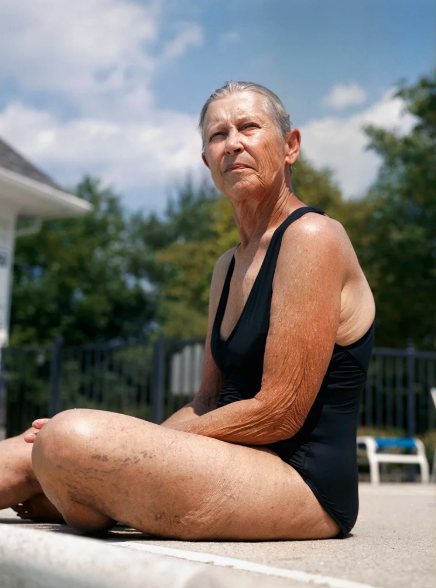
El abordaje temático de Guyette pone en entredicho, en primer lugar, la institución conceptual que escinde al hombre de la naturaleza, una de las ficciones más dañinas del idealismo moderno. Su lente no observa el paisaje como exterior virginal o salvaje, ni al cuerpo como una entidad aislada, un cascarón espiritual habitando un mundo material ajeno. Su propuesta es un ejercicio sostenido de problematización de estos conceptos, nos enfrenta a la evidencia de que somos, en gran medida, lo mismo: la misma carne perecedera, la misma savia que circula, la misma textura que se descompone y se recompone en ciclos infinitos, pero con la paradoja de saber verlo, entenderlo y pretender comprenderlo. La piel de una mujer, marcada por las huellas del tiempo o bañada por la luz se constituye en continuación directa del paisaje; la corteza de un árbol, la humedad de una roca, la carnosidad de un hongo, no son alegorías de la condición humana, son la manifestación de idénticos procesos materiales. Al hacerlo, Guyette seduce con lo que parece una trillada crítica: la industria cosmética combate los signos del envejecimiento, la cultura que venera una juventud eterna e inmaculada, el economicismo extractivista que ve en la naturaleza un mero recurso, e incluso cierto ecologismo romántico que la idealiza como un santuario separado de nosotros. Pero felizmente va bastante más allá al cuestionar la noción misma de persona, tal como la entiende el individualismo predominante, sujetándola a sus límites universales, a la vez que abre su horizonte a la contemplación que permite la fotografía misma a través de la tecnología. Sutil, bastante sutil.
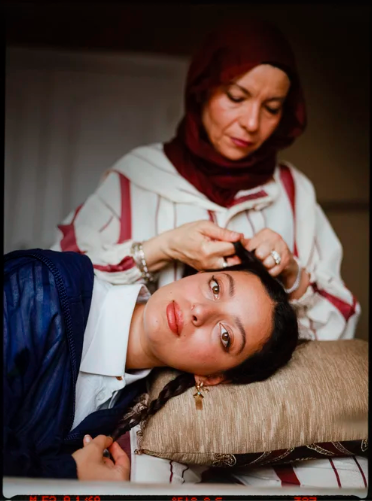
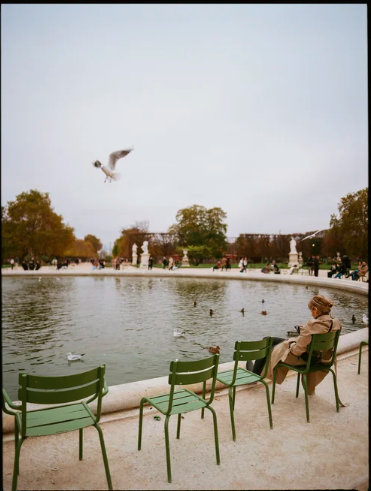
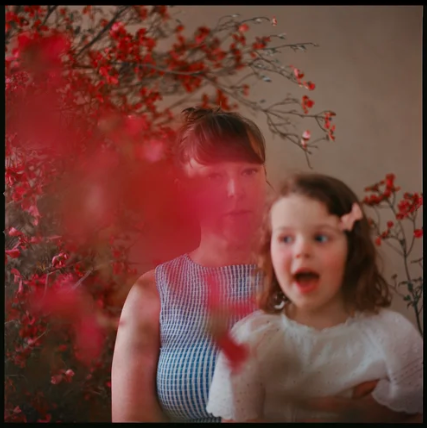
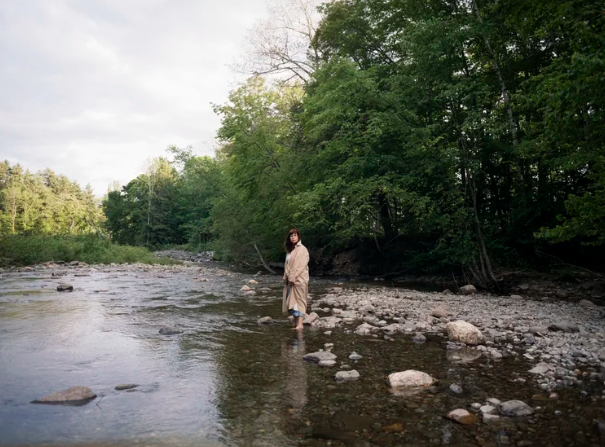
La conexión planteada por Guyette se manifiesta con una elocuencia sobrecogedora en la composición, las formas y el color. Sus encuadres son a menudo íntimos, fragmentarios, evitando la visión panorámica que distancia y objetiva. Acerca tanto la lente a la piel humana como a la corteza de un abedul o a la superficie de un estanque, que las fronteras se disuelven. Y se enfatiza justamente el artilugio que permite la aproximación. La profundidad de campo es a menudo reducida, dirigiendo la atención a un plano específico —el detalle de una piel, la superficie del agua—, sumergiendo al espectador en una experiencia táctil y visceral antes que puramente visual. La textura se convierte en el lenguaje universal: las venas azules bajo la piel translúcida de un torso femenino encuentran su eco en los nervios de una hoja; las estrías en la cadera dialogan con las grietas en la tierra seca; la suave curvatura de un hombro se funde con la redondez de una duna. La composición no busca el equilibrio clásico, sino la tensión de una unidad que está a punto de consumarse, la sugerencia de una permeabilidad constante entre los cuerpos. Todo, mediante la visión potenciada. El color, por su parte, es siempre terroso, orgánico, una paleta reducida a ocres, verdes pálidos, azules crepusculares y rosas desvaídos, como si todos los elementos hubieran sido bañados por la misma luz, impregnados por la misma esencia. No hay colores primarios estridentes; todo es matiz, degradación, un recordatorio cromático de la fugacidad y la decadencia.
Es en esta materialidad orgánica compartida donde Guyette establece su conexión más potente. La fertilidad de la vida, su impulso irreprimible, es representada no como un ideal bucólico, sino como una fuerza material, húmeda, táctil, que se manifiesta por igual en el brote de un helecho y en el vientre de una mujer; una fuerza cuyo envés es el gris deterioro. Dialéctica que no se rehúye. La muerte, aquí, no es un evento dramático o sobrenatural, sino la fase final de este proceso de fusión. Lejos del nihilismo, desmonta el terror metafísico a la finitud. Pero hace énfasis, también, en el desencanto que implica.
Guyette emplea predominantemente la fotografía analógica: el grano, la imperfección inherente al proceso químico, la espera del revelado, todo ello se alinea con su interés por lo orgánico, lo incontrolable, con una suerte de… vida propia. Acaso, una ventana abierta a la verdad material que, aunque a menudo negada, nos constituye y, finalmente, nos reabsorbe.
[Todas las imágenes, del sitio web de la artista: Jillian Guyette]
(ENGLISH VERSION)
Flesh of My Flesh: An Approach to the Work of Jillian Guyette
Translation by Rebeca Sanz
Since the dawn of photography, once its conception as a recording procedure was surpassed, the aspiration to extract poetry from the everyday, to transcend the literality of the instant, has motivated many artists to seek the greatest eloquence for their vision through technique. This tradition, rooted in nineteenth-century Pictorialism and branching through the avant-gardes of the 20th century, has often leaned towards an elementary, sometimes naive, symbolism. Indeed, it is far from sufficient to establish formal parallels between the external world and the psyche without questioning the very concepts that sustain such a separation. It is in this context that the work of Jillian Guyette emerges, perhaps as a critical twist on this heritage. Indeed, she establishes an ontological, not metaphorical, link between the organic matter of the commonly called «nature» and the organic matter of the human body, revealing their constitutive unity and their shared destiny of flowering, decay, and final fusion.
Guyette’s thematic approach calls into question, first and foremost, the conceptual institution that severs man from nature, one of the most damaging fictions of modern idealism. Her lens does not observe the landscape as a virginal or wild exterior, nor the body as an isolated entity, a spiritual shell inhabiting an alien material world. Her proposal is a sustained exercise in problematizing these concepts; she confronts us with the evidence that we are, to a great extent, the same: the same perishable flesh, the same sap that circulates, the same texture that decomposes and recomposes in infinite cycles, yet with the paradox of being able to see it, understand it, and aspire to comprehend it. The skin of a woman, marked by the traces of time or bathed in light, becomes a direct continuation of the landscape; the bark of a tree, the dampness of a rock, the fleshiness of a mushroom are not allegories of the human condition; they are the manifestation of identical material processes. In doing so, Guyette seduces with what seems a trite critique: the cosmetics industry fights the signs of aging, the culture that venerates an eternal and immaculate youth, the extractivist economism that sees nature as a mere resource, and even a certain romantic environmentalism that idealizes it as a sanctuary separate from us. But, happily, she goes much further by questioning the very notion of the person, as understood by the prevailing individualism, subjecting it to its universal limits, while simultaneously opening its horizon to the contemplation enabled by photography itself through technology. Subtle, quite subtle.
The connection proposed by Guyette manifests with overwhelming eloquence in the composition, forms, and color. Her frames are often intimate, fragmentary, avoiding the panoramic view that distances and objectifies. She brings her lens so close to human skin as to the bark of a birch tree or the surface of a pond that the boundaries dissolve. And the very artifice that allows this proximity is emphasized. The depth of field is often reduced, directing attention to a specific plane—the detail of skin, the water’s surface—immersing the viewer in a tactile and visceral experience rather than a purely visual one. Texture becomes the universal language: the blue veins under the translucent skin of a female torso find their echo in the veins of a leaf; the stretch marks on a hip converse with the cracks in dry earth; the soft curvature of a shoulder merges with the roundness of a dune. The composition does not seek classical balance, but the tension of a unity about to be consummated, the suggestion of a constant permeability between bodies. All of this, through an enhanced vision. The color, meanwhile, is always earthy, organic, a palette reduced to ochres, pale greens, twilight blues, and faded pinks, as if all elements had been bathed by the same light, imbued with the same essence. There are no strident primary colors; everything is nuance, gradation, a chromatic reminder of transience and decay.
It is in this shared organic materiality that Guyette establishes her most potent connection. The fertility of life, its irrepressible impulse, is represented not as a bucolic ideal but as a material, moist, tactile force, manifesting equally in the sprouting of a fern and in the womb of a woman; a force whose flip side is grey deterioration. A dialectic that is not shunned. Death, here, is not a dramatic or supernatural event, but the final phase of this process of fusion. Far from nihilism, it dismantles the metaphysical terror of finitude. But it also emphasizes the disenchantment that this implies.
Guyette predominantly employs analog photography: the grain, the inherent imperfection of the chemical process, the wait for development—all of this aligns with her interest in the organic, the uncontrollable, with a sort of… life of its own. Perhaps, an open window to the material truth that, though often denied, constitutes us and, ultimately, reabsorbs us.