Licencia de mirar: Aproximación a la obra de Sarah Muirhead
Por Juan Pablo Torres Muñiz
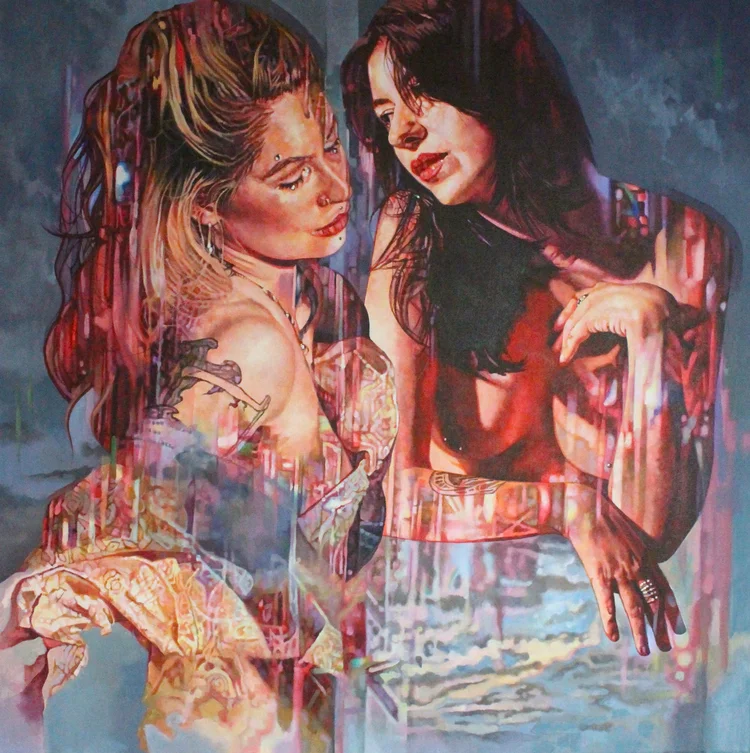
Basta cruzar el umbral de un museo para que lo que en la calle sería una descortesía se convierta en ejercicio de cultura: nos detenemos minutos enteros ante piel y más piel, examinamos un pliegue, la humedad de un labio. Nadie nos pide cuentas. Tampoco si hay sangre. Si, además, los símbolos se invierten. La pintura figurativa es la institución occidental que más largamente ha concedido ese permiso a ver sin volvernos testigos, al punto de que lo percibimos como algo de lo más natural. Sarah Muirhead pinta cuerpos, objetos de curiosidad, pies, naipes, con una minuciosidad casi clínica: nos seduce, supuestamente plegada a la tradición, pero para poner en cuestión algo más allá. En su caso, la cuestión no es qué hace el cuadro, sino a quién o a quiénes confronta. No depende del sexo de quien pinta ni del de quien mira. La apelación de la artista es a una estructura más general.
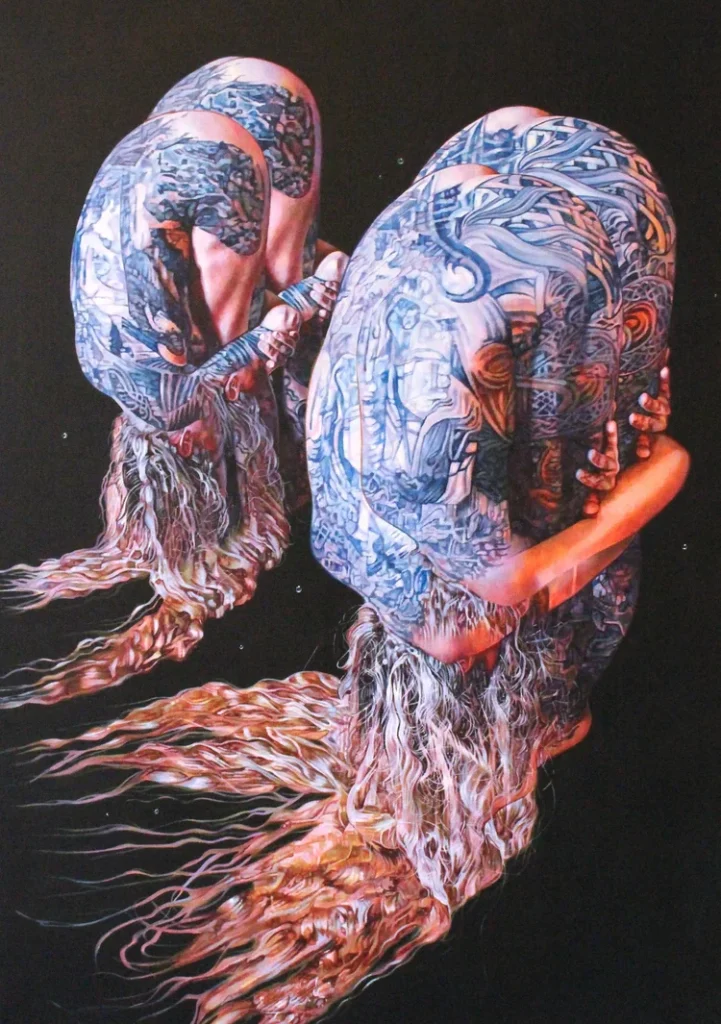
La escala de los cuadros acerca la mirada hasta que el espectador advierta su rol de voyeur. La lógica no perdona: para ver hay que acercarse, y acercarse resulta en sí confesar. La licencia de mirar no desaparece —sin ella no habría cuadro—, sino que se vuelve visible en su ejercicio, pues el receptor descubre su posición no por un discurso sino por la distancia a la que debe colocar su cuerpo. Por la convención institucional que autoriza mirar, el espectador es obligado a manifestarse a sí mismo con una distancia física, a la vez que experimenta una incomodidad operativa. Las figuras pintadas, inmóviles, le permiten a la artista plantear una situación comunicativa en la que la reciprocidad se ve trastocada, pues se supone que el espectador debiera de ser libre y no acabar acorralado. Aquí, la carne, las marcas, tatuajes, los objetos, y la disposición de cada elemento buscan —y consiguen— cierto apabullamiento. Intensidad, como se suele decir hoy, por resumir.
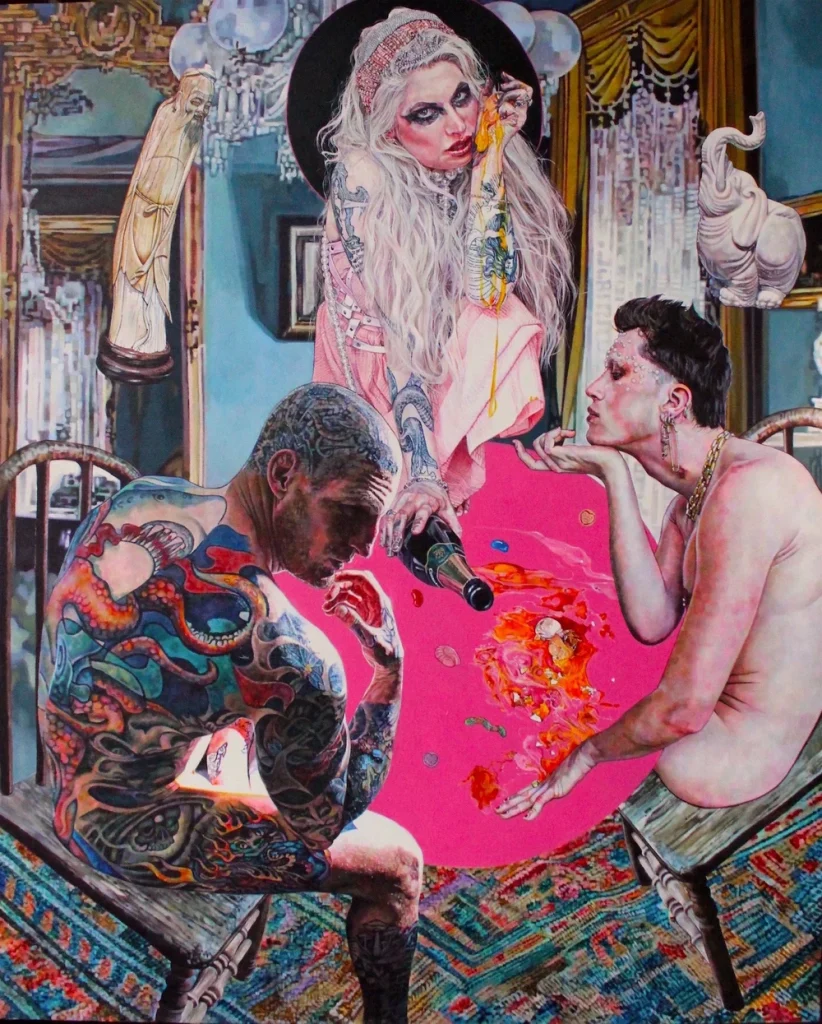
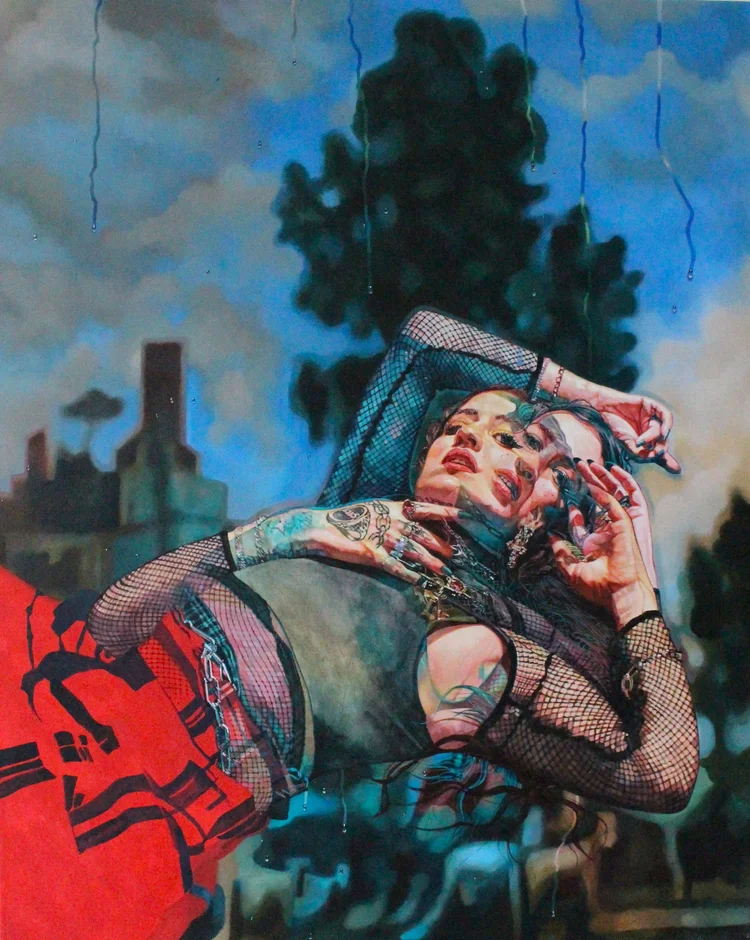
Hay un código visual bastante asentado sobre qué postura es sumisa o dominante, masculina o femenina, y Muirhead lo baraja de modo que lo erótico se lee como arquitectónico y lo sagrado como carnal. La convención no es refutada; se la hace temblar, y la propia artista busca que la imagen doble vibre. El efecto es altamente impactante: quiérase o no, resulta necesario revisar cada imagen, desplazar el punto de atención con frecuencia y, reacomodarse uno mismo. Las interpretaciones varían con la luz y el juego que plantea el efecto de doble o múltiple exposición.
El juego no excluye, ni mucho menos, la iconografía religiosa. La artista se las arregla para plantear que una comunidad que durante siglos aprendió a contemplar con devoción un cuerpo torturado y que, en esa devoción, perfeccionó el mismo mecanismo de licencia de mirar, se preste con ella a contemplaciones mucho menos pías. Devoción y fetiche, confundidos.
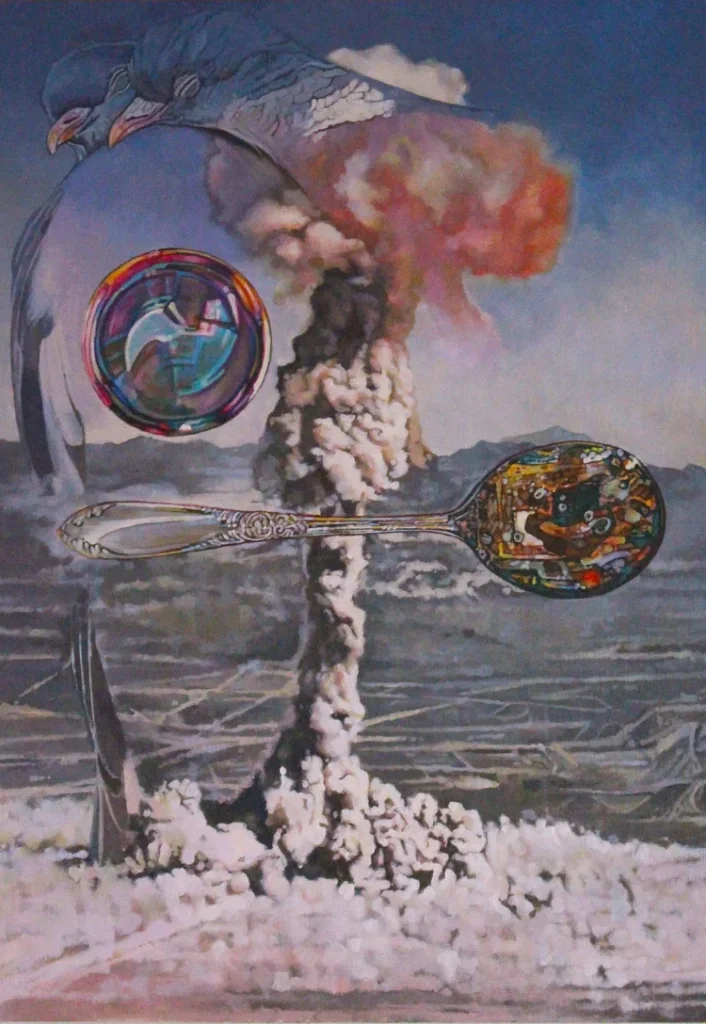
Muirhead pinta con acrílico sobre tabla, panel o lienzo, y su escala oscila entre las cinco pulgadas y los sesenta por ochenta y cuatro centímetros. Las imágenes coquetean con el fotorrealismo, pero se distancian de él, merced de la escala, de cómo luce cada sección de cada cuadro, con una clara tendencia al expresionismo alemán: la carne se resuelve en capas de tejido y color, con tatuajes envejecidos, marcas de presión, magulladuras. Sin contar los cruces de líneas, formas y volúmenes.
La artista, además, rechaza el espacio verosímil; en general, construye escenarios apenas lo bastante erróneos como para delatar la expresa artificialidad. La combinación es sofisticada: un cuerpo tratado con realismo táctil sobre un entorno imposible. El cuerpo reclama creencia; el fondo la retira. El receptor queda en una posición inestable, sin poder hundirse en la ilusión ni salir de ella, y esa inestabilidad es la materia psicológica-operativa de la obra.
Muirhead convierte la atención, la distancia, el tiempo y la vergüenza o el gozo del receptor en parte de su materia, y deja a la vista, como un pacto, la licencia que autoriza ese examen. Así, se desmiente que la figuración contemporánea haya agotado su interés, trocada por una mera capacidad de escandalizar. Ya fue dicho: la fuerza de estos cuadros no radica en lo que muestran sino en lo que hacen con quien los mira. En la comunicación que establecen, criticando su propio marco institucional.
[Todas las imágenes, del sitio Web de la artista: Sarah Muirhead Figurative Artist]
(ENGLISH VERSION)
License to Look: An Approach to the Work of Sarah Muirhead
Translation by Tiffany Amber Elías Trimble
It is enough to cross the threshold of a museum for what on the street would be a discourtesy to become an exercise in culture: we stop for whole minutes before skin and more skin, we examine a fold, the moisture of a lip. No one asks us to account for it. Nor if there is blood. If, moreover, the symbols are inverted. Figurative painting is the Western institution that has longest granted that permission to see without becoming witnesses, to the point that we perceive it as something utterly natural. Sarah Muirhead paints bodies, objects of curiosity, feet, playing cards, with an almost clinical meticulousness: she seduces us, supposedly folded into tradition, but in order to call something beyond into question. In her case, the question is not what the painting does, but whom or whoms it confronts. It does not depend on the sex of the one who paints nor on that of the one who looks. The artist’s appeal is to a more general structure.
The scale of the paintings brings the gaze close until the viewer becomes aware of their role as voyeur. The logic is unforgiving: in order to see one must approach, and approaching results in itself in a confession. The license to look does not disappear —without it there would be no painting—, but it becomes visible in its exercise, since the receiver discovers their position not through a discourse but through the distance at which they must place their body. By the institutional convention that authorizes looking, the viewer is obliged to manifest themselves with a physical distance, at the same time as they experience an operative discomfort. The painted figures, motionless, allow the artist to pose a communicative situation in which reciprocity is disrupted, since it is supposed that the viewer should be free and not end up cornered. Here, flesh, marks, tattoos, objects, and the arrangement of each element seek —and achieve— a certain overwhelming. Intensity, as is usually said today, by way of summary.
There is a fairly settled visual code about which posture is submissive or dominant, masculine or feminine, and Muirhead shuffles it in such a way that the erotic is read as architectural and the sacred as carnal. The convention is not refuted; it is made to tremble, and the artist herself seeks for the double image to vibrate. The effect is highly impactful: whether one likes it or not, it becomes necessary to review each image, to shift the point of attention frequently, and to readjust oneself. Interpretations vary with the light and the play that the effect of double or multiple exposure poses.
The play does not exclude, far from it, religious iconography. The artist manages to propose that a community that for centuries learned to contemplate with devotion a tortured body and that, in that devotion, perfected the same mechanism of license to look, lend itself with her to much less pious contemplations. Devotion and fetish, confused.
Muirhead paints with acrylic on board, panel, or canvas, and its scale oscillates between five inches and sixty by eighty-four centimeters. The images flirt with photorealism, but distance themselves from it, thanks to the scale, to how each section of each painting looks, with a clear tendency toward German Expressionism: flesh is resolved in layers of tissue and color, with aged tattoos, pressure marks, bruises. Not to mention the crossings of lines, forms, and volumes.
The artist, moreover, rejects verisimilar space; in general, she constructs scenarios just barely wrong enough to betray the express artificiality. The combination is sophisticated: a body treated with tactile realism against an impossible environment. The body demands belief; the background withdraws it. The receiver is left in an unstable position, unable neither to sink into the illusion nor to leave it, and that instability is the psychological-operative matter of the work.
Muirhead turns attention, distance, time, and the shame or the joy of the receiver into part of her material, and leaves in view, like a pact, the license that authorizes that examination. Thus, it is contradicted that contemporary figuration has exhausted its interest, exchanged for a mere capacity to scandalize. It has already been said: the force of these paintings lies not in what they show but in what they do with whoever looks at them. In the communication they establish, criticizing their own institutional framework.