El cuerpo antes del gesto: Aproximación a la obra de Robert Heindl
Por Juan Pablo Torres Muñiz
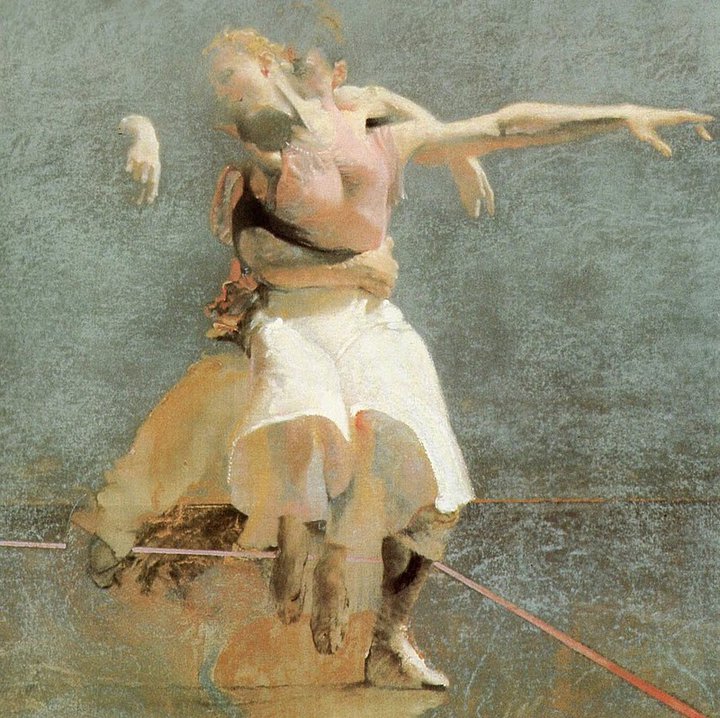
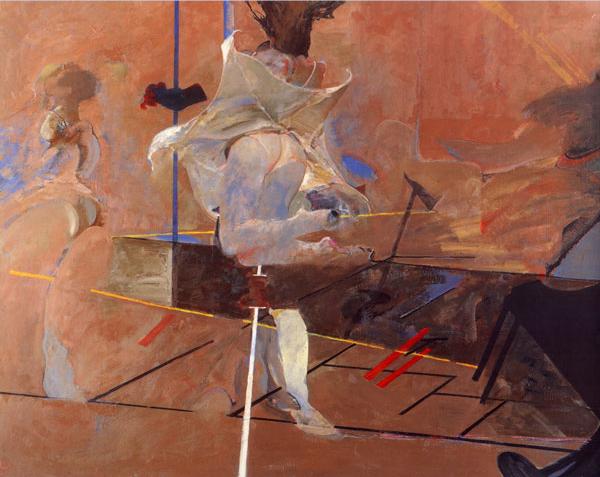
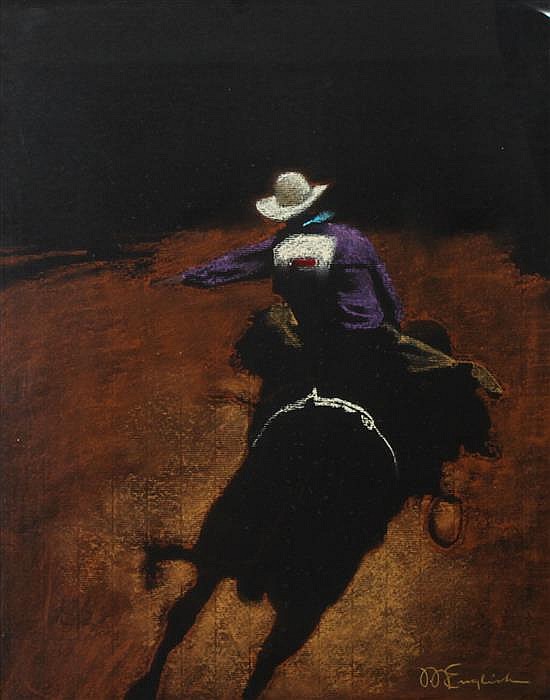
Una función de ballet. Los cuerpos parecen desafiar su propio peso, la gracia se impone como evidencia, y el espectador neófito tiende a creer que presencia un don natural, algo cercano a lo espontáneo. Pocas veces repara en que lo que contempla es, ante todo, el resultado depurado de años de técnica codificada, de jerarquías de compañía, de un vocabulario gestual transmitido de maestro a alumno, de un régimen corporal que comienza a inscribirse desde la niñez y que exige, a cambio de la ilusión de ligereza, una disciplina casi ascética. La escuela y el sacrificio, se vuelven invisibles precisamente en el instante en que triunfan: cuanto más lograda la actuación, menos se percibe el aparato que la hizo posible. De ello —y otras actividades parcialmente equivalentes, como la doma de potros— se ocupó, durante veinticinco años y a lo largo de más de mil trescientas obras, el pintor estadounidense Robert Heindel, centrando su atención no en la función, sino en el ensayo.
Hay que rastrear en la obra de Heindel la pregunta por el drama entendido como conflicto entre pose y abandono, entre quietud y movimiento, entre la disposición al gesto medido y la entrega a fuerzas ajenas a toda voluntad. Asimismo, ver de qué manera su obra pone en cuestión, específicamente, la institución de la danza —y, por extensión, toda institución que reclama para sí la fijación de los cuerpos en formas transmisibles—. ¿Qué idea del sujeto humano emerge en el punto exacto donde el cuerpo ya adiestrado, ya «posado», roza ese fondo biológico y pasional que ninguna técnica logra capturar del todo?
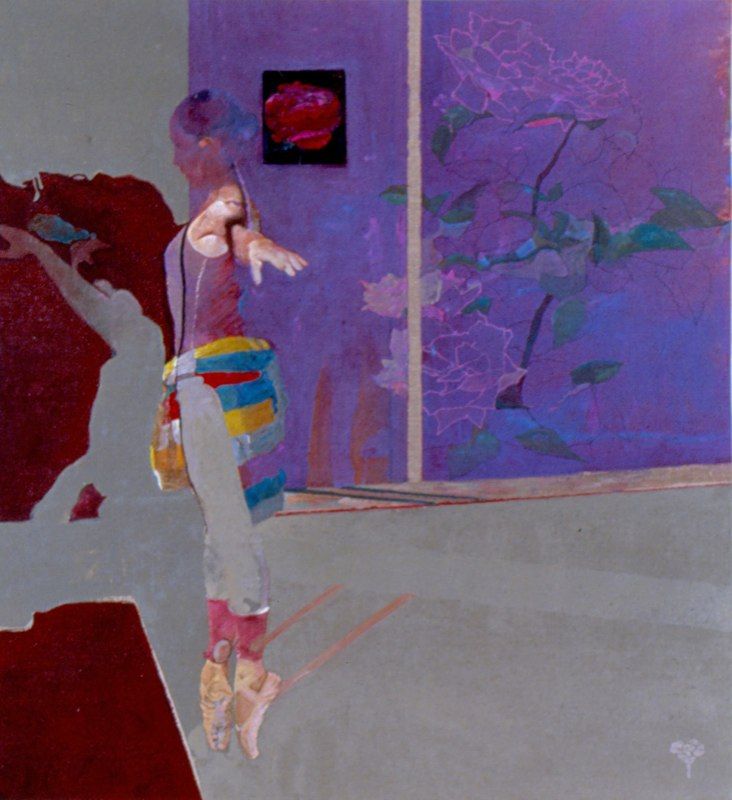
El pintor tuvo que rogar, al principio de su carrera, que se le permitiera presenciar los ensayos de ballet, condición de intruso que solo con el tiempo, y tras años de insistencia, se convirtió en invitación formal por parte de las propias compañías. El ensayo, a diferencia de la función, es el momento en que la técnica se repite, se corrige, se abandona y se retoma; es la escena donde el error todavía tiene lugar, donde el cuerpo tropieza con la exigencia del código antes de someterse por completo a él. Al elegir sistemáticamente ese instante, y no el de la representación acabada, Heindel desplaza el objeto de su pintura del producto —la función, aplaudida, vendida, reseñada— al proceso pen sí: al modo en que, mediante repetición, disciplina y dolor, un cuerpo cualquiera se convierte en cuerpo actuante. La obra pregunta, en el fondo, no qué es la danza, sino cómo se hace un bailarín, y esa pregunta es ya una pregunta institucional en sentido estricto.
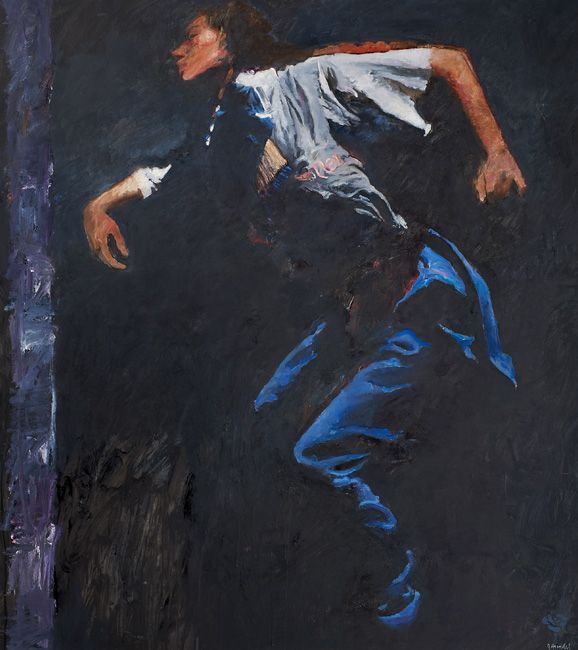
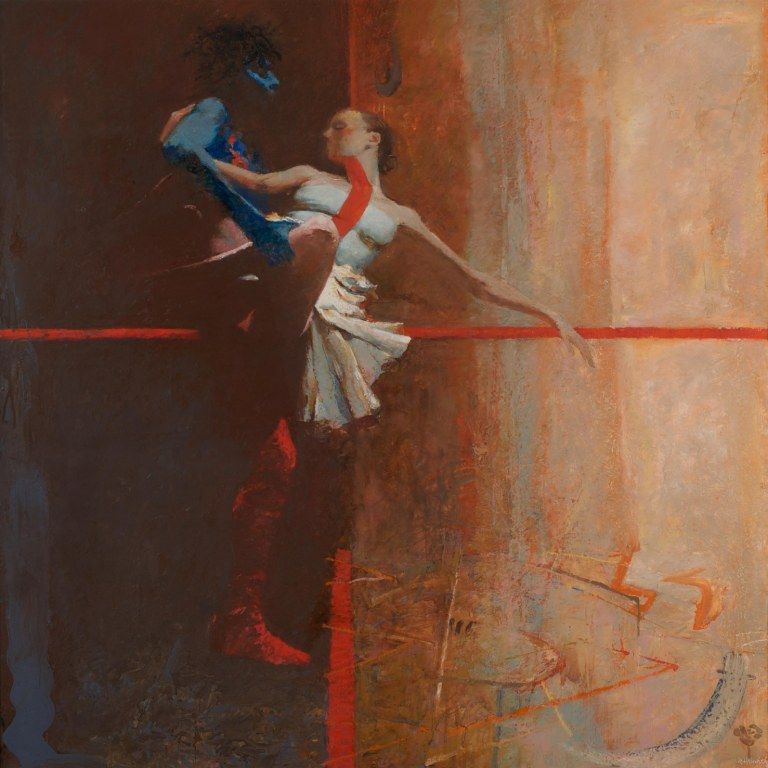
Si toda institución necesita, para reproducirse, unidades mínimas transmisibles —fórmulas, protocolos, posturas reconocibles de una generación a otra—, la pose es, en el terreno de la danza, esa unidad mínima: la posición codificada, medible, enseñable, aquella que un maestro puede corregir con precisión porque existe un canon previo con el que compararla. En la obra de Heindel se enfrentan, como verdaderas pasiones dramáticas, la disposición a la pose y el rigor de su ejecución, de un lado, frente al abandono a las fuerzas físicas y biológicas que el propio cuerpo no controla del todo, del otro. Ahora bien, esta tensión revela algo más: la pose es el punto en el que un concepto logra, por un instante, imponerse sobre la materia; el abandono, el peso, el temblor, el desequilibrio inminente, son el recordatorio de que ningún código agota jamás el cuerpo que lo sostiene. Heindel no pinta el triunfo de la pose, sino su fragilidad, el instante anterior a que se rompa o se consume en salto o caída. De ahí que buena parte de su obra parezca, literalmente, inacabada: el pintor rehúsa fijar aquello que, por definición institucional, exige después ser fijado. Esa resistencia a completar la forma es ya, en sí misma, una forma de crítica: cuestiona el afán de convertir cada instante en condición estable, en posición reconocible y repetible, y opone a ese afán la evidencia de que el cuerpo vivo se define, precisamente, por la imposibilidad de la quietud definitiva.
Merece atención, por otra parte, lo que el propio Heindel declaró: que su pintura simplemente reflejaba lo que mucha gente ve: una reivindicación, tal vez ingenua en apariencia, de una mirada común, no especializada, que contradice discretamente la exclusividad del círculo conocedor, así como el que lo sostenía económicamente. Heindel sostuvo que la participación de quien mira es el elemento final que completa la pintura, afirmación que desplaza al espectador de su lugar habitual de receptor pasivo —aquel que la institución del arte suele reservarle, entrenado para admirar, comprender o valorar un producto ya cerrado— hacia el de coautor obligado de un sentido que la obra, deliberadamente, deja incompleto. En este punto, es importante recordar que el discurso que acompaña a la pintura nunca transmite un contenido preexistente, sino que provoca una lectura parcial, útil solo en la medida en que enriquece el diálogo sobre la obra. La crítica y el comentario —el propio ejercicio que aquí se realiza— no pueden pretender agotar la obra ni sustituirla; pueden, a lo sumo, señalar algunas de las claves que la atraviesan, sabiendo que el cuadro conserva su misterio incluso después de traducidos los efectos de que se sirve.
La factura de Heindel se caracteriza por un trazo suelto y veloz, por contornos deliberadamente interrumpidos, por una paleta contenida y fría —que obliga a desplazar la mirada de un punto a otro en un afán constante de definición que nunca termina de saciarse— y por una forma que se insinúa a partir de sombras antes que de líneas cerradas. Estas decisiones son un modo personal de firmar la superficie: constituyen, en rigor, el mecanismo mediante el cual la crítica temática se ejecuta materialmente. Si la pose es la unidad mínima de la institución, la línea cerrada y completa sería su correspondiente pictórico: un contorno preciso, repetible, que cualquiera podría calcar. Heindel rehúsa justamente eso. Su pincelada no cierra la forma, la sugiere y la abandona a medio camino, de modo que el ojo del espectador —convocado, como se dijo, a completar la obra— se ve obligado a reconstruir un movimiento que la mano del pintor se negó a fijar. La técnica reproduce, así, en el terreno de la materia pictórica, exactamente aquello que la temática enuncia en el terreno del cuerpo: la imposibilidad de la quietud definitiva, la fractura del tiempo mediante la fractura del espacio en su representación geométrica.
A esta economía formal se suma un método de trabajo igualmente significativo. Heindel no pintaba a partir de fotografías tomadas en el instante, ni buscaba la exactitud documental que la cámara ofrece; según se ha señalado, cada gran serie le exigía cerca de dos años de observación continuada, en los que visitaba la compañía cada tres o cuatro meses para aprender, antes de que el cuadro pudiera siquiera comenzar a tomar forma. Esta insistencia en la duración, en la convivencia prolongada con los cuerpos antes de representarlos, supone un rechazo tácito de otra institución contemporánea: la del registro mecánico e instantáneo, el documento fotográfico que la propia institución de la danza suele emplear para fines promocionales o de archivo. Frente a la evidencia inmediata y neutral que promete la cámara, Heindel opta por una síntesis nacida de la memoria acumulada y de familiarización con el gesto observado durante meses; no reproduce un instante, sino que destila una regularidad advertida a lo largo de un proceso, lo cual explica que sus figuras parezcan, a la vez, reconocibles y genéricas, un bailarín cualquiera y ninguno en particular. Coherente con esta lógica resulta, además, el dato de que en algún momento de madurez del artista llegara a coreografiar su propia producción escénica: el observador que durante años se mantuvo, técnicamente, fuera de la institución que representaba termina por convertirse, siquiera parcialmente, en institutor él mismo, lo cual confirma que la frontera entre representar una institución y participar en su fabricación nunca fue, en este caso, una frontera estable.
La obra de Robert Heindel constituye un estudio de la certeza de que ningún sujeto humano existe fuera de instituciones —el ballet como técnica codificada, la compañía como jerarquía, el mecenazgo como circuito de consagración, la crítica como discurso que acompaña y traduce, el propio museo o galería como espacio de exhibición—, pero también la certeza, igualmente firme, de que esas instituciones jamás logran capturar por completo al sujeto que las sostiene. El drama entre pose y abandono, entre quietud y movimiento, puede leerse ahora en clave como el drama constitutivo mediante el que todo sujeto se hace, en efecto, a través del código, de la disciplina, del reglamento que ordena su gesto; pero ese mismo sujeto, en el instante justo en que el código lo posee por completo, revela también un resto —peso, miedo, fatiga, pasión— que ninguna institución programó ni puede administrar del todo. El autor no elige entre ambos términos, y ahí radica su lucidez, el valor de su propuesta.
(ENGLISH VERSION)
The body before the gesture: An approach to the work of Robert Heindl
Translation by Tiffany Amber Elías Trimble
A ballet performance. Bodies seem to defy their own weight, grace imposes itself as evidence, and the neophyte spectator tends to believe that he is witnessing a natural gift, something close to the spontaneous. He rarely notices that what he contemplates is, above all, the refined result of years of codified technique, of company hierarchies, of a gestural vocabulary transmitted from master to student, of a bodily regimen that begins to be inscribed from childhood and that demands, in exchange for the illusion of lightness, an almost ascetic discipline. Schooling and sacrifice become invisible precisely at the instant in which they triumph: the more accomplished the performance, the less the apparatus that made it possible is perceived. With this—and with other partially equivalent activities, such as horse breaking—the American painter Robert Heindel occupied himself for twenty-five years and across more than one thousand three hundred works, focusing his attention not on the performance but on the rehearsal.
One must trace in Heindel’s work the question of drama understood as conflict between pose and abandonment, between stillness and movement, between the disposition to measured gesture and surrender to forces outside all will. Likewise, to see how his work calls into question, specifically, the institution of dance—and, by extension, every institution that claims for itself the fixing of bodies into transmissible forms. What idea of the human subject emerges at the exact point where the already trained body, already posed, touches that biological and passional background that no technique manages to capture completely?
At the beginning of his career, the painter had to beg to be allowed to attend ballet rehearsals, an intruder’s condition that only over time, and after years of insistence, became a formal invitation from the companies themselves. Rehearsal, unlike performance, is the moment when technique is repeated, corrected, abandoned and resumed; it is the scene where error still takes place, where the body stumbles against the demand of the code before submitting completely to it. By systematically choosing that instant, and not that of the finished representation, Heindel shifts the object of his painting from the product—the performance, applauded, sold, reviewed—to the process itself: to the way in which, through repetition, discipline and pain, any body becomes a performing body. The work asks, at bottom, not what dance is, but how a dancer is made, and that question is already an institutional question in the strict sense.
If every institution needs, in order to reproduce itself, minimal transmissible units—formulas, protocols, postures recognizable from one generation to another—the pose is, in the field of dance, that minimal unit: the codified, measurable, teachable position, one that a teacher can correct with precision because a previous canon exists with which to compare it. In Heindel’s work, the disposition to the pose and the rigor of its execution, on one side, confront the abandonment to physical and biological forces that the body itself does not fully control, on the other, as true dramatic passions. Now, this tension reveals something more: the pose is the point at which a concept manages, for an instant, to impose itself on matter; abandonment, weight, trembling, imminent imbalance are the reminder that no code ever exhausts the body that sustains it. Heindel does not paint the triumph of the pose, but its fragility, the instant before it breaks or is consumed in a jump or fall. Hence a good part of his work seems, literally, unfinished: the painter refuses to fix what, by institutional definition, must afterward be fixed. That resistance to completing the form is already, in itself, a form of critique: it questions the desire to convert every instant into a stable condition, into a recognizable and repeatable position, and opposes to that desire the evidence that the living body is defined, precisely, by the impossibility of definitive stillness.
Worthy of attention, on the other hand, is what Heindel himself declared: that his painting simply reflected what many people see: a vindication, perhaps naive in appearance, of a common, non-specialized gaze, which discreetly contradicts the exclusivity of the connoisseur circle, as well as that of the circle that economically sustained him. Heindel maintained that the participation of the one who looks is the final element that completes the painting, a statement that shifts the spectator from his usual place as passive receiver—the place that the institution of art usually reserves for him, trained to admire, understand or value an already closed product—toward that of obliged co-author of a meaning that the work deliberately leaves incomplete. At this point, it is important to remember that the discourse that accompanies the painting never transmits a preexisting content, but provokes a partial reading, useful only insofar as it enriches the dialogue about the work. Criticism and commentary—the very exercise carried out here—cannot claim to exhaust the work or replace it; they can, at most, point to some of the keys that run through it, knowing that the painting preserves its mystery even after the effects it employs have been translated.
Heindel’s execution is characterized by a loose and swift stroke, by deliberately interrupted contours, by a contained and cold palette—which forces the gaze to shift from one point to another in a constant desire for definition that never finishes being satisfied—and by a form that is hinted at from shadows rather than closed lines. These decisions are a personal way of signing the surface: they constitute, strictly speaking, the mechanism through which the thematic critique is executed materially. If the pose is the minimal unit of the institution, the closed and complete line would be its pictorial counterpart: a precise, repeatable contour that anyone could trace. Heindel refuses precisely that. His brushstroke does not close the form, it suggests it and abandons it halfway, so that the spectator’s eye—summoned, as was said, to complete the work—is forced to reconstruct a movement that the painter’s hand refused to fix. Technique thus reproduces, in the terrain of pictorial matter, exactly what the thematic content states in the terrain of the body: the impossibility of definitive stillness, the fracture of time through the fracture of space in its geometric representation.
To this formal economy is added an equally significant working method. Heindel did not paint from photographs taken in the instant, nor did he seek the documentary exactitude that the camera offers; according to what has been pointed out, each great series demanded of him nearly two years of continuous observation, in which he visited the company every three or four months in order to learn, before the painting could even begin to take shape. This insistence on duration, on prolonged coexistence with bodies before representing them, supposes a tacit rejection of another contemporary institution: that of mechanical and instantaneous recording, the photographic document that the institution of dance itself usually employs for promotional or archival purposes. Against the immediate and neutral evidence that the camera promises, Heindel opts for a synthesis born of accumulated memory and of familiarization with the gesture observed over months; he does not reproduce an instant, but distills a regularity noticed throughout a process, which explains why his figures seem, at once, recognizable and generic, any dancer and none in particular. Coherent with this logic is, moreover, the fact that at some moment of the artist’s maturity he came to choreograph his own stage production: the observer who for years remained, technically, outside the institution he represented ends up becoming, at least partially, an institutor himself, which confirms that the border between representing an institution and participating in its fabrication was never, in this case, a stable border.
The work of Robert Heindel constitutes a study of the certainty that no human subject exists outside institutions—ballet as codified technique, the company as hierarchy, patronage as a circuit of consecration, criticism as discourse that accompanies and translates, the museum or gallery itself as exhibition space—but also the equally firm certainty that those institutions never manage to capture completely the subject who sustains them. The drama between pose and abandonment, between stillness and movement, can now be read as the constitutive drama through which every subject is made, indeed, through the code, discipline, and regulation that orders his gesture; but that same subject, at the very instant when the code possesses him completely, also reveals a remainder—weight, fear, fatigue, passion—that no institution programmed or can fully administer. The author does not choose between the two terms, and therein lies his lucidity, the value of his proposal.