Tacto e intimidad: Aproximación a la obra de Ashley McLean
Por Juan Pablo Torres Muñiz
Toda fotografía que sitúa un rostro frente al objetivo lo obliga a resolver, en fracciones de segundo, un problema que ninguna convención social le exige en la vida ordinaria: qué mostrar de sí y qué retener. La historia del retrato ha ofrecido tradicionalmente dos salidas a ese problema, ambas empobrecedoras. La primera es la contención: el sujeto adopta una máscara de neutralidad, cede al dispositivo una superficie sin fisuras y con ello garantiza su propia opacidad. La segunda es la disponibilidad teatral: el sujeto se entrega por entero a la puesta en escena, renuncia a toda reserva y se convierte en material dócil de la composición. Ashley McLean (Nueva York, 1996) construye una tercera vía al margen de la síntesis de las dos anteriores: rostros que miran directo a la cámara sin esconderse tras la contención, pero cuya expresividad —precisamente por genuina, nada actuada— llega inevitablemente teñida de una desconfianza que ningún gesto de la fotógrafa logra disolver del todo. A esa tensión se suma, en las mismas series, un segundo fenómeno de sentido opuesto: cuando dos figuras interactúan, el cuidado que se dispensan es indistinguible del afecto, lo que vuelve manifiesto lo arbitrario, casi absurdo, de cualquier convención que exija disimularlo. Y a ambos fenómenos se añade un tercero, de naturaleza espacial: el desplazamiento de la cámara hacia paisajes abiertos no diluye a los sujetos en el escenario, sino que, mediante la coincidencia misma que el paisaje común impone entre ellos, permite que emerja con mayor nitidez la individualidad propia de cada uno. Cabe entonces preguntar, con el rigor que exige la crítica de arte entendida como disciplina que interroga qué instituciones cuestiona una obra y por qué procedimiento técnico lo logra: ¿de qué manera la mirada frontal, el gesto de cuidado entre sujetos y el traslado al paisaje de origen construyen, en la fotografía de McLean, una situación comunicativa capaz de cuestionar la contención habitual y el ocultamiento donde hay afecto?
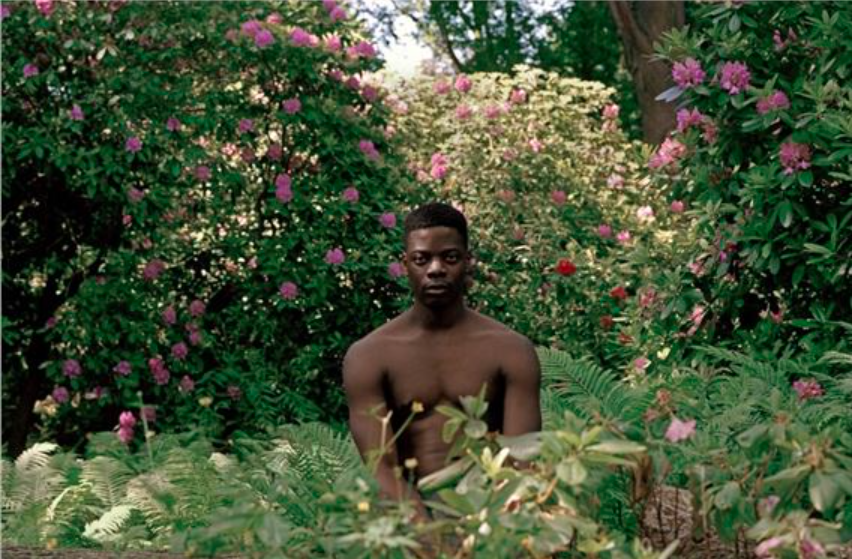
El primer eje de ese cuestionamiento se juega en el rostro que mira directamente al objetivo. La fotografía de estudio y buena parte del retrato documental han operado históricamente bajo el supuesto de que la neutralidad del gesto —la ceja quieta, la boca cerrada, la mirada que no compromete nada— constituye la prueba de autenticidad del sujeto retratado: cuanto menos expresa, más se presume que revela sin manipulación. McLean invierte ese supuesto. Sus sujetos exhiben, más bien, una expresividad legible, pertinente al momento y al vínculo que sostienen con quien fotografía, y es justamente esa legibilidad la que deja pasar, sin proponérselo, un fondo de desconfianza que ningún encuadre logra neutralizar. Esa desconfianza no es un defecto técnico ni un residuo emocional accidental: es la huella necesaria de todo acto fotográfico, que somete al sujeto a una exposición que este no controla por completo por más que colabore con ella. McLean no la disimula ni la corrige en posproducción; la deja operar como componente legítimo de la expresión. En cuestión, la exigencia de que el rostro fotografiado luzca una sola nota emocional coherente y sin fisuras: McLean demuestra que la expresividad más pertinente —la que de verdad informa sobre el sujeto— es precisamente la que admite la contradicción de mostrarse desconfiando.
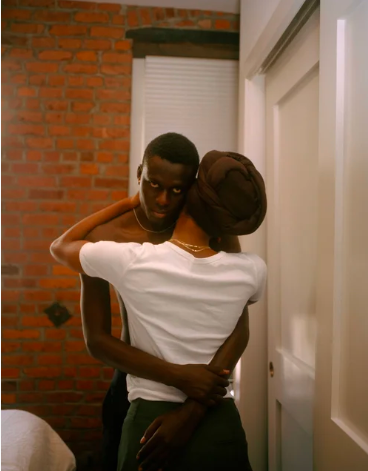
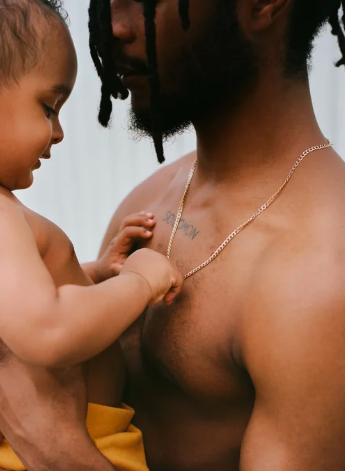
El segundo eje se despliega allí donde dos cuerpos entran en contacto. Frente al rostro solitario que negocia su propia exposición, las imágenes de pares —el brazo que rodea un hombro, la cabeza que descansa sobre otro cuerpo, la mano que sostiene una nuca— presentan un régimen distinto: el cuidado que ahí se manifiesta no requiere justificación ni contexto narrativo para ser reconocido como afecto. No hay ambigüedad posible en esos gestos, y es esa misma claridad la que convierte en evidente lo absurdo de cualquier convención —social, institucional, estética— que hubiera exigido su disimulo. McLean no argumenta contra esa convención; simplemente la deja sin sustento al mostrar, con la misma seriedad compositiva de un retrato formal, que el cuidado entre sujetos y el afecto son, en los hechos, la misma cosa observada desde dos nombres distintos. Lo que la institución del ocultamiento presupone —que hace falta un espacio protegido, una excepción, un permiso especial para que ese gesto exista— queda desmentido por la sola constancia fotográfica de que el gesto ya ocurre, con naturalidad, allí donde se lo mira.
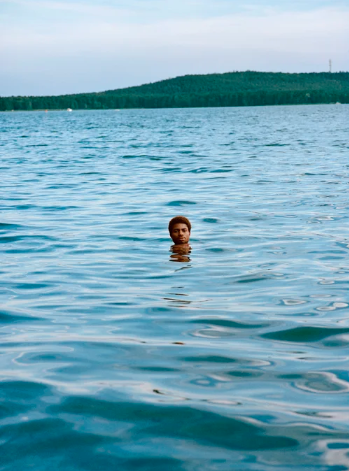
El eje complementario de los dos anteriores, concierne al paisaje. Cuando McLean traslada la cámara a espacios abiertos y, de manera más precisa, a Guyana —la tierra de la que proviene su familia, adonde volvió para fotografiar a sus abuelos y trabajar en torno a la idea del regreso—, el paisaje no funciona como fondo intercambiable ni como metáfora de libertad frente al confinamiento doméstico. Funciona como término de comparación. Al situar a distintos sujetos frente al mismo horizonte, la misma vegetación, la misma calidad de luz, la fotografía establece entre ellos una coincidencia de escenario que, lejos de homogeneizarlos, actúa como fondo neutro sobre el cual se recorta, por contraste, lo que cada sujeto tiene de irreductible: la postura propia, el modo particular de habitar ese mismo espacio compartido, el gesto que no se repite de una figura a otra, aunque el paisaje sí. La coincidencia de sujeto a sujeto —todos frente al mismo origen, todos hijos de la misma tierra— no borra la individualidad, la produce, porque es precisamente al medir a cada sujeto contra un fondo común como se hace visible aquello en lo que cada uno difiere del resto.
Estos tres ejes convergen en un mismo procedimiento técnico que los hace posibles: el uso sostenido de la fotografía analógica. McLean trabaja con película y negativo, un soporte que impone una demora entre la toma y la imagen revelada. Dicho lapso resulta una condición de posibilidad de los tres fenómenos descritos: solo un tiempo sin apremios permite que el rostro sostenga, ante la cámara, la coexistencia de apertura y desconfianza sin resolverla en una sola nota; solo tal demora permite que el gesto de cuidado entre dos cuerpos se sostenga el tiempo suficiente para registrarse sin artificio; y solo un desplazamiento pausado por el paisaje permite que la comparación entre sujetos y entorno se construya con la precisión compositiva que la autora reserva habitualmente a la formalidad del retrato de estudio.
A esta primera decisión técnica se suma la nominación singularizante de las piezas: Doney & Solomon, Theo in the Garden, nombres propios en lugar de títulos genéricos o descripciones de tipo. Este procedimiento, aparentemente menor —una etiqueta, un pie de foto—, cumple una función decisiva dentro de la lógica expuesta: la imagen exige un nombre propio que la sustraiga de cualquier lectura como muestra de un tipo o representante de una categoría. El título deja de ser información accesoria y se convierte en la ratificación verbal de lo que la imagen ya había establecido visualmente: que cada sujeto fotografiado es, ante todo, alguien y no un ejemplo.
La obra de McLean confirma que el lenguaje fotográfico dispone de recursos técnicos precisos capaces de traducir en procedimiento visual un cuestionamiento institucional que de otro modo quedaría en el terreno de la sola declaración de intenciones. Se inaugura así un espacio de sentido disponible para quien decida, como esta joven fotógrafa, abrazar la aparente contradicción.
[Todas las imágenes, de sus redes sociales.]

(ENGLISH VERSION)
Touch and intimacy: An approach to the work of Ashley McLean
Translation by Tiffany Amber Elías Trimble
Every photograph that places a face before the lens forces it to solve, in fractions of a second, a problem that no social convention demands of it in ordinary life: what to show of itself and what to withhold. The history of portraiture has traditionally offered two exits from that problem, both impoverishing. The first is containment: the subject adopts a mask of neutrality, yields to the device a seamless surface and thereby guarantees its own opacity. The second is theatrical availability: the subject gives itself entirely over to the staging, renounces all reserve and becomes docile material for the composition. Ashley McLean (New York, 1996) constructs a third path outside the synthesis of the previous two: faces that look directly at the camera without hiding behind containment, but whose expressiveness —precisely because genuine, not acted at all— arrives inevitably tinged with a distrust that no gesture of the photographer manages to dissolve completely. To this tension is added, in the same series, a second phenomenon of opposite meaning: when two figures interact, the care they bestow on each other is indistinguishable from affection, which makes manifest the arbitrary, almost absurd, character of any convention that demands it be concealed. And to both phenomena is added a third, spatial in nature: the camera’s movement toward open landscapes does not dilute the subjects in the setting, but rather, through the very coincidence that the shared landscape imposes between them, allows the individuality proper to each one to emerge with greater clarity. One may then ask, with the rigor demanded by art criticism understood as a discipline that interrogates what institutions a work questions and by what technical procedure it achieves this: in what way do the frontal gaze, the gesture of care between subjects, and the relocation to the landscape of origin construct, in McLean’s photography, a communicative situation capable of questioning the habitual containment and concealment where there is affection?
The first axis of that questioning is played out in the face that looks directly at the lens. Studio photography and a good part of documentary portraiture have historically operated under the assumption that neutrality of gesture —the still eyebrow, the closed mouth, the gaze that commits to nothing— constitutes proof of authenticity of the portrayed subject: the less it expresses, the more it is presumed to reveal without manipulation. McLean reverses that assumption. Her subjects display, rather, a legible expressiveness, pertinent to the moment and to the bond they sustain with the one photographing, and it is precisely that legibility that lets through, without intending to, a background of distrust that no framing manages to neutralize. That distrust is not a technical defect or an accidental emotional residue: it is the necessary trace of every photographic act, which subjects the subject to an exposure that it does not completely control no matter how much it collaborates with it. McLean neither disguises nor corrects it in postproduction; she lets it operate as a legitimate component of expression. At issue is the demand that the photographed face display a single coherent emotional note without fissures: McLean demonstrates that the most pertinent expressiveness —the one that truly informs about the subject— is precisely the one that admits the contradiction of showing itself distrusting.
The second axis unfolds where two bodies enter into contact. Before the solitary face negotiating its own exposure, the images of pairs —the arm around a shoulder, the head resting on another body, the hand holding the nape of a neck— present a different regime: the care manifested there does not require justification or narrative context to be recognized as affection. There is no possible ambiguity in those gestures, and it is that very clarity that makes evident the absurdity of any convention —social, institutional, aesthetic— that would have demanded its concealment. McLean does not argue against that convention; she simply leaves it without support by showing, with the same compositional seriousness of a formal portrait, that care between subjects and affection are, in fact, the same thing observed from two different names. What the institution of concealment presupposes —that a protected space, an exception, a special permission is needed for that gesture to exist— is contradicted by the mere photographic evidence that the gesture already occurs, naturally, wherever one looks at it.
The axis complementary to the previous two concerns landscape. When McLean moves the camera to open spaces and, more precisely, to Guyana —the land from which her family comes, where she returned to photograph her grandparents and work around the idea of return— the landscape does not function as an interchangeable background nor as a metaphor for freedom from domestic confinement. It functions as a term of comparison. By placing different subjects before the same horizon, the same vegetation, the same quality of light, the photograph establishes among them a coincidence of setting that, far from homogenizing them, acts as a neutral background against which is cut out, by contrast, what each subject has of irreducible: their own posture, their particular way of inhabiting that same shared space, the gesture that is not repeated from one figure to another, although the landscape is. The coincidence from subject to subject —all before the same origin, all children of the same land— does not erase individuality, it produces it, because it is precisely by measuring each subject against a common background that what each one differs in from the rest becomes visible.
These three axes converge in a single technical procedure that makes them possible: the sustained use of analog photography. McLean works with film and negative, a medium that imposes a delay between the shot and the developed image. Said lapse turns out to be a condition of possibility of the three described phenomena: only a time without pressures allows the face to sustain, before the camera, the coexistence of openness and distrust without resolving it into a single note; only such a delay allows the gesture of care between two bodies to sustain itself long enough to be registered without artifice; and only a slow movement through the landscape allows the comparison between subjects and environment to be constructed with the compositional precision that the author habitually reserves for the formality of studio portraiture.
To this first technical decision is added the singularizing nomination of the pieces: Doney & Solomon, Theo in the Garden, proper names instead of generic titles or descriptions of type. This procedure, apparently minor —a label, a caption—, fulfills a decisive function within the logic set out: the image demands a proper name that subtracts it from any reading as a sample of a type or representative of a category. The title ceases to be accessory information and becomes the verbal ratification of what the image had already established visually: that each photographed subject is, above all, someone and not an example.
McLean’s work confirms that photographic language has precise technical resources capable of translating into visual procedure an institutional questioning that would otherwise remain in the terrain of a mere declaration of intentions. Thus a space of meaning is inaugurated, available to whoever decides, like this young photographer, to embrace the apparent contradiction.