Memoria desfigurada: Aproximación a la obra de Adrian Ghenie
Por Juan Pablo Torres Muñiz
Hay imágenes que, sin evocarnos nada concreto, nos persiguen. No aquellas cuya nitidez garantiza el reconocimiento inmediato de un hecho o un rostro, sino las que han sobrevivido a la claridad, al afán esclarecedor. Y es que en ellas persiste algo que se sustrae a la identificación: una silueta, una mancha que pudo ser un rostro y que, por no conservarse entero, porta una verdad más honda que su mera apariencia. Cuanto más intentamos fijarla, más se desvanece. No nos hallamos ante un fallo de la representación, sino ante la representación de un fallo: el de nuestra relación con el pasado.
La historia moderna ha confiado gran parte de su autoridad a las imágenes. Archivos, monumentos, fotografías y documentos han sido integrados en instituciones que ordenan la memoria colectiva. Gracias a ellas, una sociedad puede establecer qué ocurrió, quién sufrió y qué debe ser recordado. Pero también puede decidir qué permanece visible, qué rostro se convierte en emblema y qué acto de violencia es excluido del relato ordinario. La imagen histórica no es una ventana transparente al pasado, sino una institución que clasifica, jerarquiza y transmite una relación determinada con lo ocurrido.
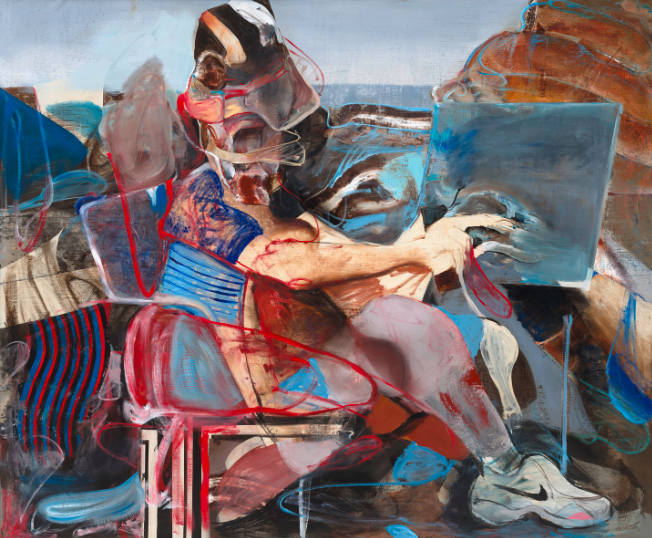
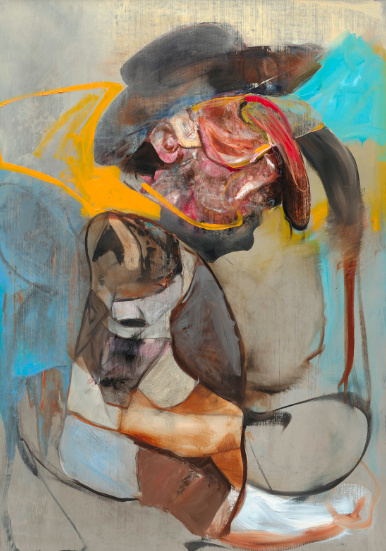
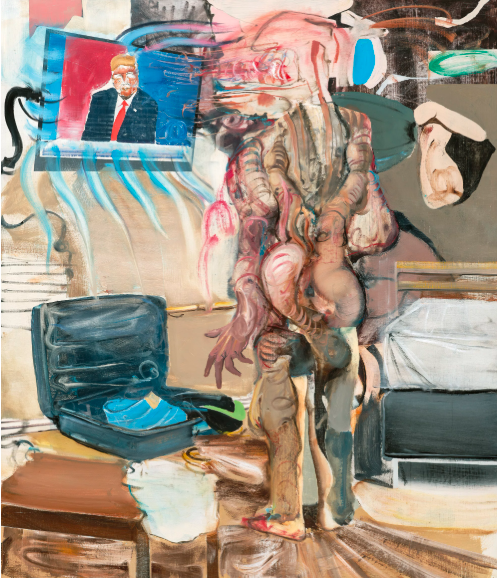
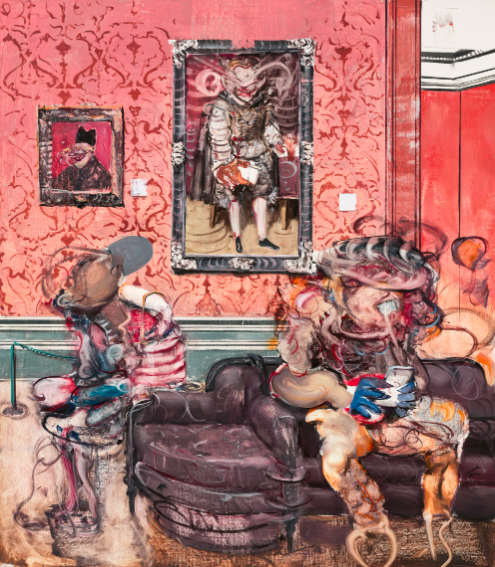
La pintura de Adrian Ghenie se instala en el corazón de esa contradicción. El artista rumano, nacido en 1977 en Baia Mare y formado en una sociedad marcada por el comunismo, trabaja con fotografías históricas, referencias artísticas, recuerdos personales y materiales de internet. Pero no reproduce esas fuentes para confirmar su autoridad; las traslada a un espacio pictórico donde la estabilidad que las hacía reconocibles se resquebraja. El rostro del dictador se vuelve una superficie herida; la escena cómica se contamina de humillación política; el interior cotidiano adquiere la densidad de una pesadilla; el retrato muestra la imposibilidad de separar la identidad de los dispositivos que la producen.
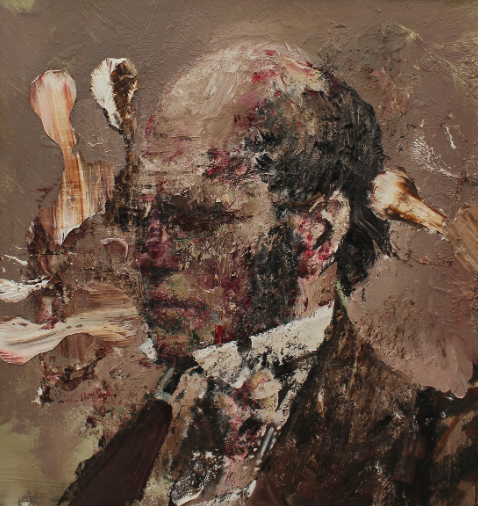
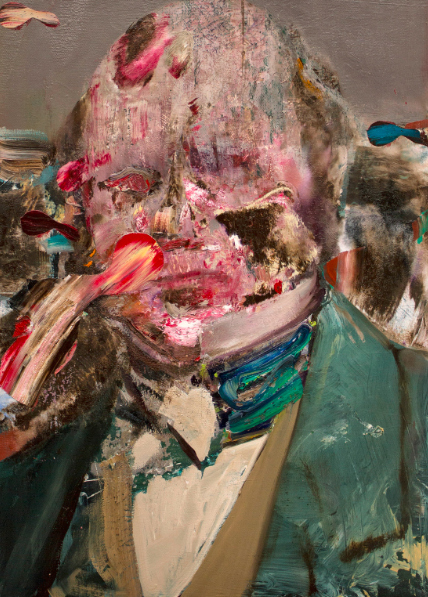
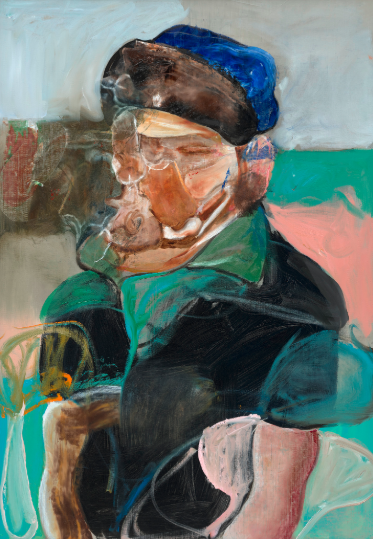
Ghenie no se limita a representar la violencia del siglo XX ni a denunciar a determinados gobernantes. Su pintura interroga la conversión de la experiencia histórica en imagen estable y memoria domesticada. Por eso, junto a los grandes tiranos, aparecen en su obra figuras como las de artistas e intelectuales —retratos de Francis Bacon o de Vincent van Gogh, por ejemplo—, sometidos a la misma lógica de desfiguración. También los hombres y mujeres anónimos, los sujetos de a pie, cuya imagen popular y cotidiana irrumpe con una gravedad inesperada, como si la historia brillara en ellos sin necesidad de epopeya. La desfiguración no destruye el pasado: lo devuelve a su condición problemática y conflictiva.
Sus personajes, lejos de integrar, nada más, una galería de monstruos aislados, nos instan a examinar cómo una sociedad concentra en un rostro la representación de un sistema, y cómo ese sistema convierte el rostro en superficie de legitimación. Frente a los de dictadores, los retratos de creadores o de gentes comunes no reciben un trato piadoso; todos son arrastrados al mismo remolino de materia y olvido. Ghenie interrumpe así la operación icónica del poder: la imagen deja de ser compacta y se vuelve lugar de disputa entre presencia y desaparición.
Si el retrato tradicional aspira a conservar la identidad mediante los rasgos, Ghenie muestra que, en las figuras históricas, esos rasgos nunca fueron puramente individuales. La memoria institucional ordena el acontecimiento para hacerlo transmisible. Un archivo necesita clasificar; un museo, contextualizar; un manual, resumir. Operaciones necesarias, pero peligrosas cuando confunden orden con clausura. La violencia histórica no se reduce a la narración que la explica. El trauma revela el límite de toda institución para hacer habitable el pasado.
La obra de Ghenie trabaja en esa frontera. Sus imágenes se presentan como recuerdos que no logran organizarse del todo. La luz recorta, pero no transparenta. El claroscuro ilumina y oculta. La materia pictórica conserva huellas de construcción y destrucción sucesivas. Recordar no es recuperar una imagen intacta, sino reconstruirla a partir de restos deformados por el tiempo, la cultura y el propio acto de recordar.
No hay aquí una simple acusación contra la mala memoria, sino la manifestación de una conciencia que no recibe el pasado de manera neutral. La pintura hace visible el conflicto sin resolverlo artificialmente. Y en esa tensión, Ghenie oscila entre el tratamiento agresivo del rostro, la caricatura y la aparente vandalización de la imagen —impregnadas de un humor oscuro que desacraliza el poder— y, al mismo tiempo, una gravedad profunda que otorga a cada figura, incluso a la más anónima, una dignidad doliente. Esa dualidad es la forma que encuentra el pintor para recordarnos que la historia es siempre una mezcla de farsa y tragedia, de gesto burlesco y herida auténtica.
La técnica es indispensable. Ghenie no ordena documentos en secuencia explicativa. Superpone, corta, transfiere y reconfigura. Elabora collages, transfiere composiciones y aplica pintura en superficies que tientan al tacto. El procedimiento reproduce la lógica de la memoria: conservar, borrar, rescatar un fragmento y destruir otro.
La superficie es escenario de una lucha. La espátula raspa la ilusión de profundidad. El pincel recupera una figura, pero también la deja suspendida en insuficiencia. La mancha abstracta permite que la imagen figurativa descubra su dependencia de operaciones materiales que suele ocultar. El retrato aparece porque la pintura lo produce, y puede deshacerlo porque nunca fue una identidad autosuficiente. La relación entre figuración y abstracción confirma esto: Ghenie construye imágenes figurativas con herramientas de la abstracción, de modo que la figura emerge de un proceso donde los elementos abstractos producen progresivamente una posibilidad de reconocimiento. Ver una figura es asistir a su institución pictórica, advertir que toda imagen histórica se construye y que toda memoria tiene un soporte, una técnica y una institución.
El claroscuro cumple una función análoga. La tradición barroca le ofrece un modo de organizar la aparición y retirada de la figura. La luz dorada no celebra el conocimiento como conquista transparente, sino como apertura que puede proteger, aislar y, finalmente, encerrar.
La pintura de Ghenie cuestiona el ideal de una razón sin cuerpo. Su materialidad recuerda que toda imagen es producida por un cuerpo situado, que todo conocimiento se realiza mediante técnicas concretas y que toda objetividad depende de instituciones históricas. El cuerpo del artista no garantiza la verdad, pero impide que la obra se presente como operación puramente intelectual.
El fracaso posee una dimensión estética e institucional. Una institución tiende a estabilizar procedimientos y premiar resultados previsibles. Ghenie introduce un riesgo que resiste esa previsibilidad. Que una pintura pueda alcanzar un punto de fracaso desde el cual una intervención destructiva abre una nueva posibilidad no celebra la improvisación, sino que afirma que la obra solo se transforma cuando deja de obedecer completamente a la lógica de la seguridad técnica.
Ghenie emplea la pintura como institución crítica de la memoria porque somete a examen las formas mediante las cuales el poder se hace visible, la violencia se vuelve narrable y el trauma se transforma en imagen transmisible. Así, impide la reducción del arte político a la ilustración de una consigna. Su política no está solo en los temas, sino en la manera en que obliga al espectador a experimentar la inestabilidad de sus propios instrumentos de reconocimiento.
El asombro persiste en la tensión entre cuerpo, imagen, archivo, poder y memoria, todo conjugado en un instante: no nos libera de las instituciones que nos constituyen, pero nos permite verlas, por un momento, en el mismo punto en que empiezan a resquebrajarse.
(ENGLISH VERSION)
Disfigured Memory: An Approach to the Work of Adrian Ghenie
Translation by Tiffany Amber Elías Trimble
There are images that, without evoking anything concrete in us, haunt us. Not those whose sharpness guarantees the immediate recognition of a fact or a face, but those that have survived clarity, the clarifying drive. For in them persists something that eludes identification: a silhouette, a blotch that could have been a face and which, because it is not kept whole, carries a truth deeper than its mere appearance. The more we try to fix it, the more it fades. We are not faced with a failure of representation, but with the representation of a failure: that of our relationship with the past.
Modern history has entrusted much of its authority to images. Archives, monuments, photographs, and documents have been integrated into institutions that order collective memory. Thanks to them, a society can establish what happened, who suffered, and what must be remembered. But it can also decide what remains visible, what face becomes an emblem, and what act of violence is excluded from the ordinary narrative. The historical image is not a transparent window to the past, but an institution that classifies, hierarchizes, and transmits a determined relationship with what occurred.
The painting of Adrian Ghenie settles in the heart of that contradiction. The Romanian artist, born in 1977 in Baia Mare and trained in a society marked by communism, works with historical photographs, artistic references, personal memories, and internet materials. But he does not reproduce those sources to confirm their authority; he transfers them to a pictorial space where the stability that made them recognizable cracks. The dictator’s face becomes a wounded surface; the comic scene becomes contaminated with political humiliation; the everyday interior acquires the density of a nightmare; the portrait shows the impossibility of separating identity from the devices that produce it.
Ghenie does not limit himself to representing the violence of the 20th century nor to denouncing certain rulers. His painting interrogates the conversion of historical experience into a stable image and domesticated memory. That is why, alongside the great tyrants, figures such as artists and intellectuals appear in his work —portraits of Francis Bacon or Vincent van Gogh, for example— subjected to the same logic of disfigurement. Also anonymous men and women, everyday people, whose popular and ordinary image erupts with an unexpected gravity, as if history shone through them without the need for epic. Disfigurement does not destroy the past: it returns it to its problematic and conflictive condition.
His characters urge us to examine how a society concentrates in a face the representation of a system, and how that system turns the face into a surface of legitimation. Compared to those of dictators, the portraits of creators or common people do not receive pious treatment; all are dragged into the same vortex of matter and oblivion. Ghenie thus interrupts the iconic operation of power: the image ceases to be compact and becomes a site of dispute between presence and disappearance.
If the traditional portrait aspires to preserve identity through features, Ghenie shows that, in historical figures, those features were never purely individual. Institutional memory orders the event to make it transmissible. An archive needs to classify; a museum, to contextualize; a textbook, to summarize. Necessary operations, but dangerous when they confuse order with closure. Historical violence is not reducible to the narrative that explains it. Trauma reveals the limit of every institution to make the past inhabitable.
Ghenie’s work operates on that frontier. His images present themselves as memories that cannot quite organize themselves. Light delineates, but does not render transparent. Chiaroscuro illuminates and conceals. The pictorial matter retains traces of successive construction and destruction. To remember is not to recover an intact image, but to reconstruct it from remains deformed by time, culture, and the very act of remembering.
There is no simple accusation here against faulty memory, but the manifestation of a consciousness that does not receive the past in a neutral way. Painting makes visible the conflict without resolving it artificially. And in that tension, Ghenie oscillates between the aggressive treatment of the face, caricature, and the apparent vandalization of the image —impregnated with a dark humor that desacralizes power— and, at the same time, a deep gravity that grants to each figure, even the most anonymous, a suffering dignity. That duality is the form the painter finds to remind us that history is always a mixture of farce and tragedy, of burlesque gesture and authentic wound.
Technique is indispensable. Ghenie does not arrange documents in an explanatory sequence. He superimposes, cuts, transfers, and reconfigures. He elaborates collages, transfers compositions, and applies paint on surfaces that tempt the touch. The procedure reproduces the logic of memory: to preserve, to erase, to rescue a fragment and destroy another.
The surface is the scene of a struggle. The palette knife scrapes away the illusion of depth. The brush recovers a figure, but also leaves it suspended in insufficiency. The abstract stain allows the figurative image to discover its dependence on material operations it usually conceals. The portrait appears because painting produces it, and can undo it because it was never a self-sufficient identity. The relationship between figuration and abstraction confirms this: Ghenie builds figurative images with the tools of abstraction, so that the figure emerges from a process where abstract elements progressively produce a possibility of recognition. To see a figure is to witness its pictorial institution, to notice that every historical image is constructed and that every memory has a support, a technique, and an institution.
Chiaroscuro fulfills an analogous function. The Baroque tradition offers him a way of organizing the appearance and withdrawal of the figure. The golden light does not celebrate knowledge as transparent conquest, but as an opening that can protect, isolate, and finally enclose.
Ghenie’s painting questions the ideal of a reason without a body. Its materiality reminds us that every image is produced by a situated body, that all knowledge is realized through concrete techniques, and that all objectivity depends on historical institutions. The artist’s body does not guarantee truth, but it prevents the work from presenting itself as a purely intellectual operation.
Failure possesses an aesthetic and institutional dimension. An institution tends to stabilize procedures and reward predictable results. Ghenie introduces a risk that resists that predictability. That a painting can reach a point of failure from which a destructive intervention opens a new possibility does not celebrate improvisation, but affirms that the work only transforms when it ceases to obey completely the logic of technical security.
Ghenie employs painting as a critical institution of memory because he subjects to examination the ways in which power becomes visible, violence becomes narratable, and trauma becomes a transmissible image. Thus, he prevents the reduction of political art to the illustration of a slogan. His politics are not only in the themes, but in the way he forces the viewer to experience the instability of their own instruments of recognition.
Astonishment persists in the tension between body, image, archive, power, and memory, all conjugated in an instant: it does not free us from the institutions that constitute us, but it allows us to see them, for a moment, at the very point where they begin to crack.