
Ficciones pretendidamente habitables: Aproximación a la obra de Juan Aballe
Por Juan Pablo Torres Muñiz
Juan Aballe (Madrid, 1975) llegó a la fotografía por derivación: estudió ciencias químicas en Madrid y Berlín antes de formarse en el International Center of Photography de Nueva York y en EFTI (Madrid). Crecer en un entorno científico le llevó, paradójicamente, hacia el polo opuesto, para explorar los límites entre la realidad y la imaginación, a hurgar en el espacio entre quien ve y lo que ve. A tentar tocar lo que, así, es. Así, mediante sus tres proyectos a la fecha, el artista aborda directamente instituciones —el mito rural, el sueño americano, la vecindad misma como categoría social—, las que preceden a lo fotografiado y le dan la forma en que puede ser percibido. La melancolía que la crítica atribuye una y otra vez a su trabajo no es un efecto de estilo, sino el registro sensible de la distancia entre esas instituciones heredadas y la realidad concreta, un vacío que es en realidad una relación.
[La ventana]
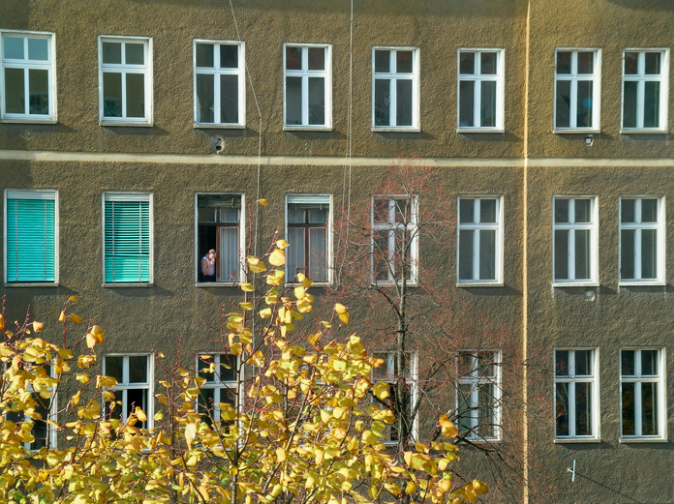
El primer proyecto de Aballe, Nachbar —vecino, en alemán—, nace en Berlín Oriental, cuando él descubre a un anciano que pasa parte de cada día asomado a la ventana del edificio de enfrente y empieza, sin decírselo a nadie ni presentarse jamás, a fotografiarlo. El resultado: un libro autoeditado de treinta y seis fotografías que documentan esa categoría social que no exige encuentro ni palabra, sino apenas proximidad sostenida y repetida en el tiempo. Pero es de advertir que Aballe no apunta sin más al sujeto; fotografía el marco —la ventana, el edificio, la distancia exacta de la calle— que permite llamar vecino a un extraño. Complejidad, que no complicación.
[El campo]
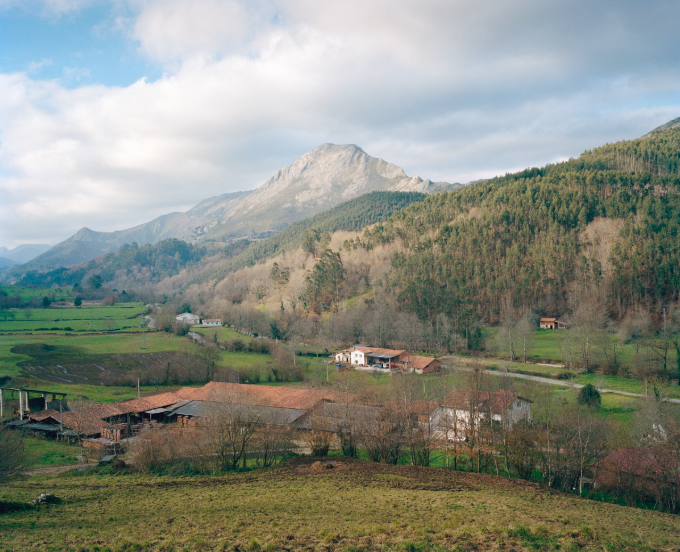
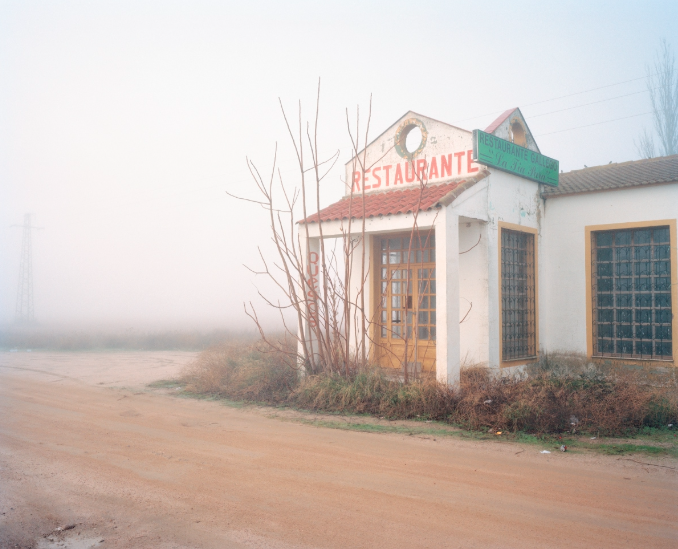
Entre 2011 y 2013, mientras varios de sus amigos empezaban a plantearse dejar la ciudad, Aballe viajó por zonas rurales de la Península Ibérica para registrar, según él mismo cuenta, no tanto el campo exterior, es decir, el paisaje, como su propio interior, donde se daba el conflicto ante la idea de cambiar definitivamente de vida. El resultado, publicado como libro en 2014 con un ensayo de Eduardo Momeñe, es una serie de paisajes despoblados, casas rudimentarias y figuras solitarias mediante las que se reflexiona sobre el mito del campo —el sueño ilustrado del buen salvaje, la idea de un origen sencillo y verdadero que la vida urbana habría corrompido— chocando contra un territorio que, en la España posterior a la crisis de 2008, se vacía de gente en lugar de llenarse de sentido.
[América]
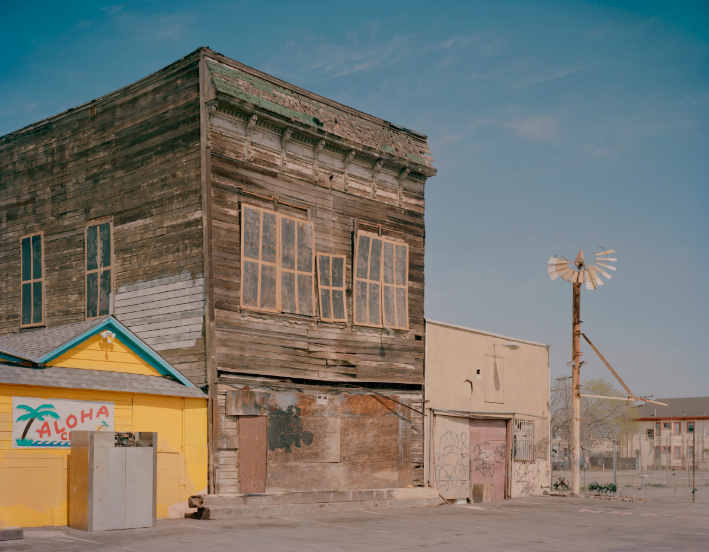
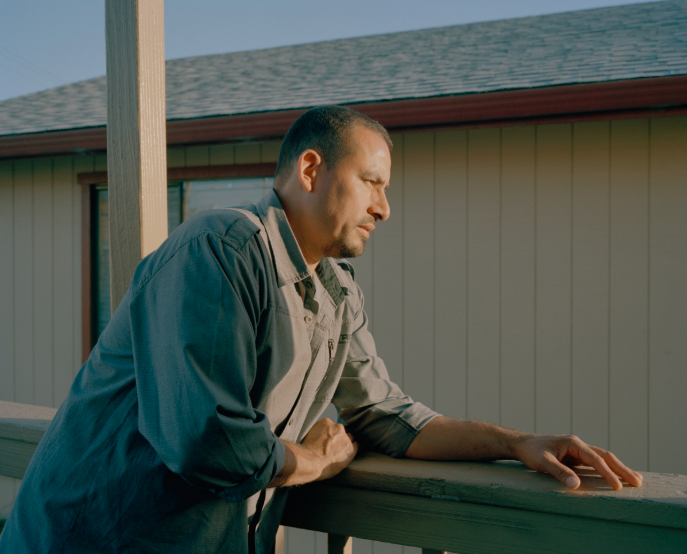
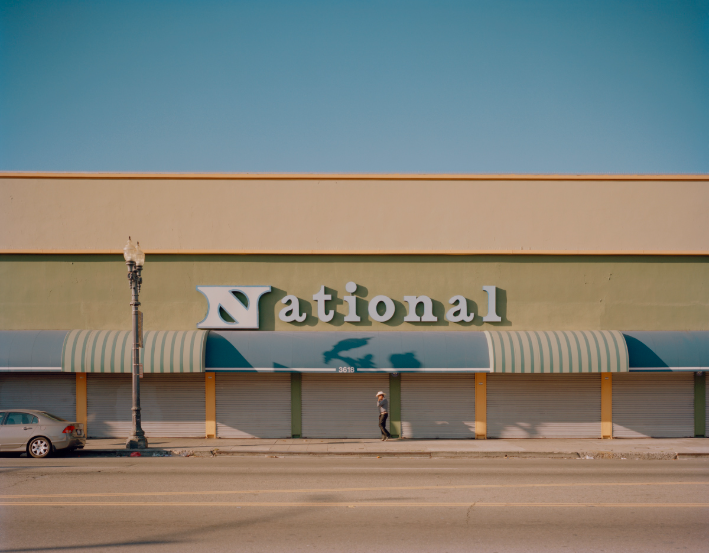
El caso más literal de su lógica de desengaño aparece en el tercer proyecto de Aballe, fotografiado en Oakland, California, entre viajes sucesivos hasta 2021. El título, Last Best Hope, retoma directamente una frase del discurso que Abraham Lincoln pronunció ante el Congreso el 1 de diciembre de 1862, en plena guerra civil, a propósito de la lucha por una vida digna. Aballe encontró en Oakland, con ayuda de una maestra local, a familias llegadas de México, Guatemala o El Salvador que se habían sacrificado enormemente por alcanzar la promesa de prosperidad, para verificar cuánto quedaba de aquel sueño. Todo ello, con sitio en California, la tierra bautizada con el nombre de una utopía literaria antes incluso de ser explorada, y que quinientos años después sigue siendo fotografiada en la distancia exacta entre esa promesa fundacional y la vida de quienes llegaron, otra vez, buscándola.
Aballe no descubre el desencanto americano por primera vez, no. Lo fotografía como el reverso necesario de una ficción que ya estaba allí, inscrita en el mapa, antes de que ningún inmigrante cruzara la frontera para comprobarla.
[La fotografía]
Hay, además, un cuarto nivel en el que la lectura institucional de esta obra se cumple, y es el de la propia fotografía documental como género. Ésta lleva consigo, históricamente, la pretensión institucional de la transparencia —la cámara como testigo neutral de lo real—, y Aballe trabaja precisamente en el punto en que tal pretensión se agrieta, mostrando que toda imagen documental ya viene cargada de las representaciones previas que el espectador proyecta sobre ella, incluida la quietud del llamado encuadre activo. En definitiva, el artista no roba un solo instante al mundo, sino que construye, cuadro a cuadro, la forma en que ese mundo podrá ser mirado.
Aballe trabaja con una paleta de color apagada y una luz difusa y homogénea —ni el contraste dramático del reportaje ni la saturación publicitaria—, que iguala en peso visual lo mítico y lo trivial: un rostro y una valla reciben idéntico tratamiento cromático, de modo que ningún elemento se impone como símbolo evidente sobre los demás. La composición es predominantemente frontal y estática, con una profundidad de campo generosa que mantiene nítidos tanto el primer plano como el fondo: nada queda desenfocado, nada se recorta como detalle expresivo aislado, y el espectador debe leer la escena entera, no un fragmento elegido por el instante decisivo. Las figuras humanas, cuando aparecen, ocupan una porción reducida del encuadre, a menudo de espaldas o a media distancia, situadas dentro de un orden espacial ya construido en vez de dominarlo como protagonistas. Esa quietud compositiva —próxima, formalmente, al gran formato documental— delata la mano de quien dispone la imagen antes de disparar: no hay caza del instante, hay espera y disposición previa del cuadro, horizontes centrados, líneas que ordenan el caos aparente del motivo.
Podría objetarse que leer así la obra de Aballe traiciona su raíz declaradamente personal y afectiva. En realidad, la emoción estética no es lo opuesto de la institución, sino su registro sensible, lo que se experimenta precisamente cuando una institución —el mito rural, el sueño americano— no logra cerrarse del todo sobre la vida real que debía explicar. La nostalgia que impregna esta obra no es ajena al mito pastoril que la genera: es su síntoma más preciso, la prueba sensible de que el mito sigue activo, aunque el territorio que debía sostenerlo se haya vaciado.
Los tres proyectos de Juan Aballe, mirados juntos, documentan la misma operación desde tres escalas distintas: la de una relación entre dos personas, sostenida por una ventana y nunca por un encuentro; la de un país entero, imaginado como refugio pastoril mientras se vacía en la realidad; y la de una nación, bautizada quinientos años antes de existir con el nombre de una isla que nunca existió. En los tres casos, lo que la cámara encuentra no es un dato bruto del mundo, sino la distancia exacta entre ese mundo y la institución —el mito, el nombre, la categoría social— que lo precede y lo hace observable. Fotografiar, para Aballe, consiste en medir, imagen a imagen, cuánto se ha desgastado la ficción que nos permitía habitarlo.
[Todas las imágenes, del sitio web de artista: https://www.juanaballe.com/]
(ENGLISH VERSION)
Supposedly Habitable Fictions: An Approach to the Work of Juan Aballe
Translation by Tiffany Amber Elias Trimble
Juan Aballe (Madrid, 1975) arrived at photography by derivation: he studied chemical sciences in Madrid and Berlin before training at the International Center of Photography in New York and at EFTI (Madrid). Growing up in a scientific environment led him, paradoxically, towards the opposite pole, to explore the limits between reality and imagination, to probe the space between the one who sees and what is seen. To try to touch what, thus, is. Thus, through his three projects to date, the artist directly addresses institutions —the rural myth, the American dream, neighborliness itself as a social category— which precede what is photographed and give it the form in which it can be perceived. The melancholy that critics repeatedly attribute to his work is not an effect of style, but the sensible record of the distance between those inherited institutions and concrete reality, a void that is actually a relation.
[The window]
Aballe’s first project, Nachbar —neighbor, in German— was born in East Berlin, when he discovered an elderly man who spent part of each day leaning out of the window of the building across the street and began, without telling anyone or ever introducing himself, to photograph him. The result: a self-published book of thirty-six photographs documenting that social category that demands neither encounter nor word, but merely sustained and repeated proximity over time. But it should be noted that Aballe does not simply point at the subject; he photographs the frame —the window, the building, the exact distance of the street— that allows one to call a stranger a neighbor. Complexity, not complication.
[The countryside]
Between 2011 and 2013, while several of his friends were beginning to consider leaving the city, Aballe traveled through rural areas of the Iberian Peninsula to record, as he himself recounts, not so much the external countryside, that is, the landscape, but his own interior, where the conflict arose before the idea of definitively changing his life. The result, published as a book in 2014 with an essay by Eduardo Momeñe, is a series of depopulated landscapes, rudimentary houses, and solitary figures through which he reflects on the myth of the countryside —the enlightened dream of the noble savage, the idea of a simple and true origin that urban life would have corrupted— clashing with a territory that, in Spain after the 2008 crisis, empties of people instead of filling with meaning.
[America]
The most literal case of his logic of disenchantment appears in Aballe’s third project, photographed in Oakland, California, over successive trips until 2021. The title, Last Best Hope, directly takes up a phrase from the speech Abraham Lincoln delivered to Congress on December 1, 1862, in the midst of the Civil War, regarding the struggle for a dignified life. Aballe found in Oakland, with the help of a local teacher, families who had come from Mexico, Guatemala, or El Salvador and had sacrificed enormously to achieve the promise of prosperity, in order to verify how much of that dream remained. All of this, in California, the land baptized with the name of a literary utopia even before it was explored, and which five hundred years later continues to be photographed in the exact distance between that foundational promise and the lives of those who arrived, once again, seeking it.
Aballe does not discover American disenchantment for the first time, no. He photographs it as the necessary reverse side of a fiction that was already there, inscribed on the map, before any immigrant crossed the border to verify it.
[Photography]
There is, moreover, a fourth level in which the institutional reading of this work is fulfilled, and that is documentary photography itself as a genre. It carries with it, historically, the institutional pretension of transparency —the camera as a neutral witness of the real— and Aballe works precisely at the point where such a pretension cracks, showing that every documentary image already comes laden with the previous representations that the viewer projects onto it, including the stillness of the so-called active framing. In short, the artist does not steal a single instant from the world, but constructs, frame by frame, the way in which that world can be looked at.
Aballe works with a muted color palette and diffuse, homogeneous light —neither the dramatic contrast of photojournalism nor the saturation of advertising— which visually equalizes the mythical and the trivial: a face and a billboard receive identical chromatic treatment, so that no element imposes itself as an obvious symbol over the others. The composition is predominantly frontal and static, with a generous depth of field that keeps both foreground and background sharp: nothing is left out of focus, nothing is isolated as an expressive detail, and the viewer must read the entire scene, not a fragment chosen by the decisive moment. Human figures, when they appear, occupy a small portion of the frame, often from behind or at mid-distance, situated within a spatial order already constructed rather than dominating it as protagonists. This compositional stillness —formally close to large-format documentary— betrays the hand of one who arranges the image before shooting: there is no hunting for the instant, there is waiting and prior arrangement of the frame, centered horizons, lines that order the apparent chaos of the subject.
It could be objected that reading Aballe’s work in this way betrays its declaredly personal and affective roots. In reality, aesthetic emotion is not the opposite of institution, but its sensible record, what is experienced precisely when an institution —the rural myth, the American dream— fails to fully close over the real life it was supposed to explain. The nostalgia that permeates this work is not alien to the pastoral myth that generates it: it is its most precise symptom, the sensible proof that the myth remains active, even though the territory that was supposed to sustain it has emptied.
Juan Aballe’s three projects, looked at together, document the same operation from three different scales: that of a relationship between two people, sustained by a window and never by an encounter; that of an entire country, imagined as a pastoral refuge while it empties in reality; and that of a nation, baptized five hundred years before existing with the name of an island that never existed. In all three cases, what the camera finds is not raw data of the world, but the exact distance between that world and the institution —the myth, the name, the social category— that precedes it and makes it observable. To photograph, for Aballe, is to measure, image by image, how much the fiction that allowed us to inhabit it has worn away.
