Reconfiguración y libertad: Aproximación a la obra «Come Home», de Sander Coers
Por Juan Pablo Torres Muñiz
La fotografía conceptual moderna exige, antes que cualquier juicio de gusto, precisiones. Las confusiones al respecto abundan y suelen reducirla a mera expresión subjetiva o a un registro técnico de la realidad. La fotografía en tanto institución artística opera sobre saberes previos ya constituidos: la óptica, la química, la semiótica, la sociología visual. A diferencia de la fotografía documental, que se mueve entre conceptos cerrados de representación fáctica, la conceptual se ocupa de las Ideas que surgen del enfrentamiento, confluencia o rebasamiento de dichos conceptos. La obra conceptual auténtica contiene elementos visuales incontrolables que no pueden ser adecuadamente contenidos por el discurso, por la explicación conceptual. Esta tensión irreductible entre lo visual y lo lingüístico constituye precisamente el campo de operaciones donde las propuestas modernas despliegan su potencia crítica.
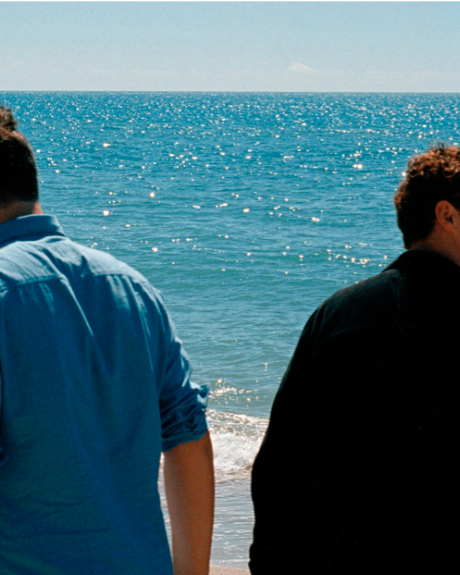
La obra de Sander Coers, artista neerlandés nacido en Terneuzen en 1997 y radicado en Rotterdam, graduado con honores de la Willem de Kooning Academie en 2021, constituye uno de los ejemplos más originales y consistentes de esta operación en la fotografía contemporánea. Su proyecto de graduación, Come Home, fue autopublicado en una edición limitada de cien ejemplares y seleccionado para la exposición Best of Graduates 2021 en la Galerie Ron Mandos, donde recibió el RM Photo Talent Award. Desde entonces, su trabajo ha sido adquirido por el Preus Museum, el Ministerio de Relaciones Exteriores de los Países Bajos y la Rabobank, entre otros. Coers define Come Home como un estudio visual del lovscape masculino. Esta neologización, paisaje del amor, ya indica la operación conceptual en juego: no se trata de retratos psicológicos individuales, sino de la construcción de un territorio institucional donde el amor, la intimidad y la masculinidad se discuten en su relación material
El proyecto consistió en seguir a un grupo de veinteañeros, a lo largo de 2020, entrevistándolos sobre su juventud, su capacidad de expresión emocional y su experiencia de la transición de niño a hombre.
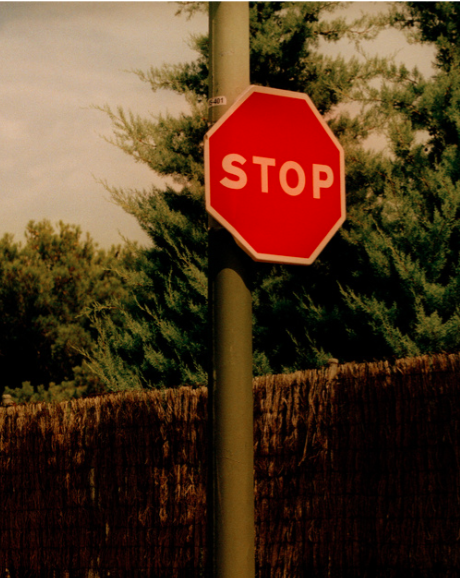
Coers fotografía las ficciones que estructuran lo que puede sentirse, nombrarse y mostrarse como masculino. Es decir, la evidencia en imágenes de cuanto se cuentan esos sujetos. Lejos de desafiar estereotipos en el sentido banal del activismo cultural, el artista delata las instituciones a partir de las ficciones que las componen. Así, en la obra, la masculinidad aparece como una identidad performativa no fijada, moldeada por fuerzas culturales y sociales. Apartado del enfoque postmodernista, que celebraría esta fluidez como fin de toda normatividad, Coers no propone una disolución del concepto, sino su rearticulación. Sus sujetos son cuerpos concretos en lugares concretos, atravesados por instituciones concretas: la familia, la escuela, la religión, el mercado, los medios de comunicación. La pregunta que guía el proyecto, qué aspecto tiene el amor, no busca una respuesta psicológica, sino que tematiza el vacío institucional donde el amor entre hombres jóvenes debería poder nombrarse.
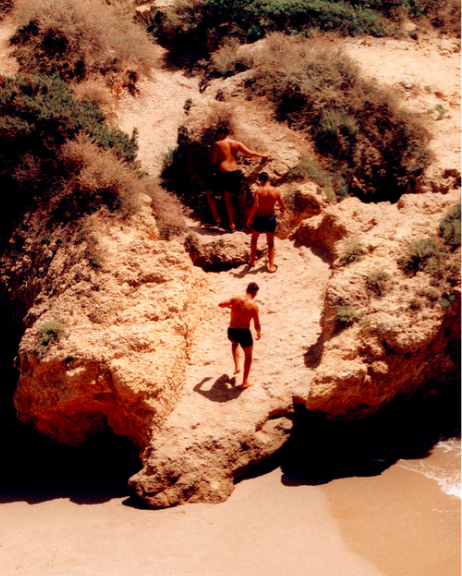
Luego tenemos, el proceso de maduración como transición institucionalmente regulada. No se trata de una biografía natural, el mito del crecimiento como desarrollo orgánico, sino de una iniciación en normas que el sujeto debe asimilar, negociar o subvertir. Coers explora cómo crecer, lidiar con experiencias pasadas y el comportamiento masculino estereotipado esperado afectan la expresión de uno mismo. Esta formulación es crucial: no dice que afectan lo que uno es, lo cual sería esencialismo, sino que afectan la expresión de uno mismo, lo cual va más allá y apela al institucionalismo del Homo Institutionalis. La persona no es una sustancia previa a las normas, sino un producto de su capacidad de expresarse dentro de los marcos que la institucionalidad posibilita. La intimidad, tema central del lovscape, es presentada no como esfera privada de sentimientos auténticos, sino como espacio institucionalmente codificado: de acceso particular. Los cuerpos masculinos en Come Home son fotografiados en situaciones de proximidad física que desafían el código de la distancia emocional habitual entre los hombres. Sin embargo, esta proximidad no es una mera vulnerabilidad, término que el discurso terapéutico ha vaciado de sentido, sino una reconfiguración de los límites entre lo público y lo privado, lo masculino y lo femenino, la amistad y el amor.
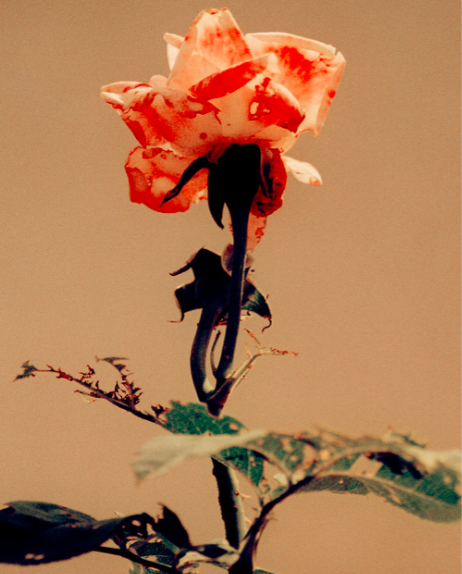
Por otra parte, tenemos como tema la memoria. A través de sus propios recuerdos y los de sus sujetos, el artista declara que intenta crear una realidad alternativa. Esta formulación es reveladora: no busca recuperar la verdad de la juventud, sino fabricar una ficción que ponga en evidencia la ficcionalidad de toda memoria. Los símbolos de su juventud en Zeeuws-Vlaanderen, el mar, las flores, los colores saturados, son marcadores que remiten a un sistema de significación compartido. Al respecto, la naturaleza, en Come Home, no es un refugio de autenticidad, sino un marco institucional alternativo donde otras formas de corporalidad masculina pueden ensayarse. Las flores, la luz solar, la brisa marina, elementos que podrían asociarse con una estética suave o femenina, son resignificados como materiales que expanden la capacidad de acción del sujeto masculino, más allá de los límites que la institución urbana-industrial le impone.
La pregunta qué aspecto tiene el amor es, en rigor, una pregunta sobre las condiciones de visibilidad institucional de un afecto. La fotografía de Coers no muestra lo que el amor es, lo cual sería una apuesta metafísica, un imposible, sino que construye visualmente las condiciones bajo las cuales el amor masculino podría ser revisado, nombrado e institucionalizado. De hecho, Coers indaga cómo las historias, tanto personales como colectivas, se transmiten a través de generaciones.
Coers utiliza fotografía analógica, un medio que él describe como la magia de la película. Su elección es, desde luego, estratégicamente conceptual. La fotografía química establece una conexión física con el referente: la luz refractada por el objeto impresiona directamente la emulsión fotosensible. Este carácter indexical confiere a la imagen una prueba material de que el objeto de registro sí existió. Pero, al combinar la fotografía analógica con la construcción de escenas, la entrevista previa y la edición del libro, lo que el artista hace es poner en tensión el índice con el icono y el símbolo. La imagen analógica no es presentada como evidencia de una realidad preexistente, sino como material en una construcción ficcional que pone en cuestión la propia noción de evidencia. La película, con su grano, sus colores impredecibles, su latencia química, funciona como materialidad primogenérica que ancla la ficción en una corporeidad irreductible, evitando que el proyecto caiga en el idealismo digital de la imagen puramente virtual.
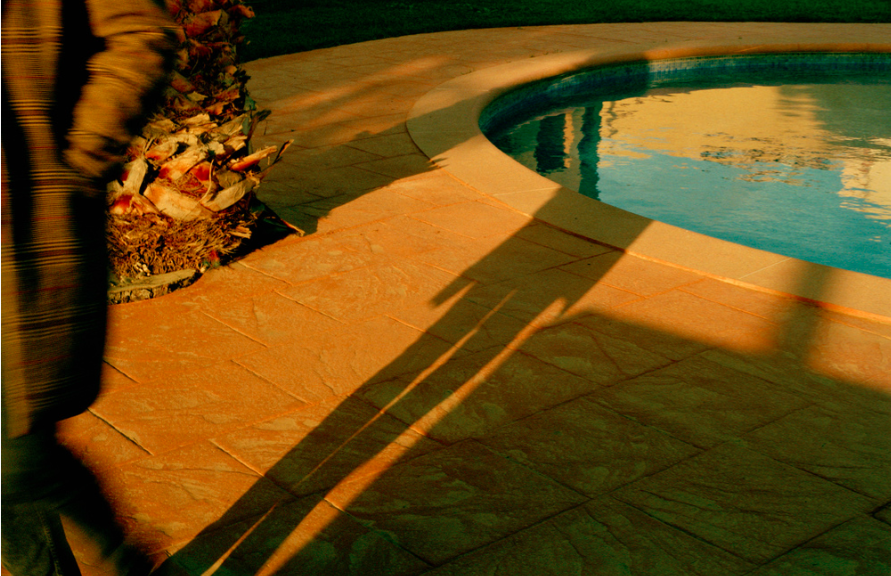
La paleta cromática de Come Home es una de sus características más distintivas: colores altamente saturados, piel besada por el sol, el color azul del mar. Desde una perspectiva estética convencional, estos colores podrían interpretarse como meramente agradables, como un juego libre de facultades cognitivas. Sin embargo, desde la poética materialista que proponemos, el color saturado opera para desbordar las categorías habituales de la fotografía masculina. La fotografía tradicional de hombres jóvenes, ya sea en la publicidad, el cine o la fotografía de moda, tiende a utilizar una paleta fría, contrastada, asociada a la dureza, azules metálicos, grises, negros. Coers invierte este código: sus azules son los del mar mediterráneo, sus amarillos los de la luz solar, sus verdes los del follaje. Esta inversión no es un capricho estético, sino una rearticulación de los afectos permitidos. La luz natural, preferida a la iluminación de estudio, refuerza el efecto. No es una luz controlada y dominadora, sino una luz ambiental, difusa, que envuelve a los sujetos sin someterlos.
La decisión de autopublicar Come Home como libro, ciento doce páginas, veinticinco por treinta centímetros, edición de cien ejemplares numerados y firmados, es constitutiva del sentido. Coers diseñó él mismo el libro, pasando por un proceso iterativo de veinte versiones distintas. La selección de sesenta fotografías entre más de mil implica un juicio crítico sobre qué imágenes pueden operar efectivamente como texto elocuente: cuáles confrontan al receptor sin necesidad de explicación, cuáles generan la fricción categorial necesaria. En el límite entre documental y ficción.
Come Home es, en este sentido, la materialización que muchos otros han pretendido: un auténtico ejercicio de libertad.
[Todas las imágenes, del sitio web del artista: https://sandercoers.com/]


(ENGLISH VERSION)
Reconfiguration and Freedom: An Approach to the Work «Come Home» by Sander Coers
Translation by Tiffany Amber Elías Trimble
Conceptual modern photography demands, before any judgment of taste, precise distinctions. Confusions on the matter abound and usually reduce it to mere subjective expression or to a technical recording of reality. Photography as an artistic institution operates on previously constituted knowledge: optics, chemistry, semiotics, visual sociology. Unlike documentary photography, which moves between closed concepts of factual representation, conceptual photography deals with the Ideas that arise from the confrontation, confluence, or surpassing of these concepts. Authentic conceptual work contains uncontrollable visual elements that cannot be adequately contained by discourse, by conceptual explanation. This irreducible tension between the visual and the linguistic constitutes precisely the field of operations where modern proposals deploy their critical power.
The work of Sander Coers, a Dutch artist born in Terneuzen in 1997 and based in Rotterdam, who graduated with honors from the Willem de Kooning Academy in 2021, constitutes one of the most original and consistent examples of this operation in contemporary photography. His graduation project, Come Home, was self-published in a limited edition of one hundred copies and selected for the Best of Graduates 2021 exhibition at Galerie Ron Mandos, where it received the RM Photo Talent Award. Since then, his work has been acquired by the Preus Museum, the Dutch Ministry of Foreign Affairs, and Rabobank, among others. Coers defines Come Home as a visual study of the male lovscape. This neologism, landscape of love, already indicates the conceptual operation at play: it is not about individual psychological portraits, but about the construction of an institutional territory where love, intimacy, and masculinity are discussed in their material relation.
The project consisted of following a group of twenty-year-olds throughout 2020, interviewing them about their youth, their capacity for emotional expression, and their experience of the transition from boy to man.
Coers photographs the fictions that structure what can be felt, named, and shown as masculine. That is, the evidence in images of what these subjects tell themselves. Far from challenging stereotypes in the banal sense of cultural activism, the artist exposes the institutions through the fictions that compose them. Thus, in the work, masculinity appears as a performative identity that is not fixed, shaped by cultural and social forces. Apart from the postmodernist approach, which would celebrate this fluidity as the end of all normativity, Coers does not propose a dissolution of the concept, but its re-articulation. His subjects are concrete bodies in concrete places, traversed by concrete institutions: family, school, religion, the market, the media. The question guiding the project, what does love look like, does not seek a psychological answer, but thematizes the institutional void where love between young men should be able to be named.
Then we have the maturation process as an institutionally regulated transition. It is not a natural biography, the myth of growth as organic development, but an initiation into norms that the subject must assimilate, negotiate, or subvert. Coers explores how growing up, dealing with past experiences, and expected stereotypical male behavior affect the expression of oneself. This formulation is crucial: it does not say that they affect what one is, which would be essentialism, but that they affect the expression of oneself, which goes further and appeals to the institutionalism of Homo Institutionalis. The person is not a substance prior to norms, but a product of their capacity to express themselves within the frameworks that institutionality makes possible. Intimacy, the central theme of the lovscape, is presented not as a private sphere of authentic feelings, but as an institutionally coded space: one of particular access. The male bodies in Come Home are photographed in situations of physical proximity that challenge the code of habitual emotional distance between men. However, this proximity is not mere vulnerability, a term that therapeutic discourse has emptied of meaning, but a reconfiguration of the boundaries between the public and the private, the masculine and the feminine, friendship and love.
On the other hand, memory is another theme. Through his own memories and those of his subjects, the artist states that he tries to create an alternative reality. This formulation is revealing: he does not seek to recover the truth of youth, but to fabricate a fiction that highlights the fictionality of all memory. The symbols of his youth in Zeeuws-Vlaanderen, the sea, the flowers, the saturated colors, are markers that refer to a shared system of signification. In this regard, nature, in Come Home, is not a refuge of authenticity, but an alternative institutional framework where other forms of masculinity can be rehearsed. The flowers, sunlight, sea breeze, elements that could be associated with a soft or feminine aesthetic, are resignified as materials that expand the capacity for action of the male subject, beyond the limits imposed by the urban-industrial institution.
The question what does love look like is, strictly speaking, a question about the conditions of institutional visibility of an affection. Coers’ photography does not show what love is, which would be a metaphysical wager, an impossibility, but visually constructs the conditions under which male love could be revised, named, and institutionalized. In fact, Coers investigates how stories, both personal and collective, are transmitted across generations.
Coers uses analog photography, a medium he describes as the magic of film. His choice is, of course, strategically conceptual. Chemical photography establishes a physical connection with the referent: the light refracted by the object directly impresses the photosensitive emulsion. This indexical character gives the image material proof that the recorded object did exist. But, by combining analog photography with the construction of scenes, prior interviews, and book editing, what the artist does is put the index in tension with the icon and the symbol. The analog image is not presented as evidence of a pre-existing reality, but as material in a fictional construction that questions the very notion of evidence. The film, with its grain, its unpredictable colors, its chemical latency, functions as first-genus materiality that anchors the fiction in an irreducible corporeality, preventing the project from falling into the digital idealism of the purely virtual image.
The chromatic palette of Come Home is one of its most distinctive characteristics: highly saturated colors, sun-kissed skin, the blue of the sea. From a conventional aesthetic perspective, these colors could be interpreted as merely pleasant, as a free play of cognitive faculties. However, from the materialist poetics we propose, saturated color operates to overflow the usual categories of masculine photography. Traditional photography of young men, whether in advertising, cinema, or fashion photography, tends to use a cold, contrasted palette, associated with hardness, metallic blues, grays, blacks. Coers inverts this code: his blues are those of the Mediterranean sea, his yellows those of sunlight, his greens those of foliage. This inversion is not an aesthetic whim, but a re-articulation of permitted affections. Natural light, preferred over studio lighting, reinforces the effect. It is not a controlled, dominating light, but an ambient, diffuse light that envelops the subjects without subduing them.
The decision to self-publish Come Home as a book, one hundred and twelve pages, twenty-five by thirty centimeters, edition of one hundred numbered and signed copies, is constitutive of its meaning. Coers designed the book himself, going through an iterative process of twenty different versions. The selection of sixty photographs from over a thousand implies a critical judgment about which images can effectively operate as an eloquent text: which ones confront the receiver without need for explanation, which ones generate the necessary categorical friction. On the border between documentary and fiction.
Come Home is, in this sense, the materialization that many others have sought: an authentic exercise of freedom.