Entre la vorágine: Aproximación a la obra de Riccardo Magherini
Por Juan Pablo Torres Muñiz
La fotografía urbana, desde los tiempos de Atget y su empeño por documentar el París que desaparecía bajo la piqueta de Haussmann, ha oscilado entre dos polos: el deseo de testimoniar la realidad objetiva de la ciudad y la voluntad de capturar su pulso más esquivo, su movimiento perpetuo, su pulso. La tradición moderna, desde los experimentalismos de la vanguardia hasta el instante decisivo de Cartier-Bresson, trató de congelar el tiempo para revelar su estructura, pero siempre se topó con una limitación: la fotografía, en su concepción más extendida, es el arte de un único instante. Sin embargo, fue en los márgenes de esta práctica donde algunos artistas empezaron a desmontar tal presunción. La obra de Riccardo Magherini sigue esa estela crítica, con el medio fotográfico convertido en una máquina de reconstrucción de la memoria y la percepción. Y es que, lejos de una simple superposición de imágenes, nos propone el acto de fotografiar como un proceso de edificación lenta, comparable a la manera en que el cerebro humano ensambla los fragmentos de una experiencia para constituir un recuerdo.
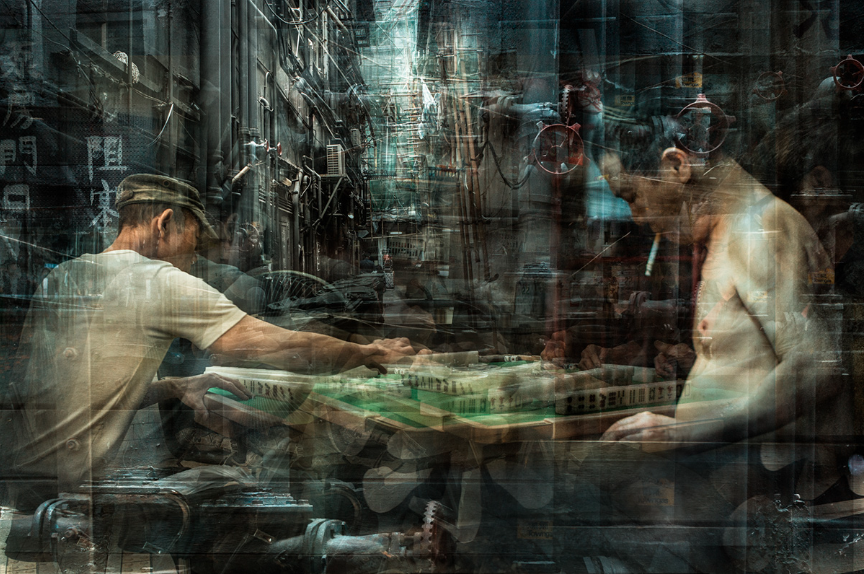
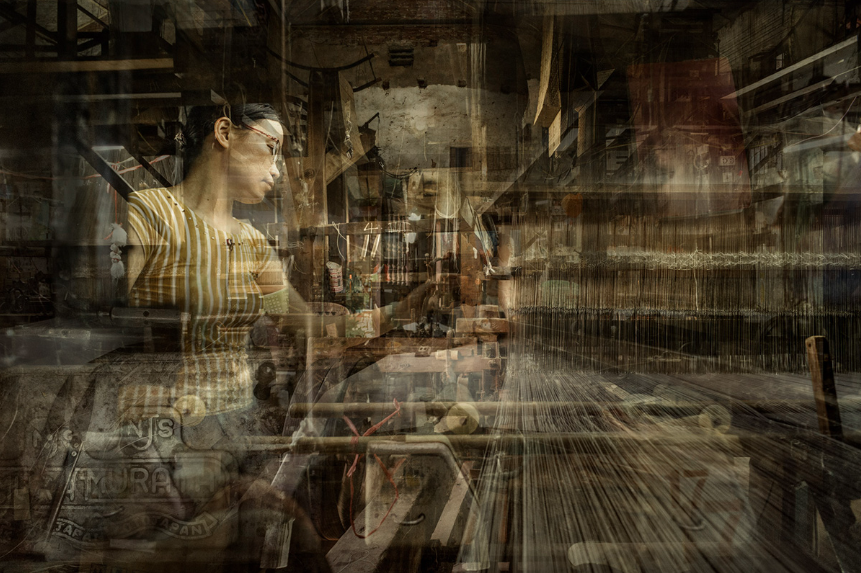
El tema central de su obra, que abarca más de quince años y seis series urbanas fundamentales —Tokio, Florencia, Circus, Hong Kong, Bangkok y Hanói—, es una interrogación sostenida sobre la naturaleza del tiempo, las instituciones que lo organizan y cómo estas nos condicionan. Magherini pone en cuestión la concepción lineal del tiempo como un flujo homogéneo y mensurable, para sustituirla por una noción estratificada y subjetiva, donde pasado y presente coexisten en una misma superficie visual: la memoria de dicha especie. Sus imágenes, construidas a partir de múltiples tomas del mismo lugar superpuestas, en vez de congelar un instante, simulan la dinámica de su montaje como recuerdo complejo. Al desmantelar la linealidad temporal, el artista socava la base de las instituciones que se sustentan en ella, como la planificación urbana, la historia oficial o el archivo documental, a la vez que reconoce la necesidad de lapsos para la configuración de la experiencia. La ciudad, en su obra, deja de ser un escenario para la acción y se convierte en un palimpsesto, un campo fértil en sí mismo, con todo su ruido y sus silencios.
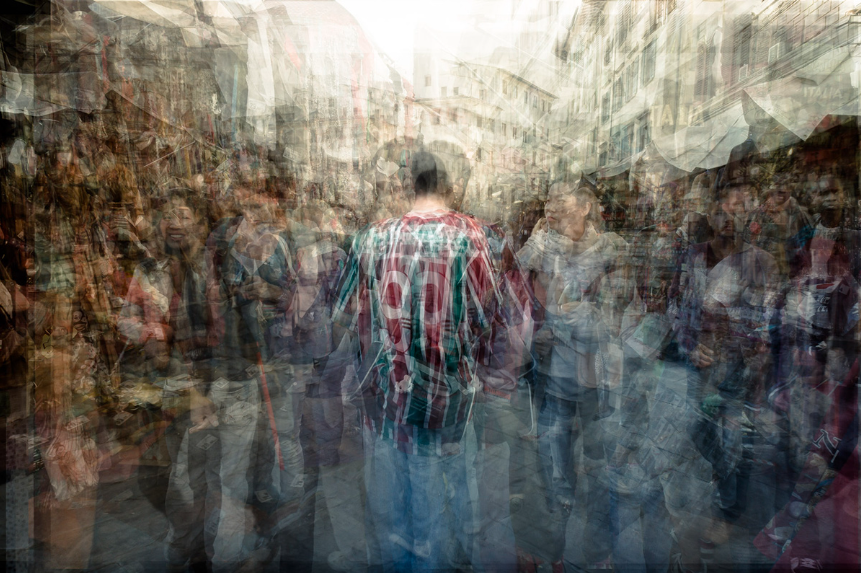
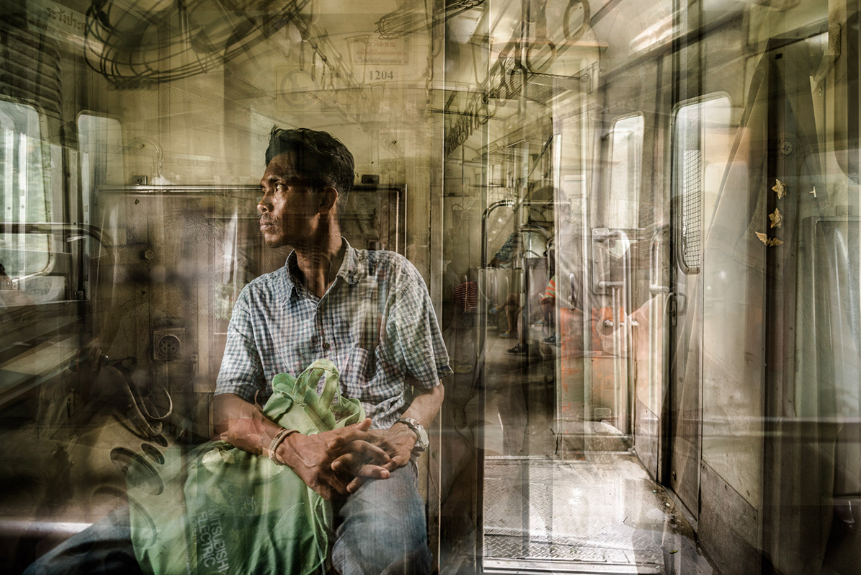
Así, llegamos al asunto de la vida en la metrópoli contemporánea, con su vorágine de estímulos y su negación de la pausa y la reflexión. Magherini reconstruye la multitud como una presencia particular compuesta de distintas capas. Los individuos emergen de ella y se disuelven de vuelta en el flujo colectivo. Su método, nacido del extrañamiento que sintió en Tokio, es claramente una respuesta directa a la saturación perceptual de la ciudad moderna. Al superponer diferentes momentos de una misma escena, no solo ralentiza la mirada, sino que crea una imagen que es, en sí misma, una experiencia de la densidad y complejidad urbana, al margen de los cronómetros. En este sentido, su obra interroga la soledad y la alienación propias del individuo en la gran urbe, pero sin caer en el patetismo: el individuo no es una víctima, sino una figura que se negocia constantemente con la masa, que se define en su relación con el entorno. La identidad, lejos de ser un asunto de política identitaria o ideología, se presenta como una construcción racional que requiere del sujeto un ejercicio permanente de reflexión y posicionamiento frente al flujo de la ciudad, un proceso que las imágenes de Magherini hacen visible al mostrarnos a personas que son definidas por las geometrías que las rodean o por la mirada intensa que devuelven al objetivo.
La artificialidad de la memoria y su extravío constituyen otro eje fundamental de su propuesta. Su conciencia de que la memoria no es un depósito fiel del pasado, sino una construcción activa, sujeta a la perspectiva, la emoción y el deseo, permea cada rincón de las imágenes. Sus fotografías son, en este sentido, artefactos de una memoria artificial, una que se sabe construida y que, por ello mismo, puede ser cuestionada y reelaborada, apelando incluso a la Historia, con mayúscula, en referencias de toda clase. Como en todo trabajo complejo, se debe prestar especial atención a los detalles.
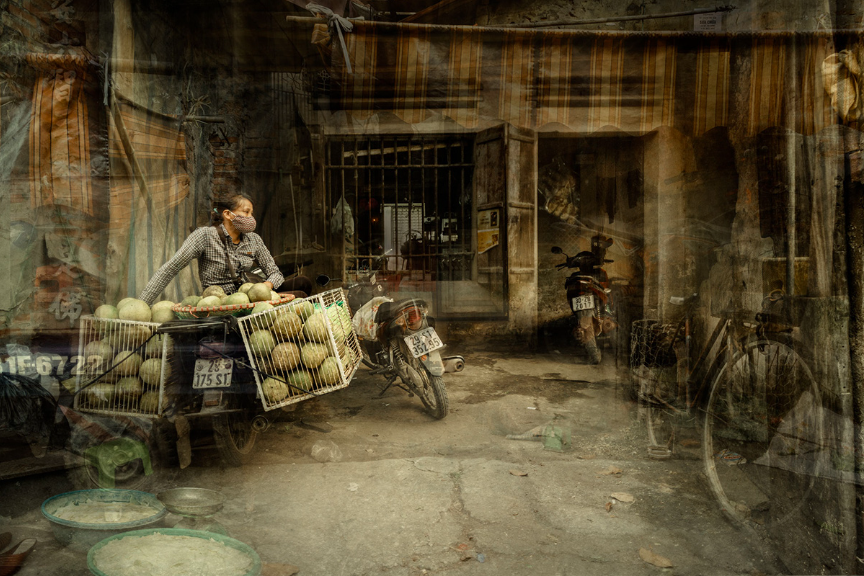
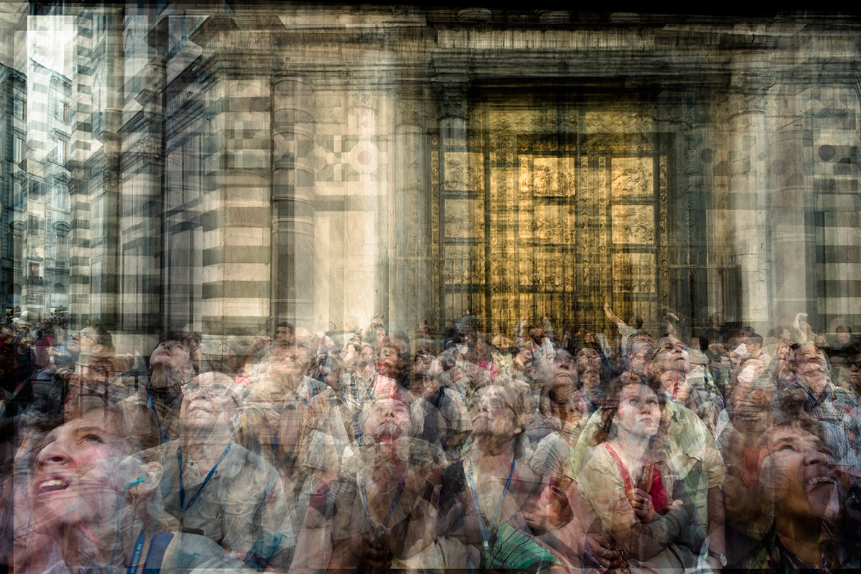
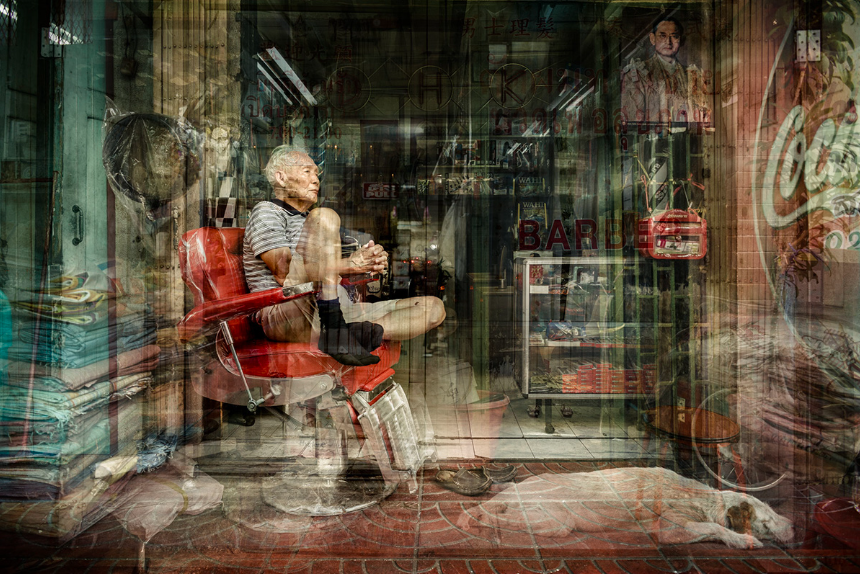
El método del artista dota a sus fotografías de una calidad pictórica y una profundidad que burlan con facilidad la percepción convencional. Lejos de la inmediatez del documento, sus obras exigen una contemplación prolongada, una inmersión en sus capas para desentrañar las historias que se superponen. Su evolución técnica es también una evolución conceptual: comenzando con la perspectiva fija que ancla sus primeras series en la arquitectura renacentista de Florencia, pasando por la libertad compositiva que le permite la serie Circus, donde abandona ese punto de vista para tratar el fondo como un lienzo y reconstruir la realidad con elementos de diferentes momentos. Finalmente, su trabajo en Bangkok y Hanói lo lleva a un acercamiento al retrato y a una paleta más contenida y atmosférica, demostrando que no apela a una fórmula, sino que se sirve de un instrumento flexible que se adapta al carácter, al tono de cada ciudad. El artista alcanza de este modo su madurez.
La paleta de colores es igualmente decisiva: la serie de Hanói se inspira en la tierra que envuelve la ciudad, mientras que Bangkok se nutre de sus colores vibrantes. En todo caso, la técnica se revela como una forma de conocimiento y de traducción de una experiencia multisensorial. El resultado impacta. Conlleva el olvido de la marcha de las horas.
[Todas las imágenes, del sitio web del artista: Riccardo Magherini Fine Art Photography]
(ENGLISH VERSION)
Against the Vertigo: An Approach to the Work of Riccardo Magherini
Translation by Tiffany Amber Elías Trimble
Urban photography, from the time of Atget and his endeavor to document the Paris that was disappearing under Haussmann’s pickaxe, has oscillated between two poles: the desire to bear witness to the objective reality of the city and the will to capture its most elusive pulse, its perpetual movement, its throb. The modern tradition, from the experimentalism of the avant-garde to Cartier-Bresson’s decisive moment, tried to freeze time to reveal its structure, but it always encountered a limitation: photography, in its most widespread conception, is the art of a single instant. However, it was on the margins of this practice that some artists began to dismantle such an assumption. The work of Riccardo Magherini follows this critical wake, with the photographic medium turned into a machine for reconstructing memory and perception. And indeed, far from a simple superimposition of images, he proposes the act of photographing as a process of slow construction, comparable to the way the human brain assembles fragments of an experience to constitute a memory.
The central theme of his work, which spans more than fifteen years and six fundamental urban series —Tokyo, Florence, Circus, Hong Kong, Bangkok, and Hanoi—, is a sustained interrogation of the nature of time, the institutions that organize it, and how they condition us. Magherini calls into question the linear conception of time as a homogeneous and measurable flow, replacing it with a stratified and subjective notion, where past and present coexist on the same visual surface: the memory of that species. His images, constructed from multiple superimposed shots of the same place, rather than freezing an instant, simulate the dynamics of their assembly as a complex memory. By dismantling temporal linearity, the artist undermines the basis of the institutions that rest upon it, such as urban planning, official history, or the documentary archive, while at the same time recognizing the need for lapses in the configuration of experience. The city, in his work, ceases to be a stage for action and becomes a palimpsest, a fertile field in itself, with all its noise and silences.
Thus, we arrive at the matter of life in the contemporary metropolis, with its vortex of stimuli and its denial of pause and reflection. Magherini reconstructs the multitude as a particular presence composed of different layers. Individuals emerge from it and dissolve back into the collective flow. His method, born of the estrangement he felt in Tokyo, is clearly a direct response to the perceptual saturation of the modern city. By superimposing different moments of the same scene, he not only slows down the gaze but also creates an image that is, in itself, an experience of urban density and complexity, beyond the reach of stopwatches. In this sense, his work interrogates the solitude and alienation inherent to the individual in the large city, but without falling into pathos: the individual is not a victim, but a figure that constantly negotiates with the mass, that defines itself in its relationship with the environment. Identity, far from being a matter of identity politics or ideology, presents itself as a rational construction that demands from the subject a permanent exercise of reflection and positioning in the face of the city’s flow, a process that Magherini’s images make visible by showing us people who are defined by the geometries that surround them or by the intense gaze they return to the lens.
The artificiality of memory and its loss constitute another fundamental axis of his proposal. His awareness that memory is not a faithful repository of the past, but an active construction, subject to perspective, emotion, and desire, permeates every corner of the images. His photographs are, in this sense, artifacts of an artificial memory, one that knows itself to be constructed and that, for that very reason, can be questioned and reworked, even appealing to History, with a capital H, through references of all kinds. As in all complex work, special attention must be paid to details.
The artist’s method gives his photographs a pictorial quality and a depth that easily elude conventional perception. Far from the immediacy of the document, his works demand prolonged contemplation, an immersion in their layers to unravel the superimposed stories. His technical evolution is also a conceptual evolution: beginning with the fixed perspective that anchors his early series in the Renaissance architecture of Florence, moving on to the compositional freedom allowed by the “Circus” series, where he abandons that point of view to treat the background as a canvas and reconstruct reality with elements from different moments. Finally, his work in Bangkok and Hanoi leads him to an approach to portraiture and a more contained and atmospheric palette, demonstrating that he does not resort to a formula, but rather uses a flexible instrument that adapts to the character, the tone of each city. The artist thus reaches his maturity.
The color palette is equally decisive: the Hanoi series is inspired by the earth that envelops the city, while Bangkok draws on its vibrant colors. In any case, the technique reveals itself as a form of knowledge and translation of a multisensory experience. The result is impactful. It entails the forgetting of the march of hours.