
La arquitectura del no-lugar: Cómo el espacio contemporáneo anula la instancia institucional
Por Juan Pablo Torres Muñiz
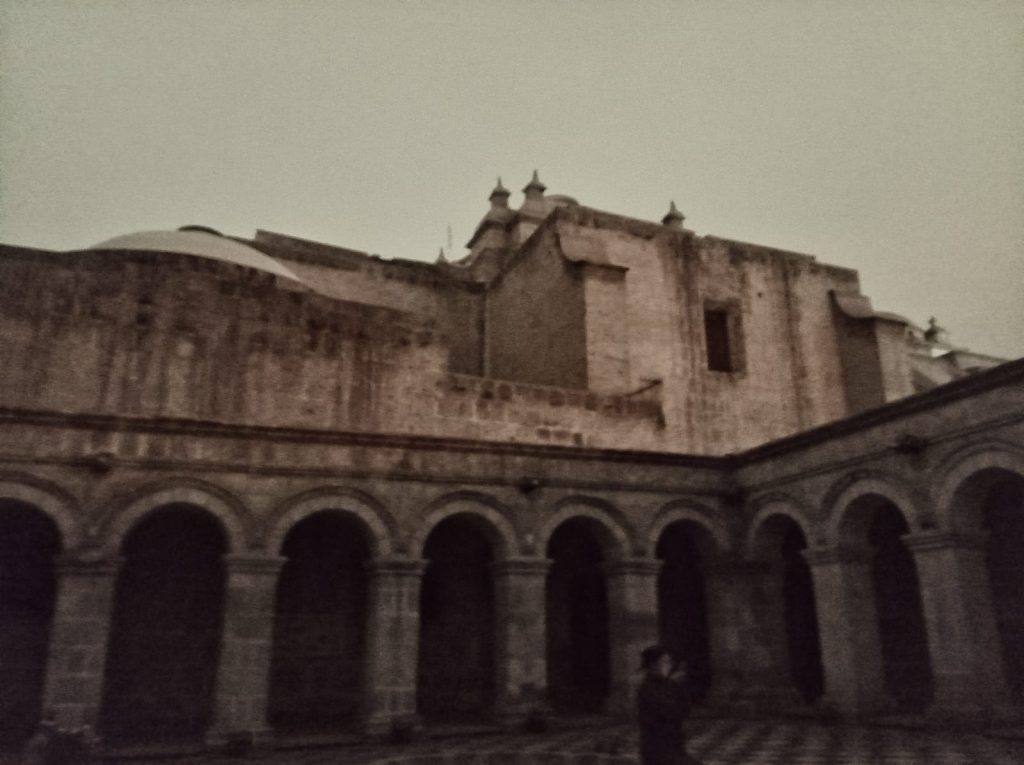
Ningún ser humano ha decidido jamás, en soledad, qué forma debe tener una iglesia, una plaza o una cárcel. Y, sin embargo, cuando entramos a cualquiera de esos espacios, sabemos —sin que nadie nos lo explique— cómo comportarnos. Bajamos la voz en la catedral. Caminamos despacio en la plaza. Sentimos la opresión de los muros en la prisión. La arquitectura es, de todas las artes, la que ejerce su poder de manera más silenciosa y acaso más total: no se cuelga en una pared para ser contemplada en un momento de ocio, sino que nos rodea, nos contiene, organiza nuestros cuerpos en el espacio durante horas, días, vidas enteras. Se habita. Y por habitarse sin que lo notemos, es una de las artes más persuasivas; al mismo tiempo, la más invisible en su persuasión.
Esta capacidad de la arquitectura para organizar la conducta humana sin que medie un consentimiento explícito es, precisamente, lo que la convierte en un asunto de la mayor gravedad institucional. Una sociedad se reconoce a sí misma en sus edificios: en sus templos, sus ayuntamientos, sus mercados, sus escuelas. Cuando esos edificios cambian de naturaleza —cuando dejan de ser templos, ayuntamientos, mercados y escuelas con historia y se convierten en estructuras intercambiables sin más finalidad que la circulación eficiente de cuerpos y mercancías—, no es solo el paisaje urbano lo que cambia. Es el tipo de sujeto que esos espacios producen lo que se transforma de raíz.
Sin embargo, la arquitectura ha sido sistemáticamente desestimada en el imaginario contemporáneo como arte de pleno derecho, equiparable a la pintura, la literatura o la música. Se la celebra como ingeniería, como negocio inmobiliario, como solución de eficiencia energética certificable; rara vez se la examina como lo que en rigor es: una institución cuestionadora y productora de sentido, un sistema de signos que organiza personas. Tal desestimación, empero, no es inocente. Tiene una consecuencia exacta: al dejar de pensar la arquitectura como arte, dejamos también de preguntarnos qué tipo de orden institucional construye o destruye cada decisión arquitectónica. Y mientras no nos lo preguntamos, ese orden —o ese desorden— sigue operando sobre nosotros sin oposición ni crítica posible.
De modo que aquí restituimos esa pregunta. A partir de una constatación incómoda: buena parte del espacio que habita el hombre contemporáneo —aeropuertos, centros comerciales, cadenas hoteleras, estaciones de servicio, oficinas corporativas de planta libre, complejos de coworking— ha sido diseñado deliberadamente para no constituir comunidad, para no acumular memoria, para no imponer ningún criterio compartido más allá de la circulación eficiente de cuerpos. El antropólogo francés Marc Augé llamó a estos espacios «no-lugares», y observó que su anonimato era estructural: «el espacio del no lugar no crea ni identidad singular ni relación, sino soledad y similitud» (citado en Paisaje Transversal, 2009, párr. 2).
Sostenemos que, cuando el sitio —es decir, el espacio que en algún momento estuvo institucionalizado— deja de ser lugar, cuando carece de historia, no impone normas y no constituye comunidad, la institución misma se vuelve imposible en su interior. La arquitectura contemporánea, lejos de ser neutral, es política en el sentido más profundo y menos partidista del término: no se limita a alojar sujetos, sino que los produce. Y el sujeto que la arquitectura del no-lugar produce dista de la persona institucional —compleja, múltiple, coherente en la gestión de sus distintas personalidades sociales— y es, más bien, el consumidor individual despersonalizado, reducido a una identidad fácilmente determinable por las normas del mercado.
[La symploké de materiales y la teoría del Homo Institutionalis]
Para comprender por qué la arquitectura es asunto institucional de primer orden, es necesario partir del arte, no como expresión subjetiva ni como mero objeto bello, sino como una situación comunicativa cuestionadora institucionalizada que conjuga cuatro materiales: el autor, la obra, el público y el marco institucional, ello en tres géneros de materialidad cognoscible, siguiendo la distinción establecida por Gustavo Bueno en su Teoría del cierre categorial (1992-1993): la materialidad primogenérica (M1), correspondiente a los objetos físicos y corpóreos; la materialidad segundogenérica (M2), correspondiente a los procesos psicológicos, las vivencias y operaciones del sujeto; y la materialidad terciogenérica (M3), correspondiente a las relaciones lógicas, geométricas y estructuras normativas que organizan la obra.
Esta tridimensionalidad tiene una aplicación literal e inmediata en arquitectura. M1 son los sillares, el hormigón, el acero, el vidrio: la masa sólida sometida a la gravedad que Vitruvio, ya en el siglo I a. C., denominaba firmitas. M2 es el acto de habitar, la experiencia vivida del espacio en el tiempo, que Le Corbusier (1923/1978) describió como el espacio vivido por el cuerpo en movimiento. Y M3 es el conjunto de relaciones abstractas que organizan ese espacio: las proporciones, los sistemas geométricos, y un concepto que merece subrayarse: el kenós o vacío arquitectónico, definido no como una nada, sino como una relación terciogenérica entre los cuerpos sólidos que lo envuelven, donde el vacío no es nada sino conexión abstracta materializada.
El vacío arquitectónico —el espacio interior de un edificio, la plaza que sus muros configuran— no es ausencia de materia, sino relación: es M3 en estado puro, una estructura de sentido que solo existe en virtud de los cuerpos que la delimitan y de las normas culturales que la interpretan. Cuando esa relación se diseña deliberadamente para no significar nada —para ser, en el sentido más estricto, intercambiable con cualquier otra relación equivalente en cualquier otro lugar del planeta—, lo que se produce es un vacío institucionalmente vaciado: una negación activa, no una ausencia pasiva.
La teoría del Homo Institutionalis añade a este marco la pieza que falta: la definición técnica de institución como marco normativo colectivo que determina total o parcialmente el funcionamiento de una sociedad de personas, y la distinción crucial entre persona e identidad. La persona es, en este marco, una construcción racional compleja que permite al sujeto operar coherentemente en múltiples instituciones sociales simultáneas —familia, profesión, ciudadanía, fe, amistad—, cada una de las cuales exige de él una personalidad distinta y específica, sin que esa multiplicidad comprometa su integridad: la persona íntegra es, precisamente, aquella capaz de gestionar coherentemente esas personalidades diversas. La identidad, en cambio, es una categoría mucho más pobre: la identificación de un sujeto con un grupo determinado, generalmente sobre la base de rasgos fácilmente clasificables y, en la sociedad de consumo, fácilmente determinables por criterios de mercado (edad, poder adquisitivo, hábitos de compra, preferencias de marca).
[El no-lugar de Marc Augé]
El concepto de no-lugar fue acuñado por el antropólogo francés Marc Augé (1992/1998) en su libro Los no lugares: espacios del anonimato. Una antropología de la sobremodernidad, para designar una categoría de espacios propiamente contemporáneos: aeropuertos, autopistas, cadenas hoteleras, supermercados, campos de refugiados, distribuidores automáticos —en general, todo espacio de tránsito y consumo masivo característico de lo que Augé denomina «sobremodernidad» (surmodernité), según Wikipedia, un exceso de la modernidad caracterizado por la aceleración del tiempo, la superabundancia de información y la individualización de las referencias.
Para definir el no-lugar, Augé construye primero su opuesto: el «lugar antropológico», que el autor caracteriza mediante tres rasgos constitutivos: ser identitario (otorga al sujeto que lo habita una identidad reconocible y reconocida por los demás), ser relacional (constituye y sostiene vínculos entre quienes lo comparten) y ser histórico (acumula memoria, tiempo sedimentado, huella generacional) (citado en Paisaje Transversal, 2009, párr. 3; Jairomoraga, s.f.). La fórmula del propio Augé es de una precisión casi geométrica: «si un lugar puede definirse como lugar de identidad, relacional e histórico, un espacio que no puede definirse ni como espacio de identidad ni como relacional ni como histórico, definirá un no lugar» (citado en Bauman, 2000/2003, p. 111; Paisaje Transversal, 2009, párr. 3).
Conviene detenerse, antes de avanzar, en la pregunta que el propio enunciado del problema plantea: ¿por qué llamar a estos espacios «no-lugares» y no simplemente «vacíos» o «espacios neutros»? La respuesta, que aquí se asume como parte constitutiva de la tesis, es que el prefijo de negación no es retórico sino conceptualmente necesario. Un vacío es la mera ausencia de algo; un no-lugar es la presencia activa de una negación: un espacio que ha sido construido, financiado, diseñado y normado precisamente para impedir que ocurra aquello que el lugar antropológico permite. No es que en el aeropuerto «no haya» comunidad, historia o norma compartida por casualidad u omisión; es que el aeropuerto ha sido diseñado, en su lógica más profunda, para que esos elementos no puedan constituirse, porque su constitución entorpecería la función que el espacio debe cumplir: la circulación más rápida y eficiente posible de individuos anónimos hacia un destino que no es ese espacio.
Augé (1992/1998) describe con precisión la relación que el individuo establece con el no-lugar: una relación estrictamente contractual, mediada por el billete, la tarjeta de crédito o el documento de identidad. Esta observación etnográfica es, leída desde la teoría del Homo Institutionalis, una descripción exacta de la reducción de persona a identidad: en el no-lugar, el sujeto no opera como persona compleja capaz de gestionar múltiples personalidades institucionales, sino como mero portador de un dato de identificación verificable, intercambiable con cualquier otro portador del mismo tipo de dato.
[Koolhaas y Norberg-Schulz]
La antropología de Augé encuentra un correlato preciso en la propia disciplina arquitectónica. El arquitecto holandés Rem Koolhaas, en su ensayo La ciudad genérica (1995/2006), describe el mismo fenómeno desde el lado de la producción del espacio, no de su recepción antropológica: una ciudad genérica es aquella que ha renunciado deliberadamente a la identidad local en favor de la convergencia global, hasta el punto de que, según la lectura que de su obra hace Milenio (2019), Koolhaas llega a preguntarse «¿cuáles son las desventajas de la identidad; y, a la inversa, cuáles son las ventajas de la vacuidad?» (párr. 2), planteando la homogeneización no como accidente lamentable sino como posible movimiento consciente en doble sentido: por una parte, como alejamiento de la diferencia y, por otra, de acercamiento a la similitud.
Frente a esta tendencia, el historiador y teórico noruego de la arquitectura Christian Norberg-Schulz desarrolló, en obras como Existencia, espacio y arquitectura (1971) y, sobre todo, Genius loci: paisaje, ambiente y arquitectura (1979/1980), una fenomenología arquitectónica que sostiene la tesis exactamente contraria: que la función primordial de la arquitectura es revelar y reforzar el genius loci, el espíritu o carácter único de cada sitio, derivado de su geografía, su clima, su luz, sus materiales, su historia y su cultura, para ayudar al ser humano a «habitar» en el sentido pleno y existencial que Heidegger atribuye al término (Moove Magazine, 2026, párr. 2-3). Norberg-Schulz advertía ya, en el prefacio de Genius loci, sobre la urgencia de «volver a una concepción fenomenológica, cualitativa de la arquitectura» frente al «trabajo abstracto, científico» que domina la disciplina (Studocu, s.f., párr. 1), una advertencia que cuatro décadas después resulta, si cabe, más pertinente.
Con estas tres piezas teóricas —la symploké de materiales y el Homo Institutionalis, así como el no-lugar de Augé, y la tensión entre ciudad genérica y genius loci en el debate arquitectónico— se dispone ya del instrumental conceptual necesario para examinar, con el rigor argumentativo que el problema exige, cómo la arquitectura contemporánea, en su producción masiva de no-lugares, anula la posibilidad misma de la institución.
[Anulación institucional]
La primera operación que el no-lugar realiza sobre el espacio es la supresión de su dimensión histórica, lo que equivale a vaciar la materialidad terciogenérica (M3) de toda relación significativa con un pasado compartido. Si M3 comprende las relaciones lógicas y normativas que organizan un espacio —y si, como se ha visto, el vacío arquitectónico es precisamente una relación de esa clase—, entonces un espacio sin historia es un espacio cuyo M3 ha sido reducido a la mínima función operativa: la circulación. No hay relación estructural que conecte ese espacio con un antes y un después significativos para la comunidad que lo habita transitoriamente, porque ese espacio no está diseñado para ser habitado por una comunidad, sino atravesado por una sucesión de individuos sin relación entre sí. El propio análisis etnográfico de Augé sobre la experiencia del viajero confirma la supresión: en el no-lugar, las personas «en tránsito deben instalarse durante algún tiempo de espera» en un escenario que «apenas permite un furtivo cruce de miradas entre personas que nunca más se encontrarán» (Anti Liburudenda, s.f., párr. 1). No hay acumulación posible de memoria compartida en un espacio cuya función explícita es no retener a nadie.
Pero el no-lugar no solo carece de historia; carece también de la capacidad estructural para constituir relación entre quienes lo habitan, lo que impide la formación de comunidad en su sentido más elemental. Una institución es un marco normativo colectivo; como tal presupone un conjunto de personas vinculadas por relaciones reconocibles y estables. Si el espacio impide la formación de esas relaciones —si se diseña para que los sujetos que lo ocupan permanezcan mutuamente anónimos, sin intercambio significativo y sin reencuentro previsible—, entonces ese espacio impide, por su propia estructura física y funcional, la condición de posibilidad de cualquier institución. La relación que el individuo mantiene en el no-lugar es, en palabras del propio Augé, «contractual», mediada por documentos y tickets. La similitud entre no-lugares de todo el planeta —un aeropuerto en Lima es funcionalmente indistinguible de un aeropuerto en Fráncfort— es la prueba empírica de que esa relacionalidad estructural ha sido eliminada del diseño.
La producción masiva de espacios isovalentes e intercambiables no es un efecto colateral involuntario de la arquitectura contemporánea, sino una estrategia consciente y documentada de la globalización del urbanismo. Cuando un sistema económico exige que sus infraestructuras —terminales aeroportuarias, cadenas hoteleras, centros comerciales, plantas de oficinas— sean reconocibles, operables y rentables en cualquier latitud del planeta sin necesidad de adaptación significativa al contexto, la homogeneidad espacial se convierte en un requisito funcional del sistema, no en una pérdida lamentable que ese sistema padece pasivamente. Rem Koolhaas, en La ciudad genérica (1995/2006), documenta y en cierto modo celebra de manera provocadora este proceso. El análisis de Nabarralde (2015) sobre el ensayo de Koolhaas confirma que se trata de «un modelo urbano globalizador que no solo se aplica en las nuevas ciudades a lo largo de todo el planeta, sino que se pone en marcha […] en las llamadas ciudades históricas, vaciándolas, intencionadamente, de identidad» (párr. 1). El propio Koolhaas (citado en Gestión Urbana, s.f.) describe el aterrizaje en los aeropuertos de la ciudad genérica como «indiferente», y enumera entre los rasgos de ese modelo urbano «el sinsentido de su urbanismo, la desaparición de su política […], la anonimia de sus barrios, la banalidad de su arquitectura […] [y] el olvido de su historia» (párr. 1). El olvido de la historia y la desaparición de la política no son, en esta descripción, daños colaterales: son, según la propia interpretación que el arquitecto ofrece de su objeto de estudio, posibles condiciones de un proyecto.
Los discursos contemporáneos de la flexibilidad y la sostenibilidad arquitectónicas, lejos de constituir una alternativa al no-lugar, han terminado operando como su justificación retórica más sofisticada, produciendo espacios certificados y «verdes» que conservan intacta la misma estructura de anonimato funcional. Cuando la flexibilidad se entiende como capacidad de un espacio para adaptarse instantáneamente a cualquier uso, y la sostenibilidad se mide mediante indicadores técnicos universales (consumo energético, gestión de residuos, calidad del aire) que pueden certificarse y replicarse en cualquier edificio del mundo bajo el mismo estándar, ambos discursos terminan exigiendo, paradójicamente, la misma neutralidad contextual que el no-lugar requiere: un espacio flexible y certificable es, por definición, un espacio cuya identidad concreta y local debe minimizarse para maximizar su adaptabilidad genérica. Los reportes del sector inmobiliario corporativo documentan con precisión esta lógica. El Observatorio Inmobiliario (2025) señala que «los edificios con certificaciones sostenibles como WELL, LEED o BREEAM alcanzan rentas entre un 15% y un 20% superiores a los inmuebles no certificados» (párr. 1), y que, de cara al futuro, se vaticina «una generalización de este modelo» de espacio flexible y certificado, hasta el punto de que «todo el mundo querrá tener un espacio flexible o similar en su edificio» (párr. 2). En Madrid, según la misma fuente, «hasta el 50% de los proyectos entregados» entre 2022 y 2024 «obtuvo o aspiró a alcanzar la certificación LEED Platino» (párr. 3). Estos espacios —oficinas flexibles, coworkings certificados— se promocionan explícitamente por su capacidad de ofrecer, en palabras de un operador del sector, «espacios saludables que aumentan la productividad» (Lexington, s.f., párr. 2) bajo estándares idénticos en Barcelona, Madrid o cualquier otra ciudad donde la marca opere. La sostenibilidad y la flexibilidad, medidas y certificadas mediante criterios técnicos universales (Networkia, 2024), son hoy un argumento de venta inmobiliaria replicable globalmente, y esa replicabilidad —condición misma de su eficacia comercial— es estructuralmente idéntica a la isovalencia que define al no-lugar de Augé.
La existencia misma de una corriente arquitectónica —la fenomenología del lugar de Norberg-Schulz— dedicada explícitamente a contrarrestar la tendencia hacia la genericidad demuestra que la producción de no-lugares no es un destino inevitable de la técnica constructiva contemporánea, sino una decisión entre alternativas reales, y por tanto una decisión política en el sentido más estricto del término. Si solo existiera una manera posible de construir en el siglo XXI, hablar de la «política» de la arquitectura sería una metáfora vacía; pero la coexistencia documentada de dos paradigmas radicalmente opuestos —la ciudad genérica de Koolhaas, que busca activamente la convergencia y la vacuidad identitaria, y la fenomenología del genius loci de Norberg-Schulz, que busca activamente revelar el carácter único de cada sitio— demuestra que cada edificio concreto es el resultado de una elección entre estos dos órdenes de valores, y que esa elección tiene consecuencias institucionales verificables sobre quienes habitan el resultado. La fenomenología arquitectónica, según la síntesis de Moove Magazine (2026), sostiene que «los edificios deben ayudarnos a habitar en el sentido profundo heideggeriano: establecer una relación significativa con un lugar, sentirnos en casa en el mundo» (párr. 3), en contraste deliberado con «el universalismo del Movimiento Moderno que aplicaba las mismas formas en todos los contextos» (párr. 4). La existencia de este contraste teórico y práctico documentado —dos escuelas, dos métodos, dos resultados constructivos verificables en el espacio real de nuestras ciudades— es la prueba de que la arquitectura del no-lugar no es la única arquitectura posible, sino una arquitectura elegida, y que toda elección entre alternativas reales con consecuencias sobre la vida colectiva de las personas es, por definición técnica, una decisión política.
El sujeto que habita el no-lugar no deja de ser categorizado; simplemente lo es según un criterio distinto y más pobre que el institucional: el criterio de la identidad de mercado, fácilmente determinable mediante variables de consumo, en lugar del criterio de la persona, que exige el reconocimiento de una pluralidad coherente de pertenencias institucionales. Si, como establece la teoría del Homo Institutionalis, la persona íntegra es aquella capaz de gestionar coherentemente sus distintas personalidades —cada una correspondiente a una institución social distinta (familiar, profesional, religiosa, cívica)—, entonces un espacio que no reconoce ninguna de esas instituciones, y que en cambio organiza toda su oferta y su señalética en función de variables de consumo (poder adquisitivo, hábitos de compra, segmento demográfico), sustituye activamente la categoría de persona por la categoría de identidad, y tal sustitución determina qué tipo de comportamiento se espera, se permite y se recompensa en ese espacio. El propio diseño funcional de los no-lugares contemporáneos —desde la segmentación de las zonas de un aeropuerto según clases de viaje hasta la organización de un centro comercial según perfiles de gasto— opera, según la observación etnográfica original de Augé, mediante una identificación reducida a lo documental. Esta reducción es estructuralmente idéntica a la segmentación de mercado: ambas operan sustituyendo la complejidad de la persona institucional por un dato simple, verificable y clasificable.
Si la función definitoria del arte es cuestionar el orden institucional vigente y ampliar el mundo del sujeto mediante el asombro cuestionador que genera la belleza, entonces la arquitectura del no-lugar —que no cuestiona nada, que no produce asombro sino indiferencia funcional, que no amplía el mundo del sujeto sino que lo reduce a un trayecto eficiente— no puede ser considerada arte en sentido estricto, sino su negación material precisa, lo cual confirma por contraste la tesis central de este ensayo. Definimos belleza como el reconocimiento de un objeto, suceso o fenómeno que desborda los conceptos, categorías e instituciones del mundo del sujeto, generando un asombro cuestionador irreductible a mera impresión sensible, y que revela una ampliación significativa del mundo y, por consiguiente, de la libertad del sujeto. Un no-lugar, por construcción, no desborda ninguna categoría: encaja deliberadamente en el repertorio de categorías más genérico y previsible posible, precisamente para ser reconocido instantáneamente por cualquier usuario de cualquier procedencia sin necesidad de interpretación ni aprendizaje. Donde el arte multiplica el mundo, el no-lugar lo reduce a una función única, repetible e idéntica a sí misma en cualquier parte del planeta. El marco institucional —uno de los cuatro materiales esenciales que deben operar para que una obra sea considerada arte— está compuesto por «personas concretas que, en un tiempo y lugar determinados, reconocen la obra como un texto que desafía la realidad material y política». Un no-lugar no tiene, ni busca tener, ese marco institucional de reconocimiento crítico local: su éxito se mide exactamente por lo contrario, por la ausencia de fricción y de cuestionamiento, por la fluidez sin interrupciones de quienes lo atraviesan. La definición misma del fenómeno, en ambos casos —el arte que cuestiona, el no-lugar que no cuestiona nada—, es estructuralmente especular: cada una es la negación exacta de la otra, lo que confirma que la arquitectura del no-lugar no es arquitectura fallida ni arquitectura pobre, sino arquitectura que ha renunciado deliberadamente a operar como arte y, por extensión, a operar como institución.
[Por lo tanto…]
La arquitectura contemporánea, en su producción masiva de espacios homogéneos, isovalentes e intercambiables no es un fenómeno neutro ni accidental, sino una transformación institucional de fondo que afecta directamente la posibilidad misma de que el sujeto humano se constituya como persona en sentido pleno.
El no-lugar suprime sistemáticamente las tres condiciones que Augé identificó como constitutivas del lugar antropológico —identidad, relación e historia—, y que esa supresión, leída desde la teoría de la symploké material, equivale a vaciar la materialidad terciogenérica (M3) del espacio de toda relación estructural significativa, reduciendo el vacío arquitectónico —que en su sentido pleno es conexión abstracta cargada de sentido— a mera función de circulación.
Por otra parte, esta homogeneización, lejos de ser un efecto colateral lamentable de la técnica constructiva contemporánea, responde a una lógica deliberada de la globalización urbanística, documentada explícitamente por arquitectos como Rem Koolhaas, y reforzada en la actualidad por discursos técnicos —la flexibilidad y la sostenibilidad certificable— que, pese a su apariencia progresista y ecológica, terminan exigiendo la misma neutralidad contextual e intercambiabilidad global que define estructuralmente al no-lugar.
Finalmente, el sujeto producido por estos espacios no es la persona institucional —capaz de gestionar coherentemente múltiples pertenencias sociales complejas— sino el consumidor individual reducido a identidad de mercado, una categoría empobrecida y fácilmente clasificable que sustituye la riqueza de lo institucional por la simplicidad operativa de lo documental y lo transaccional.
La existencia documentada de alternativas reales demuestra que esta transformación no es un destino inevitable de la civilización técnica, sino el resultado de decisiones concretas, tomadas por agentes concretos (promotores, gobiernos municipales, despachos de arquitectura, cadenas corporativas), con consecuencias verificables sobre el tipo de vida colectiva que resulta posible en los espacios que esas decisiones producen. Por eso la arquitectura es política en el sentido más profundo: no porque sirva a tal o cual partido o ideología explícita, sino porque cada decisión sobre cómo construir un espacio es, simultáneamente, una decisión sobre qué tipo de sujeto ese espacio hará posible.
Las implicaciones de estas conclusiones son de muy largo alcance. Para la crítica arquitectónica, subrayan que ningún edificio puede evaluarse exclusivamente según criterios técnicos —eficiencia estructural, rendimiento energético, viabilidad económica— sin examinar simultáneamente su capacidad o incapacidad para sostener relación, memoria y norma compartida entre quienes lo habitan: dicho de otro modo, sin examinar su capacidad institucional y, por tanto, los demás materiales implicados en la comunicación que se desarrolla mediante el espacio. Para la gestión cultural y la planificación urbana, implican que la defensa de los espacios históricos, comunitarios y relacionales de una ciudad —plazas, mercados tradicionales, bibliotecas, centros culturales con arraigo local— lejos de un gesto nostálgico o afán de anticuario, constituyen una defensa activa de las condiciones materiales de posibilidad de la institución misma, sin la cual ninguna sociedad de personas puede sostenerse como tal.
Y para la filosofía del arte y la teoría institucional, implican la urgencia de la restitución de la arquitectura entre las artes mayores, debido a su capacidad de cuestionar —o de anular— el orden institucional del que toda sociedad humana depende para ser, precisamente, una sociedad de personas y no una mera aglomeración de consumidores en tránsito.
Referencias bibliográficas:
Anti Liburudenda. (s.f.). Los no lugares, espacios del anonimato: Antropología sobre modernidad. Augé, Marc. https://www.anti-web.com/es/libro/los-no-lugares-espacios-del-anonimato-antropologia-sobre-modernidad_4526
Augé, M. (1998). Los no lugares, espacios del anonimato: Una antropología de la sobremodernidad (M. Mizraji, Trad.; 4.ª ed.). Gedisa. (Obra original publicada en 1992)
Bauman, Z. (2003). Modernidad líquida (M. Rosenberg, Trad.). Fondo de Cultura Económica. (Obra original publicada en 2000)
Bueno, G. (1992-1993). Teoría del cierre categorial (vols. 1-5). Pentalfa.
Gestión Urbana. (s.f.). La ciudad genérica de Rem Koolhaas: «¿Qué queda si se quita la identidad?, ¿lo genérico?». http://www.gestionurbana.es/?p=390
Goodreads. (s.f.). La ciudad genérica by Rem Koolhaas [Reseñas]. https://www.goodreads.com/book/show/161786.La_ciudad_gen_rica
Jairomoraga. (s.f.). El lugar antropológico. Los no lugares. https://jairomoraga.wixsite.com/los-no-lugares/el-lugar-antropolgico
La Palabra. (2023, 18 de septiembre). Marc Augé: Una reflexión sobre las formas de significar los lugares. https://lapalabra.univalle.edu.co/marc-auge-una-reflexion-sobre-las-formas-de-significar-los-lugares/
Le Corbusier. (1978). Hacia una arquitectura (E. L. Revol, Trad.). Poseidón. (Obra original publicada en 1923)
Lexington. (s.f.). ¿Buscas un coworking sostenible? https://www.lexington.es/blog/coworking-sostenible-edificio-oficinas-ecologico
Milenio. (2019, 4 de abril). Ciudad genérica. https://www.milenio.com/cultura/ciudad-generica
Moove Magazine. (2026, 22 de abril). Fenomenología de Norberg-Schulz: Genius loci y habitar. https://moovemag.com/norberg-schulz-fenomenologia-arquitectura
Nabarralde. (2015, 26 de enero). La ciudad genérica. https://nabarralde.eus/es/la-ciudad-generica/
Networkia. (2024, 6 de noviembre). Espacios flex y sostenibilidad: El papel del coworking en Madrid y Barcelona. https://networkia.es/los-espacios-flex-aliados-de-la-sostenibilidad/
Norberg-Schulz, C. (1980). Genius loci: Towards a phenomenology of architecture. Rizzoli. (Obra original publicada en 1979)
Norberg-Schulz, C. (1975). Existencia, espacio y arquitectura (J. M. Feduchi, Trad.). Blume. (Obra original publicada en 1971)
Observatorio Inmobiliario. (2025, 17 de julio). Oficinas más humanas y modelos flexibles: El valor estratégico del espacio de trabajo. https://observatorioinmobiliario.es/noticias/oficinas/oficinas-mas-humanas-y-modelos-flexibles-el-valor-estrategico-del-espacio-de-trabajo-2/
Paisaje Transversal. (2009, octubre). Marc Augé / Los no lugares. https://paisajetransversal.org/2009/10/marc-auge-los-no-lugares/
Studocu. (s.f.). Estudio sobre el genius loci en la arquitectura de Norberg-Schulz. https://www.studocu.com/co/document/pontificia-universidad-javeriana/teoria-e-historia/norberg-schulz-genius-loci/32268708
Torres Muñiz, J. P. (2023). Homo Institutionalis: Ración de planteamientos críticos para dentro y fuera de aulas. Grupo Editorial Caja Negra.
Torres Muñiz, J. P. (2026, febrero). Ejercicio de libertad: Síntesis dialéctica de una filosofía del arte desde el enfoque del Homo Institutionalis. Criba. https://formacionsaro.com/ejercicio-de-libertad-sintesis-dialectica-de-una-filosofia-del-arte-desde-el-enfoque-del-homo-institutionalis/
Wikipedia. (2026). Marc Augé. https://es.wikipedia.org/wiki/Marc_Aug%C3%A9
Wikipedia. (2026). No-lugar. https://es.wikipedia.org/wiki/No-lugar
(ENGLISH VERSION)
The Architecture of Non-Place: How Contemporary Space Nullifies the Institutional Instance
Translation by Tiffany Amber Elías Trimble
No human being has ever decided, in solitude, what shape a church, a square, or a prison should take. And yet, when we enter any of these spaces, we know —without anyone explaining it to us— how to behave. We lower our voices in the cathedral. We walk slowly in the square. We feel the oppression of the walls in the prison. Architecture is, of all the arts, the one that exercises its power most silently and perhaps most totally: it is not hung on a wall to be contemplated in a moment of leisure, but surrounds us, contains us, organizes our bodies in space for hours, days, entire lives. It is inhabited. And because it is inhabited without our noticing, it is one of the most persuasive arts; at the same time, the most invisible in its persuasion.
This capacity of architecture to organize human behavior without explicit consent is precisely what makes it a matter of the utmost institutional gravity. A society recognizes itself in its buildings: in its temples, its town halls, its markets, its schools. When those buildings change in nature —when they cease to be temples, town halls, markets, and schools with history and become interchangeable structures with no purpose other than the efficient circulation of bodies and goods—, it is not only the urban landscape that changes. It is the type of subject that those spaces produce that is transformed from the ground up.
However, architecture has been systematically dismissed in the contemporary imaginary as a full-fledged art, comparable to painting, literature, or music. It is celebrated as engineering, as real estate business, as a certifiable energy efficiency solution; it is rarely examined for what it strictly is: an institution that questions and produces meaning, a system of signs that organizes people. Such dismissal, however, is not innocent. It has an exact consequence: by ceasing to think of architecture as art, we also stop asking ourselves what kind of institutional order each architectural decision builds or destroys. And as long as we do not ask ourselves, that order —or that disorder— continues to operate upon us without opposition or possible critique.
So here we restore that question. Starting from an uncomfortable observation: a large part of the space inhabited by contemporary man —airports, shopping centers, hotel chains, service stations, open-plan corporate offices, coworking complexes— has been deliberately designed not to constitute community, not to accumulate memory, not to impose any shared criterion beyond the efficient circulation of bodies. The French anthropologist Marc Augé called these spaces «non-places,» and observed that their anonymity was structural: «the space of non-place creates neither singular identity nor relation, but solitude and similitude» (cited in Paisaje Transversal, 2009, para. 2).
We maintain that when the site —that is, the space that at some point was institutionalized— ceases to be a place, when it lacks history, does not impose norms, and does not constitute community, the institution itself becomes impossible within it. Contemporary architecture, far from being neutral, is political in the deepest and least partisan sense of the term: it does not limit itself to housing subjects, but produces them. And the subject that the architecture of non-place produces is far from the institutional person —complex, multiple, coherent in the management of their different social personalities— and is, rather, the depersonalized individual consumer, reduced to an identity easily determinable by market norms.
[The symploké of materials and the theory of Homo Institutionalis]
To understand why architecture is a matter of primary institutional importance, it is necessary to start from art, not as subjective expression nor as a mere beautiful object, but as an institutionalized questioning communicative situation that combines four materials: the author, the work, the public, and the institutional framework, within three genres of knowable materiality, following the distinction established by Gustavo Bueno in his Theory of Categorical Closure (1992-1993): the first-genus materiality (M1), corresponding to physical and corporeal objects; the second-genus materiality (M2), corresponding to psychological processes, experiences, and operations of the subject; and the third-genus materiality (M3), corresponding to logical, geometric relations, and normative structures that organize the work.
This three-dimensionality has a literal and immediate application in architecture. M1 comprises the ashlars, concrete, steel, glass: the solid mass subject to gravity that Vitruvius, already in the 1st century BC, called firmitas. M2 is the act of inhabiting, the lived experience of space over time, which Le Corbusier (1923/1978) described as space lived by the body in motion. And M3 is the set of abstract relations that organize that space: the proportions, the geometric systems, and a concept worth underlining: the kenós or architectural void, defined not as a nothingness, but as a third-genus relation between the solid bodies that surround it, where the void is not nothing but abstract connection materialized.
The architectural void —the interior space of a building, the square that its walls configure— is not absence of matter, but relation: it is M3 in pure state, a structure of meaning that exists only by virtue of the bodies that delimit it and the cultural norms that interpret it. When that relation is deliberately designed to signify nothing —to be, in the strictest sense, interchangeable with any other equivalent relation anywhere else on the planet—, what is produced is an institutionally voided void: an active negation, not a passive absence.
The theory of Homo Institutionalis adds to this framework the missing piece: the technical definition of institution as a collective normative framework that determines totally or partially the functioning of a society of persons, and the crucial distinction between person and identity. The person is, in this framework, a complex rational construction that allows the subject to operate coherently in multiple simultaneous social institutions —family, profession, citizenship, faith, friendship—, each of which demands a distinct and specific personality from them, without that multiplicity compromising their integrity: the integral person is precisely the one capable of coherently managing those diverse personalities. Identity, on the other hand, is a much poorer category: the identification of a subject with a certain group, generally on the basis of easily classifiable traits and, in consumer society, easily determinable by market criteria (age, purchasing power, buying habits, brand preferences).
[Marc Augé’s non-place]
The concept of non-place was coined by the French anthropologist Marc Augé (1992/1998) in his book Non-Places: Introduction to an Anthropology of Supermodernity, to designate a category of properly contemporary spaces: airports, highways, hotel chains, supermarkets, refugee camps, vending machines —in general, every space of transit and mass consumption characteristic of what Augé terms «supermodernity» (surmodernité), according to Wikipedia, an excess of modernity characterized by the acceleration of time, the superabundance of information, and the individualization of references.
To define non-place, Augé first constructs its opposite: the «anthropological place,» which the author characterizes by three constitutive traits: being identity-giving (it grants the inhabitant a recognizable identity recognized by others), being relational (it constitutes and sustains bonds between those who share it), and being historical (it accumulates memory, sedimented time, generational trace) (cited in Paisaje Transversal, 2009, para. 3; Jairomoraga, n.d.). Augé’s own formula is of almost geometric precision: «if a place can be defined as a place of identity, relational and historical, a space that cannot be defined either as a space of identity, nor as relational nor as historical, will define a non-place» (cited in Bauman, 2000/2003, p. 111; Paisaje Transversal, 2009, para. 3).
It is worth pausing, before proceeding, on the question that the statement of the problem itself raises: why call these spaces «non-places» and not simply «voids» or «neutral spaces»? The answer, assumed here as a constitutive part of the thesis, is that the prefix of negation is not rhetorical but conceptually necessary. A void is the mere absence of something; a non-place is the active presence of a negation: a space that has been built, financed, designed, and normed precisely to prevent what the anthropological place allows from occurring. It is not that in the airport «there is no» community, history, or shared norm by chance or omission; it is that the airport has been designed, in its deepest logic, so that these elements cannot constitute themselves, because their constitution would hinder the function that the space must fulfill: the fastest and most efficient circulation possible of anonymous individuals towards a destination that is not that space.
Augé (1992/1998) precisely describes the relationship that the individual establishes with the non-place: a strictly contractual relationship, mediated by the ticket, credit card, or identity document. This ethnographic observation, read from the perspective of the theory of Homo Institutionalis, is an exact description of the reduction of person to identity: in the non-place, the subject does not operate as a complex person capable of managing multiple institutional personalities, but as a mere bearer of a verifiable identification data point, interchangeable with any other bearer of the same type of data.
[Koolhaas and Norberg-Schulz]
Augé’s anthropology finds a precise correlate in the architectural discipline itself. The Dutch architect Rem Koolhaas, in his essay The Generic City (1995/2006), describes the same phenomenon from the side of the production of space, not of its anthropological reception: a generic city is one that has deliberately renounced local identity in favor of global convergence, to the point that, according to Milenio’s (2019) reading of his work, Koolhaas even asks himself «what are the disadvantages of identity; and, conversely, what are the advantages of vacuity?» (para. 2), posing homogenization not as a regrettable accident but as a possible conscious movement in a double sense: on the one hand, as a distancing from difference and, on the other, as an approach to similarity.
Faced with this tendency, the Norwegian architectural historian and theorist Christian Norberg-Schulz developed, in works such as Existence, Space and Architecture (1971) and, above all, Genius Loci: Towards a Phenomenology of Architecture (1979/1980), an architectural phenomenology that sustains the exact opposite thesis: that the primary function of architecture is to reveal and reinforce the genius loci, the spirit or unique character of each site, derived from its geography, its climate, its light, its materials, its history, and its culture, to help the human being «dwell» in the full existential sense that Heidegger attributes to the term (Moove Magazine, 2026, para. 2-3). Norberg-Schulz already warned, in the preface of Genius Loci, about the urgency of «returning to a phenomenological, qualitative conception of architecture» in the face of the «abstract, scientific work» that dominates the discipline (Studocu, n.d., para. 1), a warning that four decades later proves, if anything, more pertinent.
With these three theoretical pieces —the symploké of materials and Homo Institutionalis, Augé’s non-place, and the tension between generic city and genius loci in the architectural debate— the conceptual instrument necessary to examine, with the argumentative rigor the problem demands, how contemporary architecture, in its massive production of non-places, annuls the very possibility of institution is now in place.
[Institutional annulment]
The first operation that non-place performs on space is the suppression of its historical dimension, which is equivalent to emptying third-genus materiality (M3) of all significant relation to a shared past. If M3 comprises the logical and normative relations that organize a space —and if, as seen, the architectural void is precisely a relation of that class—, then a space without history is a space whose M3 has been reduced to the minimum operational function: circulation. There is no structural relation connecting that space with a before and after significant for the community that inhabits it transiently, because that space is not designed to be inhabited by a community, but crossed by a succession of individuals without relation to each other. Augé’s own ethnographic analysis of the traveler’s experience confirms the suppression: in the non-place, people «in transit must settle in for some waiting time» in a setting that «barely allows a furtive crossing of glances between people who will never meet again» (Anti Liburudenda, n.d., para. 1). There is no possible accumulation of shared memory in a space whose explicit function is not to retain anyone.
But non-place not only lacks history; it also lacks the structural capacity to constitute relation between those who inhabit it, which prevents the formation of community in its most elementary sense. An institution is a collective normative framework; as such, it presupposes a set of persons linked by recognizable and stable relations. If the space prevents the formation of those relations —if it is designed so that the subjects occupying it remain mutually anonymous, without significant exchange and without foreseeable re-encounter—, then that space prevents, by its very physical and functional structure, the condition of possibility of any institution. The relationship that the individual maintains in non-place is, in Augé’s own words, «contractual,» mediated by documents and tickets. The similarity between non-places across the planet —an airport in Lima is functionally indistinguishable from an airport in Frankfurt— is the empirical proof that this structural relationality has been eliminated from design.
The massive production of isovalent and interchangeable spaces is not an involuntary side effect of contemporary architecture, but a conscious and documented strategy of the globalization of urbanism. When an economic system demands that its infrastructures —airport terminals, hotel chains, shopping centers, office plants— be recognizable, operable, and profitable at any latitude on the planet without the need for significant adaptation to context, spatial homogeneity becomes a functional requirement of the system, not a regrettable loss that the system passively suffers. Rem Koolhaas, in The Generic City (1995/2006), documents and to some extent provocatively celebrates this process. Nabarralde’s (2015) analysis of Koolhaas’s essay confirms that it is «a globalizing urban model that not only applies to new cities across the planet, but is set in motion […] in the so-called historical cities, intentionally emptying them of identity» (para. 1). Koolhaas himself (cited in Gestión Urbana, n.d.) describes landing at the generic city’s airports as «indifferent,» and lists among the traits of that urban model «the nonsense of its urbanism, the disappearance of its politics […], the anonymity of its neighborhoods, the banality of its architecture […] [and] the oblivion of its history» (para. 1). The oblivion of history and the disappearance of politics are not, in this description, collateral damage: they are, according to the architect’s own interpretation of his object of study, possible conditions of a project.
Contemporary discourses of architectural flexibility and sustainability, far from constituting an alternative to non-place, have ended up operating as its most sophisticated rhetorical justification, producing certified and «green» spaces that retain the same structure of functional anonymity intact. When flexibility is understood as a space’s capacity to adapt instantly to any use, and sustainability is measured by universal technical indicators (energy consumption, waste management, air quality) that can be certified and replicated in any building in the world under the same standard, both discourses end up demanding, paradoxically, the same contextual neutrality that non-place requires: a flexible and certifiable space is, by definition, a space whose concrete and local identity must be minimized to maximize its generic adaptability. Corporate real estate sector reports precisely document this logic. The Observatorio Inmobiliario (2025) notes that «buildings with sustainable certifications such as WELL, LEED, or BREEAM achieve rents between 15% and 20% higher than non-certified properties» (para. 1), and that, looking ahead, «a generalization of this model» of flexible and certified space is predicted, to the point that «everyone will want to have a flexible space or similar in their building» (para. 2). In Madrid, according to the same source, «up to 50% of delivered projects» between 2022 and 2024 «obtained or aspired to achieve LEED Platinum certification» (para. 3). These spaces —flexible offices, certified coworkings— are explicitly promoted for their capacity to offer, in the words of a sector operator, «healthy spaces that increase productivity» (Lexington, n.d., para. 2) under identical standards in Barcelona, Madrid, or any other city where the brand operates. Sustainability and flexibility, measured and certified by universal technical criteria (Networkia, 2024), are today a globally replicable real estate sales argument, and that replicability —the very condition of its commercial effectiveness— is structurally identical to the isovalence that defines Augé’s non-place.
The very existence of an architectural current —Norberg-Schulz’s phenomenology of place— explicitly dedicated to counteracting the tendency towards genericness demonstrates that the production of non-places is not an inevitable destiny of contemporary constructive technique, but a decision between real alternatives, and therefore a political decision in the strictest sense of the term. If there were only one possible way to build in the 21st century, talking about the «politics» of architecture would be an empty metaphor; but the documented coexistence of two radically opposed paradigms —Koolhaas’s generic city, which actively seeks convergence and identity vacuity, and Norberg-Schulz’s phenomenology of genius loci, which actively seeks to reveal the unique character of each site— demonstrates that each concrete building is the result of a choice between these two orders of values, and that this choice has verifiable institutional consequences for those who inhabit the result. Architectural phenomenology, according to Moove Magazine’s (2026) synthesis, holds that «buildings should help us dwell in the deep Heideggerian sense: establish a meaningful relationship with a place, feel at home in the world» (para. 3), in deliberate contrast to «the universalism of the Modern Movement that applied the same forms in all contexts» (para. 4). The existence of this documented theoretical and practical contrast —two schools, two methods, two verifiable constructive results in the real space of our cities— is the proof that the architecture of non-place is not the only possible architecture, but a chosen architecture, and that every choice between real alternatives with consequences for the collective life of people is, by technical definition, a political decision.
The subject inhabiting non-place does not cease to be categorized; they simply are so according to a different and poorer criterion than the institutional one: the criterion of market identity, easily determinable through consumption variables, instead of the criterion of person, which demands the recognition of a coherent plurality of institutional belongings. If, as the theory of Homo Institutionalis establishes, the integral person is the one capable of coherently managing their different personalities —each corresponding to a different social institution (family, professional, religious, civic)—, then a space that recognizes none of these institutions, and instead organizes its entire offer and signage according to consumption variables (purchasing power, buying habits, demographic segment), actively substitutes the category of person for the category of identity, and such substitution determines what type of behavior is expected, permitted, and rewarded in that space. The very functional design of contemporary non-places —from the segmentation of airport areas according to travel class to the organization of a shopping center according to spending profiles— operates, according to Augé’s original ethnographic observation, through an identification reduced to the documentary. This reduction is structurally identical to market segmentation: both operate by substituting the complexity of the institutional person for a simple, verifiable, and classifiable data point.
If the defining function of art is to question the prevailing institutional order and expand the subject’s world through the questioning astonishment generated by beauty, then the architecture of non-place —which questions nothing, which produces not astonishment but functional indifference, which does not expand the subject’s world but reduces it to an efficient trajectory— cannot be considered art in the strict sense, but rather its precise material negation, which confirms by contrast the central thesis of this essay. We define beauty as the recognition of an object, event, or phenomenon that overflows the concepts, categories, and institutions of the subject’s world, generating a questioning astonishment irreducible to mere sensory impression, and that reveals a significant expansion of the world and, consequently, of the subject’s freedom. A non-place, by construction, does not overflow any category: it deliberately fits into the most generic and predictable possible repertoire of categories, precisely to be instantly recognized by any user from any origin without the need for interpretation or learning. Where art multiplies the world, non-place reduces it to a single, repeatable function, identical to itself anywhere on the planet. The institutional framework —one of the four essential materials that must operate for a work to be considered art— is composed of «concrete people who, in a determined time and place, recognize the work as a text that challenges material and political reality.» A non-place does not have, nor does it seek to have, that local institutional framework of critical recognition: its success is measured precisely by the opposite, by the absence of friction and questioning, by the uninterrupted fluidity of those who traverse it. The very definition of the phenomenon, in both cases —art that questions, non-place that questions nothing— is structurally specular: each is the exact negation of the other, which confirms that the architecture of non-place is neither failed architecture nor poor architecture, but architecture that has deliberately renounced operating as art and, by extension, as institution.
[Therefore…]
Contemporary architecture, in its massive production of homogeneous, isovalent, and interchangeable spaces, is not a neutral or accidental phenomenon, but a profound institutional transformation that directly affects the very possibility of the human subject constituting themselves as a person in the fullest sense.
Non-place systematically suppresses the three conditions that Augé identified as constitutive of the anthropological place —identity, relation, and history—, and that this suppression, read from the theory of material symploké, is equivalent to emptying the third-genus materiality (M3) of space of all significant structural relation, reducing the architectural void —which in its full sense is meaningful abstract connection— to mere circulation function.
Furthermore, this homogenization, far from being a regrettable side effect of contemporary constructive technique, responds to a deliberate logic of urbanistic globalization, explicitly documented by architects such as Rem Koolhaas, and currently reinforced by technical discourses —flexibility and certifiable sustainability— that, despite their progressive and ecological appearance, end up demanding the same contextual neutrality and global interchangeability that structurally defines non-place.
Finally, the subject produced by these spaces is not the institutional person —capable of coherently managing multiple complex social belongings— but the individual consumer reduced to market identity, an impoverished and easily classifiable category that substitutes the richness of the institutional for the operational simplicity of the documentary and the transactional.
The documented existence of real alternatives demonstrates that this transformation is not an inevitable destiny of technical civilization, but the result of concrete decisions, made by concrete agents (developers, municipal governments, architecture firms, corporate chains), with verifiable consequences on the type of collective life that becomes possible in the spaces that those decisions produce. That is why architecture is political in the deepest sense: not because it serves this or that party or explicit ideology, but because every decision on how to build a space is, simultaneously, a decision on what type of subject that space will make possible.
The implications of these conclusions are far-reaching. For architectural criticism, they imply that no building can be evaluated exclusively according to technical criteria —structural efficiency, energy performance, economic viability— without simultaneously examining its capacity or incapacity to sustain relation, memory, and shared norm among those who inhabit it: in other words, without examining its institutional capacity. For cultural management and urban planning, they imply that the defense of a city’s historical, community, and relational spaces —squares, traditional markets, libraries, cultural centers with local roots— is not a nostalgic or antiquarian gesture, but an active defense of the material conditions of possibility of the institution itself, without which no society of persons can sustain itself as such.
And for the philosophy of art and institutional theory, they imply that architecture deserves to be restored, with all the conceptual rigor that such restoration demands, to its rightful place among the major arts: not as embellished engineering nor as certifiable real estate product, but as the material institution that, together with literature, painting, and music, has the capacity to question —or to annul— the institutional order on which every human society depends to be, precisely, a society of persons and not a mere agglomeration of consumers in transit.