
Cita en el umbral: Aproximación a la obra de Greta Kresse
Por Juan Pablo Torres Muñiz
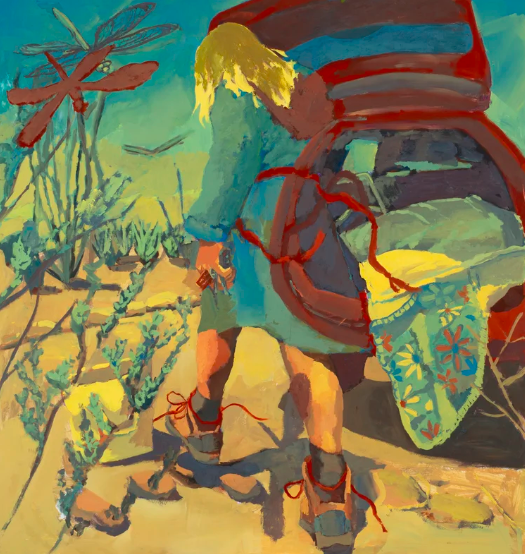
En una tradición pictórica que va del realismo documental de los impresionistas americanos a la introspección de Edward Hopper, pasando por la narrativa cotidiana de Fairfield Porter, Greta Kresse inscribe su obra singular decididamente. Lejos de lo excepcional y lo heroico; su pintura se detiene deliberadamente en las encrucijadas silenciosas de la vida diaria, en esos suspensos que la mayoría prefiere ignorar o atraviesa de prisa. Heredera de la escuela del plein air, Kresse traslada la inmediatez de la observación directa al lienzo, pero sin la pretensión de capturar una verdad absoluta, sino más bien una impresión afectiva, una temperatura emocional específica, en su caso, del Sur estadounidense que la vio crecer. Su obra, en tal sentido, documenta con la urgencia de quien sabe que lo real se escapa apenas se lo nombra, en todas partes.
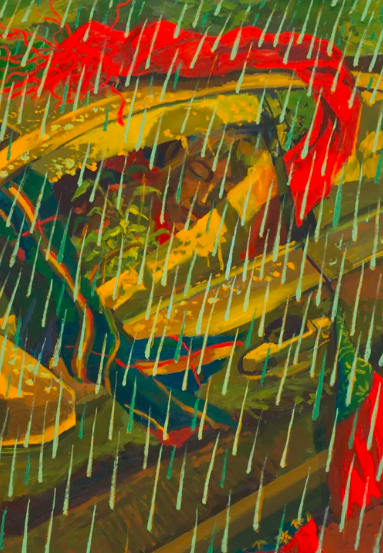
La fuerza expresiva de su pintura reside precisamente en esa capacidad de convertir lo aparentemente trivial en asunto central. Sus cuadros registran fragmentos de vidas en pausa, en espera, en ese intervalo indeciso entre una decisión y otra. Son imágenes de la confusión, no del caos, sino de esa fatiga que precede a la partida o sigue a una jornada extenuante. Kresse capta los instantes en que el sujeto, agotado, renuncia al control y se entrega a la inercia del entorno. Ahí, en ese abandono, ocurre la pintura.
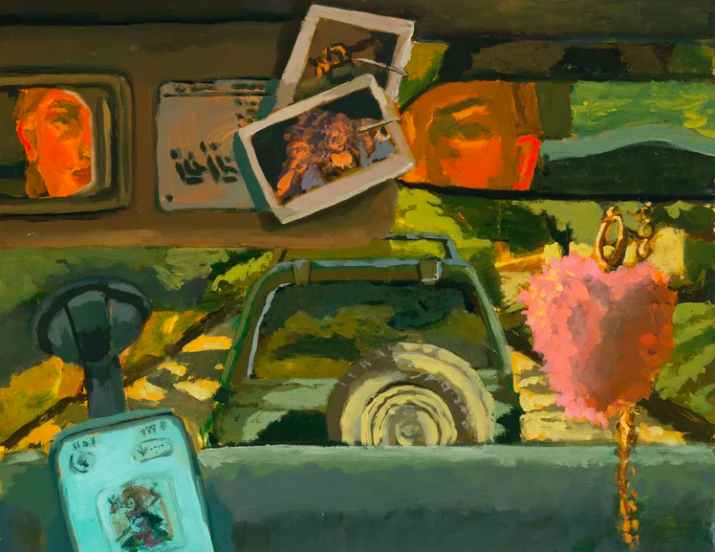
Los temas que así, atraviesa, son varios. Ante todo, la identidad. Lejos de cualquier rollo identitario, Kresse la presenta auténticamente en conflicto: el vacío existencial del adolescente perdido en el asiento trasero de un automóvil, el adulto joven atrapado entre el amor por su tierra y la urgencia de abandonarla, la mujer que se mira en el espejo retrovisor y no reconoce del todo a quien ve. Son identidades frágiles, en construcción, en crisis, sin marcos a los que aferrarse. En sus lienzos, los personajes parecen vagar sin brújula, más arrastrados por las circunstancias que por una voluntad decidida. La artista muestra el desamparo de quienes saben que su futuro depende de factores que apenas controlan. El destino no es aquí una estrella que guía, sino un viento que empuja sin rumbo fijo.
La complementación de las parejas constituye otro tema recurrente. Kresse no pinta el amor romántico ni el erotismo complaciente; sus figuras se tocan sin certezas, se buscan sin seguridad, se rozan en la penumbra del interior de un coche o en la orilla de un río. Hay en sus encuadres una tensión entre la necesidad de afecto y el terror a la intimidad, entre el impulso de fundirse con el otro y la desconfianza que la intimidad exige. Todo, producto de nuestro tiempo.
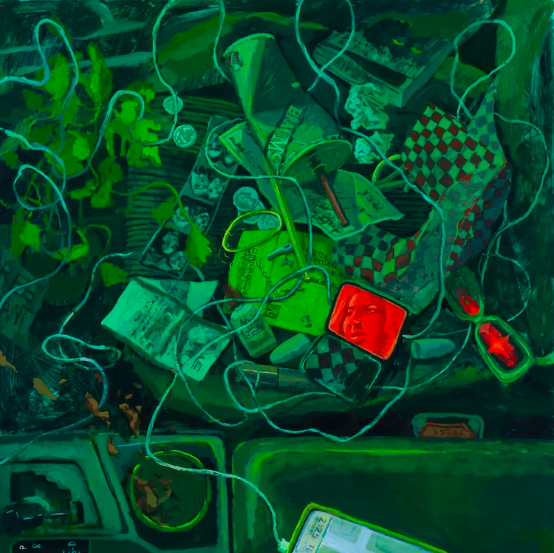
En este mismo sentido, la sobreestimulación y la carencia de referentes aparecen tratadas con una lucidez que debe mucho a la tradición poética que la artista confiesa como fuente de inspiración. Kresse pinta la saturación contemporánea, pero no la representa como ruido: la muestra en la mirada ausente de sus figuras, en su incapacidad para concentrarse en una sola cosa, en esa deriva atenta que no sabe dónde posarse. Sus personajes están sobreexpuestos a estímulos que no alcanzan a procesar; en consecuencia, han perdido la brújula que orientaba a generaciones anteriores. Los referentes tradicionales —familia, religión, comunidad— aparecen en sus cuadros no como faros sino como ruinas de las que apenas queda una silueta borrosa.
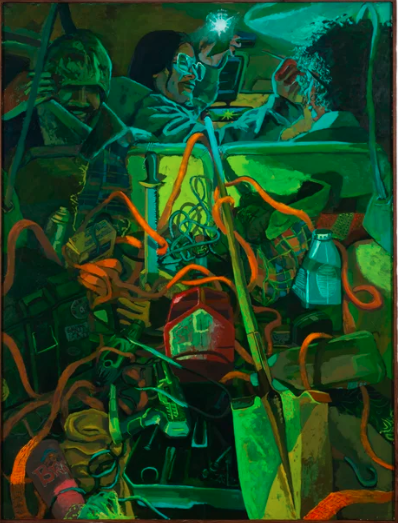
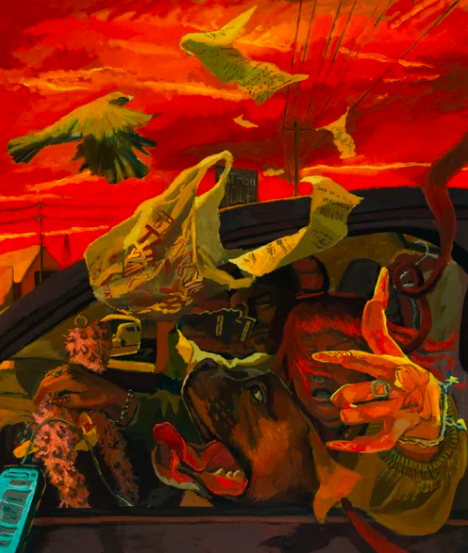
Pero es quizás en la representación simbólica de la indecisión donde Kresse alcanza su mayor potencia crítica. Sus imágenes presentan una saturación de líneas rectas y curvas superpuestas. Las rectas —el sentido de la marcha, el horizonte, la dirección, lo que cabría asociar con la masculinidad entendida como proyección— se entrecruzan con curvas —la plenitud, el círculo que se cierra sobre sí mismo, lo que se asocia con la feminidad como principio de acogida y totalidad. Esta sobreposición no es armónica sino claramente conflictiva; las líneas se obstruyen, se anulan, se tensan mutuamente. Es el dibujo mismo de la incertidumbre, el registro de una voluntad que no sabe qué querer. El sufrimiento que esa indecisión acarrea no se explicita en gestos dramáticos, sino que se filtra en la opresión de los encuadres, en la claustrofobia de los interiores de los automóviles, en la luz que no termina de definirse.
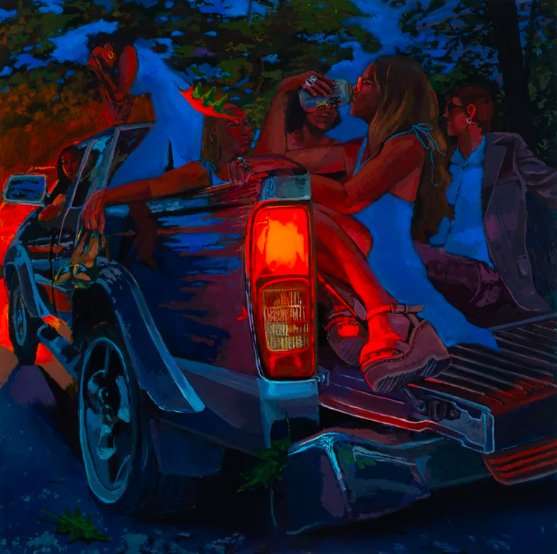
Técnicamente, Kresse opera con una notable economía de medios. Su herramienta principal es el óleo sobre lienzo, y más recientemente sobre paneles de aluminio, un soporte que exige una factura más precisa. Su paleta, deliberadamente limitada a menudo a sólo tres pigmentos, produce una notable unidad cromática que unifica cada escena en una atmósfera densa, casi líquida. Los verdes húmedos del verano sureño, los rosas desérticos del atardecer, los azules nocturnos de los interiores de coches configuran una gama tonal que, en lugar de distraer, concentra la atención en la relación entre las figuras y su entorno.
La artista trabaja combinando la observación directa del plein air —que asegura la frescura y la inmediatez del registro— con una posterior manipulación de referentes fotográficos. Este procedimiento le permite corregir, reorganizar, inventar, pero sin perder nunca el anclaje en lo real. Los resultados son imágenes que parecen instantáneas, pero que la pintura ha espesado hasta convertirlas en otra cosa: no documentos, sino meditaciones. El empleo de veladuras actúa como un tamiz atmosférico: los amarillos cálidos se posan sobre la piel como una luz filtrada, los verdes envuelven a los nadadores como un elemento más que como un fondo. Las figuras, cuidadosamente delineadas, se disuelven a menudo en la abstracción de los contornos, invitando al espectador a completar lo que la pincelada apenas sugiere.
La composición de sus cuadros, por otra parte, subraya la idea de umbral. Los marcos de los coches, las ventanas, los espejos retrovisores, las orillas de los ríos: todos son límites que la artista utiliza para problematizar la separación entre interior y exterior, entre el mundo propio y el ajeno, entre lo que se es y lo que se proyecta ser. Sus figuras habitan bordes, fronteras, espacios de transición donde ninguna pertenencia es definitiva y toda identidad está en suspenso.
La obra de Greta Kresse se inscribe así, de manera deliberada, en una tradición de resistencia a la inmediatez y a la saturación significante de nuestro tiempo. Su pintura, como un espejo de sus fisuras. La mirada que propone no es la del consumo, sino la de la renuncia al vértigo. Y nos enfrenta.
[Todas las imágenes, del sitio web del artista: Greta Kresse]
(ENGLISH VERSION)
Threshold Date: Approach to the Work of Greta Kresse
Translation by Tiffany Amber Elías Trimble
In a pictorial tradition that ranges from the documentary realism of the American Impressionists to the introspection of Edward Hopper, passing through the everyday narrative of Fairfield Porter, Greta Kresse inscribes her singular work decisively. Far from the exceptional and the heroic; her painting deliberately stops at the silent crossroads of daily life, in those suspensions that most prefer to ignore or cross hastily. Heir to the plein air school, Kresse transfers the immediacy of direct observation to the canvas, but without the pretense of capturing an absolute truth, rather an affective impression, a specific emotional temperature, in her case, of the American South where she grew up. Her work, in this sense, documents with the urgency of one who knows that the real escapes as soon as it is named, everywhere.
The expressive strength of her painting lies precisely in that ability to turn the apparently trivial into a central matter. Her canvases record fragments of lives on pause, waiting, in that undecided interval between one decision and another. They are images of confusion, not chaos, but of that fatigue that precedes departure or follows an exhausting day. Kresse captures the moments when the subject, exhausted, gives up control and surrenders to the inertia of the environment. There, in that abandonment, painting occurs.
The themes she thus traverses are several. First of all, identity. Far from any identity rhetoric, Kresse presents it authentically in conflict: the existential void of the teenager lost in the back seat of a car, the young adult caught between love for their land and the urgency to leave it, the woman who looks in the rearview mirror and does not fully recognize who she sees. They are fragile identities, under construction, in crisis, without frameworks to cling to. In her canvases, the characters seem to wander without a compass, more dragged by circumstances than by a decided will. The artist shows the helplessness of those who know that their future depends on factors they barely control. Destiny here is not a guiding star, but a wind that pushes without a fixed course.
The complementation of couples is another recurring theme. Kresse does not paint romantic love or complacent eroticism; her figures touch without certainty, seek each other without security, brush against each other in the twilight of a car interior or on a riverbank. In her framings there is a tension between the need for affection and the terror of intimacy, between the impulse to merge with the other and the distrust that intimacy demands. All of it, a product of our time.
In this same sense, overstimulation and the lack of references appear treated with a lucidity that owes much to the poetic tradition that the artist confesses as a source of inspiration. Kresse paints contemporary saturation, but does not represent it as noise: she shows it in the absent gaze of her figures, in their inability to concentrate on a single thing, in that attentive drift that does not know where to settle. Her characters are overexposed to stimuli they cannot process; consequently, they have lost the compass that guided previous generations. Traditional references —family, religion, community— appear in her paintings not as beacons but as ruins from which only a blurry silhouette remains.
But it is perhaps in the symbolic representation of indecision where Kresse reaches her greatest critical power. Her images present a saturation of superimposed straight lines and curves. The straight lines —direction of travel, horizon, orientation, what could be associated with masculinity understood as projection— intersect with curves —plenitude, the circle that closes in on itself, what is associated with femininity as a principle of welcome and totality. This superimposition is not harmonious but clearly conflictive; the lines obstruct each other, cancel each other out, tense each other mutually. It is the very drawing of uncertainty, the record of a will that does not know what to want. The suffering that this indecision entails is not made explicit in dramatic gestures, but filters through the oppressiveness of the framings, the claustrophobia of car interiors, the light that never quite defines itself.
Technically, Kresse operates with a notable economy of means. Her main tool is oil on canvas, and more recently on aluminum panels, a support that demands a more precise execution. Her palette, deliberately often limited to just three pigments, produces a notable chromatic unity that unifies each scene in a dense, almost liquid atmosphere. The humid greens of the southern summer, the desert pinks of sunset, the nocturnal blues of car interiors configure a tonal range that, instead of distracting, concentrates attention on the relationship between the figures and their environment.
The artist works by combining direct plein air observation —which ensures freshness and immediacy of recording— with a subsequent manipulation of photographic references. This procedure allows her to correct, reorganize, invent, but without ever losing the anchor in the real. The results are images that look like snapshots, but which painting has thickened into something else: not documents, but meditations. The use of glazes acts as an atmospheric sieve: warm yellows settle on the skin like filtered light, greens envelop the swimmers as an element rather than a background. The figures, carefully delineated, often dissolve into the abstraction of the contours, inviting the viewer to complete what the brushstroke barely suggests.
The composition of her paintings, on the other hand, underlines the idea of the threshold. Car frames, windows, rearview mirrors, riverbanks: all are limits that the artist uses to problematize the separation between interior and exterior, between one’s own world and that of others, between what one is and what one projects to be. Her figures inhabit edges, borders, transition spaces where no belonging is definitive and every identity is in suspension.
Greta Kresse’s work thus deliberately inscribes itself in a tradition of resistance to the immediacy and significant saturation of our time. Her painting, like a mirror of its fissures. The gaze she proposes is not that of consumption, but that of renouncing vertigo. And it confronts us.